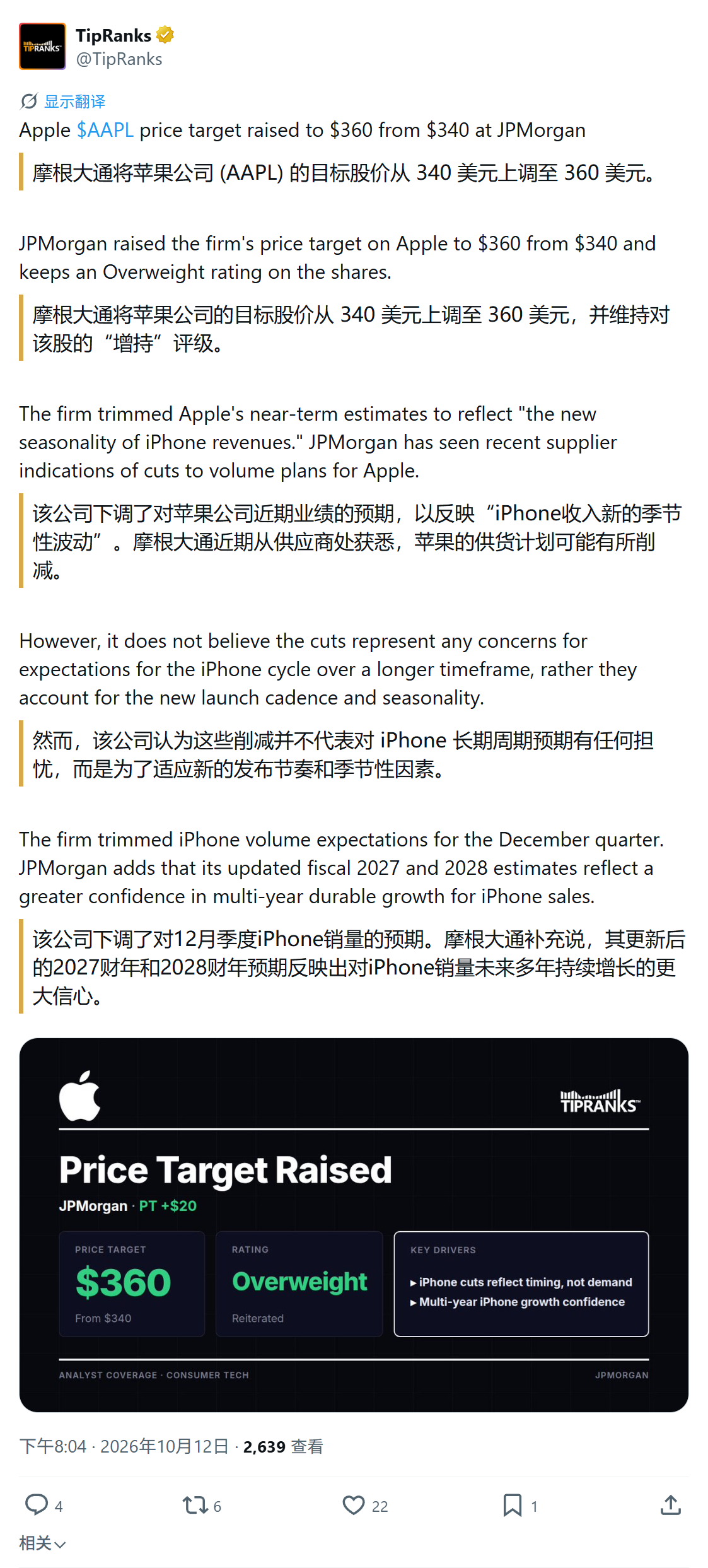
On October 13th, according to a report from technology media AppleInsider, the same day (October 12th), it was reported that JPMorgan Chase refuted reports suggesting weak Pro demand and reduced orders. JPMorgan raised its target stock price for Apple (AAPL) from $340 to $360, an increase of $20.
In an investor report released on October 12, JPMorgan Chase refuted reports that Apple had cut orders due to weak demand for iPhone and Pro, and advised investors to focus on the longer-term fundamentals.
JPMorgan Chase had previously lowered its target price for Apple to $340 in July 2026 (Note from IT: The current exchange rate is approximately 2,278 yuan) due to concerns about limited supply. In response to recent rumors of order cuts, analysts at the bank stated that these changes are within the scope of Apple's annual routine production adjustments.
It also lowered Apple's quarterly performance forecast for December, but attributed the reason to the iPhone release schedule in 2026 being split into two parts. Analysts expect that potential buyers of the basic or entry-level iPhone model will wait for the new models to be released at the beginning of 2027, thus creating a temporary sales gap.
JPMorgan Chase believes that although the growth rate is limited, the current demand for iPhone 18 Pro is higher than that for iPhone 17 Pro. Analysts expect that the phased listing strategy will drive an increase in sales of the Pro model. The iPhone Duo is expected to be launched at the end of October, and its sales are expected to fully make up for the gap caused by the absence of the basic models.
JPMorgan Chase predicts that Apple's quarterly earnings in September will only slightly exceed industry expectations, with supply constraints remaining a factor affecting performance. For the December quarter, the bank expects iPhone Duo sales to be around 8.5 million units; due to the shortage of non-Pro models, iPhone revenue is expected to decline by about 2% year-on-year.
Related Reading: "Memory Prices Rise, iPhone 18 Pro Series Selling Prices; Reports Show Apple Cuts Orders for New Device Parts"