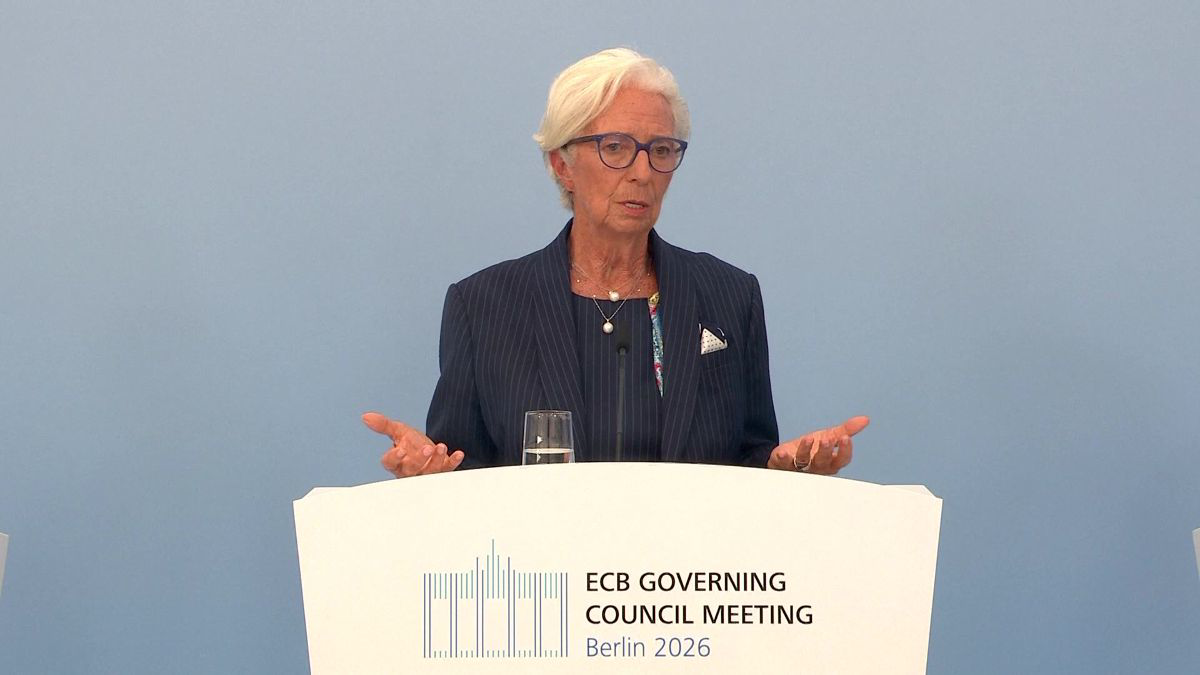


After its September meeting, the European Central Bank (ECB) announced its interest rate decisions. The minutes of the meeting released on October 8 did not contain any further policy decisions. Instead, they provided insights into how policymakers at the time compared inflation, growth, the bond market, and future risks. The minutes show that energy prices continued to drive short-term inflation expectations, and the upward trend in long-term yields was also discussed; at the same time, the economic performance of the eurozone proved to be more resilient than previously estimated. To simplify this document to "the central bank decided to continue raising interest rates" would misrepresent the internal conditions assessed during the meeting as a predetermined course of action.
The meeting was held in Berlin from September 9th to 10th. The minutes revealed that the market generally expected an interest rate hike at that time, and also took into account the possibility of further rate increases by the end of 2027; however, the median judgment from analysts' surveys was more cautious. This indicates that financial market prices, professional forecasts, and official central bank decisions represent three different levels. The market can change its bets daily, central banks need to re-evaluate their positions after new data becomes available, and the media should not treat the implied market paths as direct policy commitments.
The energy shock has not disappeared, but growth has not also declined according to the old scenario.
The minutes cited data available at the time: The preliminary inflation rate for the eurozone in August was 3.3%, higher than 2.9% in July; the increase in the energy sub-item rose from 10.3% to 14.3%. During the discussion, officials noted the pressure on oil, refined products, and natural gas prices, and also considered whether the price increases would further be transmitted to non-energy goods and services. It is important to distinguish between "energy driving the overall index" and "a widespread second-round effect that has already been established": the minutes clearly state that no obvious comprehensive second-round effects were observed at that time, and the growth rates of wages and unit labor costs also slowed down. A higher risk does not mean that the risk has already materialized.
On the other hand, consumption, public spending, and exports supported the economy in the second quarter. Staff at the European Central Bank (ECB) raised their baseline forecasts for eurozone growth in 2026 and 2027 to 0.9% and 1.4%, respectively, with a forecast of 1.5% for 2028. These are the projections from the September meeting and not the actual growth rates that have already been realized. The minutes also record differing opinions: some believe that the economy's ability to adapt to external shocks may have been underestimated; others are concerned that energy prices, long-term financing costs, or a weakening of global AI investment enthusiasm could suppress subsequent demand. It is only by considering these views together that one can understand why the central bank, despite being relatively optimistic about recent growth, is reluctant to commit to a fixed interest rate trajectory in advance.
AI related investments are not simply considered a positive factor in the summary. The eurozone stock markets are supported by profit expectations and technical enthusiasm, while policymakers also discuss the growth of AI corporate debt and valuation risks. Official records indicate that the direct exposure of the eurozone to such leverage is currently limited, but investors can be indirectly affected through the stock market; however, the increased debt issuance by large American tech companies has not yet significantly squeezed the financing conditions of other issuers in the eurozone. This assessment is that "there is no obvious crowding out as of the time of the meeting," but it does not guarantee that such a situation will never occur in the future. If macro reports only highlight that "central banks are optimistic about AI," they will overlook their concerns regarding capital costs and financial stability.
Rising long-term interest rates add another constraint to the next step of policy-making.
Interest rate decisions first affect the prices of short-term funds, but businesses and households often refer to longer maturity periods when borrowing. The minutes note that the overnight index swap curve in the eurozone has moved upward overall, with changes in longer-term yields reflecting both real maturity premium factors and a market re-pricing of fiscal and inflation prospects. Rising long-term interest rates will tighten financing conditions before central banks further raise rates; if they rise too quickly, bonds, housing loans, and business investment may be affected first. Therefore, at the next meeting, we cannot simply ask whether inflation figures are high or not; we also need to consider how much the existing financial conditions have already tightened.
At that time, officials believed that the sovereign debt spreads in the eurozone were generally stable, and the rise in long-term yields had not yet triggered a widespread re-evaluation of sovereign credit risks. This observation also has its temporal limitations. If spreads widen in the future, energy shocks persist, or the cost of issuing corporate debt significantly increases, the previous assessment that 'the market was orderly' will need to be re-examined. After the release of the minutes, markets should compare them with subsequent data on wages, inflation, loans, and bonds, rather than treating the situation as of September as a status quo that applies indefinitely after October.
For the average reader, the most useful information in the minutes is identifying the different levels of language used in policy discussions: the interest rates that have already been decided, the statistics presented during the meeting, the staff's forecasts for the future, the risk discussions among members, and the market's own expectations. These are not all considered the same type of facts. Energy costs put upward pressure on prices, while the economy's resilience means that central banks do not need to consider only a slowdown in growth. At the same time, long-term interest rates and financing conditions remind them to be cautious about excessive tightening. The coexistence of these three factors explains why meeting minutes are more complex than a simple label such as “hawkish” or “dovish.” The next direction of policy still depends on future data, and the minutes do not predict the date or extent of the next interest rate hike.
It is also important to note the time difference in the release of the meeting minutes. Although they were published on October 8th, they record discussions that took place in early September; during that period, market prices, energy supply, and statistical data could have all changed. When readers see oil prices, natural gas prices, or expectations for interest rate hikes mentioned in the minutes, they should understand these as the information available at the time of the officials' meeting, not as real-time quotes from October 8th. Copying the prices from an older period verbatim into today's market analysis is a common timeliness error in financial reports. A more reliable approach is to use the minutes to explain the policy considerations and then use new data to assess whether these concerns have continued to develop.
Bank credit is also a window through which to observe whether policies are being effectively transmitted. The minutes state that in July, the annual growth rate of corporate loans rose to 4.4%, while the growth rate of housing loans fell slightly. The mortgage loan interest rate was around 3.5% in both June and July. These figures indicate that the responses of different borrowing sectors are not consistent, and it is not appropriate to generalize the financing environment with a single overall figure. If long-term yields continue to rise in the future, even if policy interest rates remain unchanged for the time being, the costs of newly issued bonds and long-term mortgages may still change. Conversely, if the rise in risky assets offsets some of the tightening measures, actual financial conditions will not mechanically synchronize with policy interest rates. It is within this interrelated set of signals that central banks make their decisions.