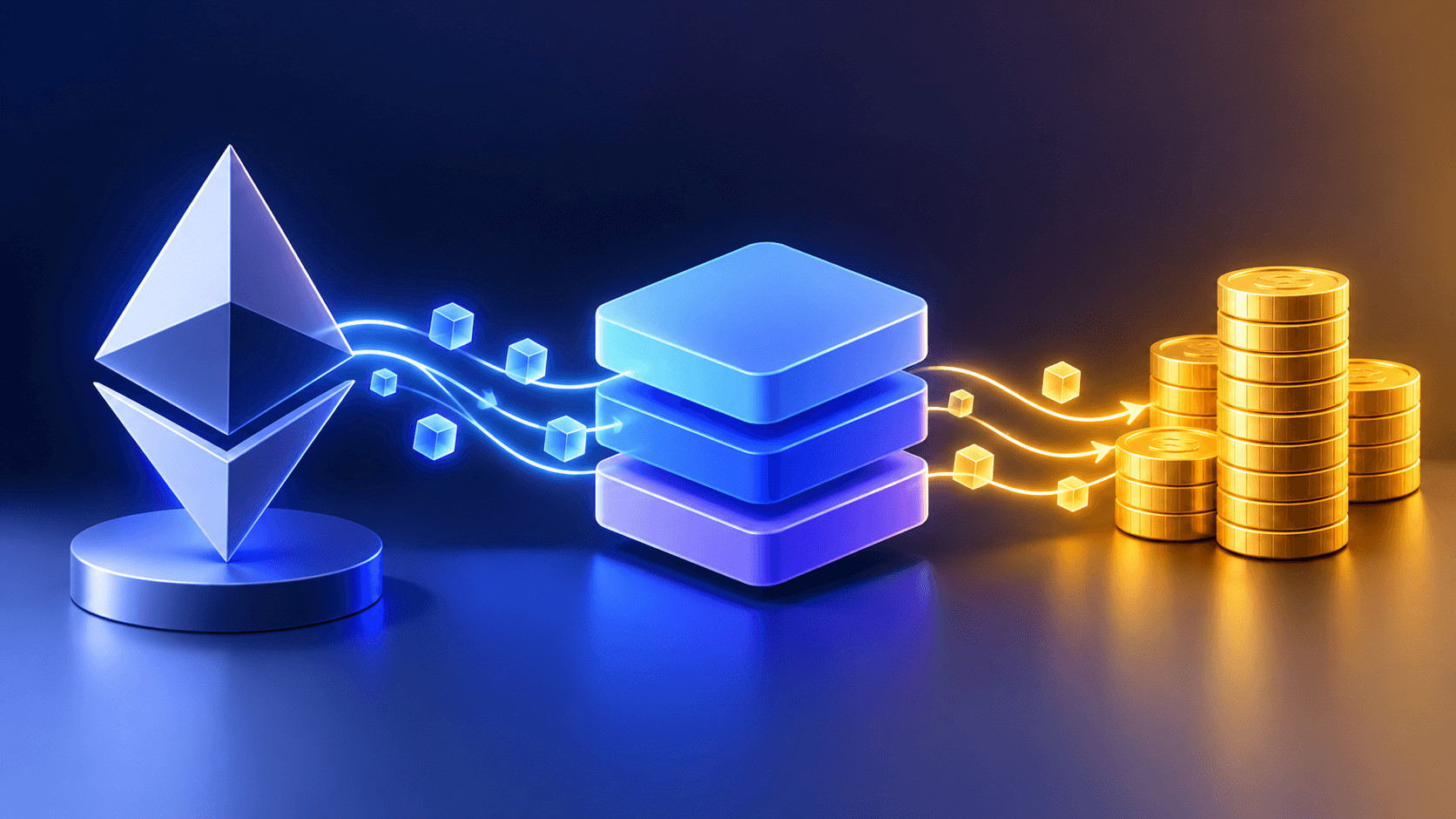













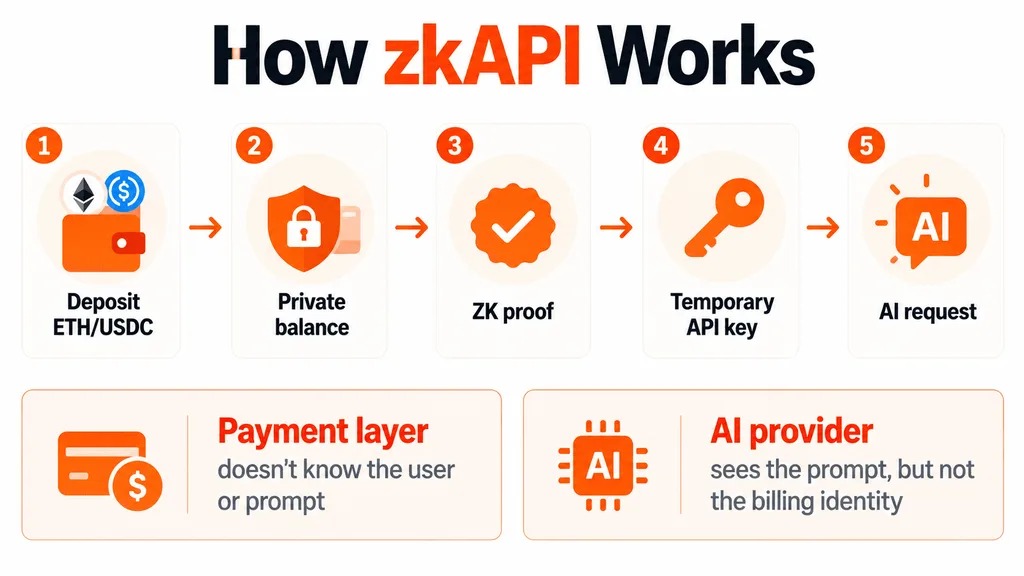
On October 1st, the Ethereum Foundation, in collaboration with Open Anonymity Project, launched zkAPI. This system has been deployed on the Ethereum mainnet, allowing users to first deposit ETH, USDC, or other supported assets into a blockchain-based vault, and then use them through zero-knowledge proof authorization for API.
The core idea of this solution is to sever the connection between the payer's identity and the actual content they use.
In the traditional API mode, API keys are usually bound to accounts and payment methods, which means that service providers may associate the long-term accumulated AI prompts or other request records with the same user. In contrast, zkAPI generates short-term valid consumption vouchers without disclosing which specific deposit funds these vouchers are supported by.
zkAPI separates the usage behavior of AI from the payment identity.
Users first deposit funds into the Ethereum smart contract treasury. Afterwards, their balances are represented in a private manner, and are not exposed with each initiation of a API request.
When a user needs to access the service, their device generates a zero-knowledge proof to demonstrate that they have sufficient funds and have not spent the same amount of money repeatedly.
The server will verify this certificate and issue a short-term API key with a specified consumption limit. Subsequently, the prompt can be directly sent from the user's device to the AI service provider.
The key point is that the payment server cannot see the content of the prompt words, and the provider of AI also has no way of knowing which Ethereum deposit provided the funds for that request.
AI is just the first use case.
The Ethereum Foundation stated that AI reasoning is the initial focus of zkAPI, as the prompt words may contain particularly sensitive information, but the use of zkAPI is not limited to AI.
The same infrastructure may also be used in the future for processing blockchain RPC calls, image and video generation, VPN bandwidth, as well as machine-to-machine payments, allowing services to be charged on a per-use basis without users needing to maintain a long-term account.
However, this system still has its limitations. zkAPI It hides only the payment relationship, not all the information of the request. AI Providers can still see the prompts themselves and may also obtain network information such as the IP address. Repeated writing styles or personal details within the prompts could also lead to previously separate conversations being reconnected.
Maya Bennett
Maya Bennett is a financial journalist who has reported on cryptocurrencies, stocks, and broader market trends. Her coverage focuses on Bitcoin, major digital assets, the stock market, monetary policy, as well as economic developments that influence investor sentiment. She is adept at transforming rapidly changing market events into clear and concise reports.