Nvidia Vera Rubin claims that AI has a 3.7-fold performance boost, but who can afford it?
Coinpaper
09-27 00:10
Ai Focus
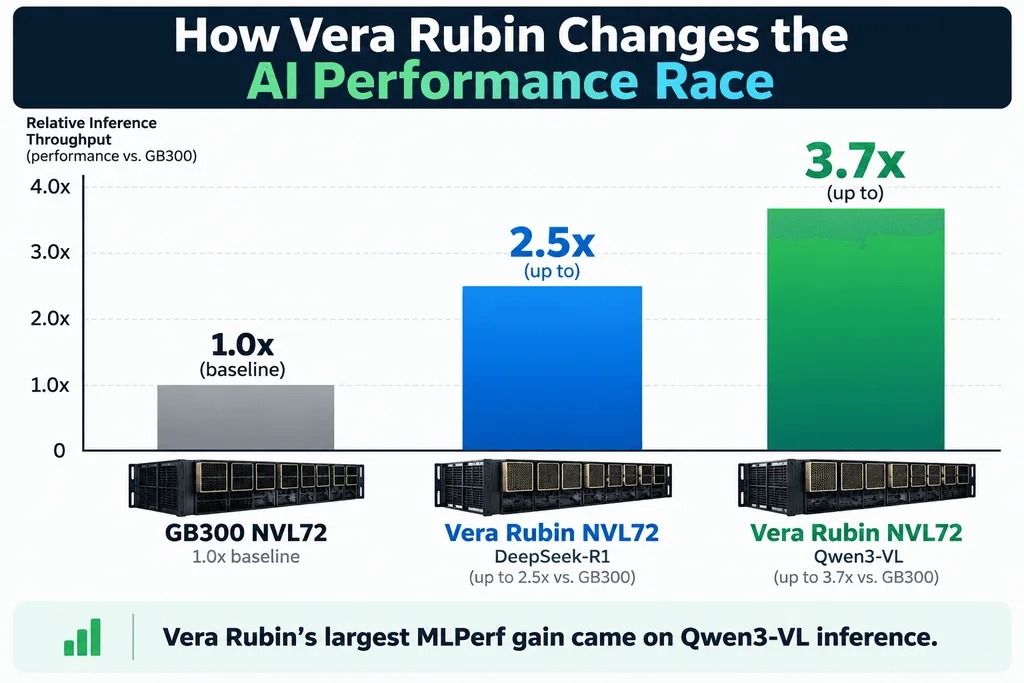
The next-generation Vera Rubin platform, Nvidia, has achieved its first significant result in independent benchmark tests, with the official claiming a performance improvement of 3.7 times under specific workloads. However, reports indicate that this also highlights the increasing cost for AI company to keep up with the hardware iterations of Nvidia.
Helpful
No.Help

Nvidia The next-generation Vera Rubin platform has obtained its first important independent benchmark test results, with a performance improvement that is significant enough to present another issue for AI company: the cost of keeping up with Nvidia hardware iterations is becoming increasingly high.

Nvidia disclosed this result in its official MLPerf announcement, describing Vera Rubin's participation as a preview submission before wider deployment.

This point is very important: a 3.7-fold improvement is the best result measured on a specific workload, and it does not mean that all AI applications will suddenly become 3.7 times faster.

Nvidia made last year's AI infrastructure seem outdated very quickly

This benchmark test also demonstrates how rapidly the underlying economic structure is changing.

Nvidia indicates that four GB300 NVL72 racks, totaling 288 GPU, have achieved 99% expansion efficiency, and software improvements alone have led to a performance boost of up to 1.6 times, which is higher than the results of the previous round of MLPerf.

This means that the replacement cycle is exceptionally fast. AI Cloud operators are not simply increasing GPU, but are repeatedly weighing whether the existing clusters can still compete with the updated system, as the new system can produce more token per rack, per megawatt.
Performance competitions are turning into financing competitions.

And thus, the story no longer remains confined to Nvidia.

CoreWeave recently increased the issuance scale of its convertible bonds from $3 billion to $3.7 billion, adding another round of major financing to an industry that has already consumed a large amount of debt and equity funds. Reports suggest that this demonstrates how GPU's expansion is rapidly translating into pressure on its balance sheet.

The same issue extends to the entire industry. Nebius has also turned to billions of dollars in financing, while the broader AI infrastructure boom is increasingly being funded by debt.

Nvidia believes that higher throughput can reduce the cost per token, which means that new hardware may ultimately justify its investment through better economic efficiency. However, Nvidia has not yet made available a simple rack price for investors to directly compare the 3.7-fold benchmark test improvement with the procurement costs.

Maya Bennett

Maya Bennett is a financial journalist with experience reporting on cryptocurrencies, stocks, and broader market trends. Her areas of focus include Bitcoin, major digital assets, the stock market, monetary policy, as well as economic developments that influence investor sentiment. She is adept at transforming rapidly changing market news into clear and concise reports.

Tip
$0
Like
1
Save
1
Views 60
CoinMeta reminds readers to view blockchain rationally, stay aware of risks, and beware of virtual token issuance and speculation. All content on this site represents market information or related viewpoints only and does not constitute any form of investment advice. If you find sensitive content, please click“Report”,and we will handle it promptly。
Submit
Comment 0
Hot
Latest
No comments yet. Be the first!
Related
Will the encryption of “Uptober” reappear? Analyzing the strongest months in history
Although “Uptober” is one of the most well-known seasonal patterns in the crypto market, October 2025 reminded the market that not all Oktobers are upward trending. Bitcoin reached a record high that month, only to see a decline of about 4% later on due to new Sino-US trade disputes that triggered risk aversion and large-scale liquidations. Looking at history, from 2013 to 2025, there were 10 October months with positive returns for Bitcoin, averaging around 19%; however, October 2026 began under different circumstances, with increased inflows of ETF, short covering, and improved liquidity, which drove Bitcoin and various altcoins stronger.
U.Today
·2026-09-28 16:41:25
8
Will SoFi switch its $25 billion card business to its own stablecoin cause Ripple concern?
According to the announcement from SoFi, the project is expected to process over $25 billion in transactions annually. Settlements have been facilitated through the Mastercard global payment network, with SoFiUSD serving as the underlying digital settlement asset. The article mentions that this development raises a competitive issue regarding Ripple and RLUSD: if regulated large banks can issue their own stablecoins and directly connect to the global payment network, will there still be a need for third-party stablecoins for settlement?
Coinpaper
·2026-09-28 16:25:14
7
JPMorgan Maintains 'Overweight' Rating on Boeing, Says 737 MAX Software Issues Have Limited Impact on Current Deliveries
JPMorgan maintains a 'overweight' rating on Boeing and a target price of $290, believing that the recently disclosed issues with the 737 MAX flight control software are unlikely to have a significant impact on the delivery of the MAX 8 and MAX 9 models at present. However, there are still potential risks for the delivery of the MAX 7 and MAX 10 models in 2027.
The Block
·2026-09-28 16:25:12
8
After Buffett's purchase price was broken through, has Google really become cheaper? | Silicon Valley Observation
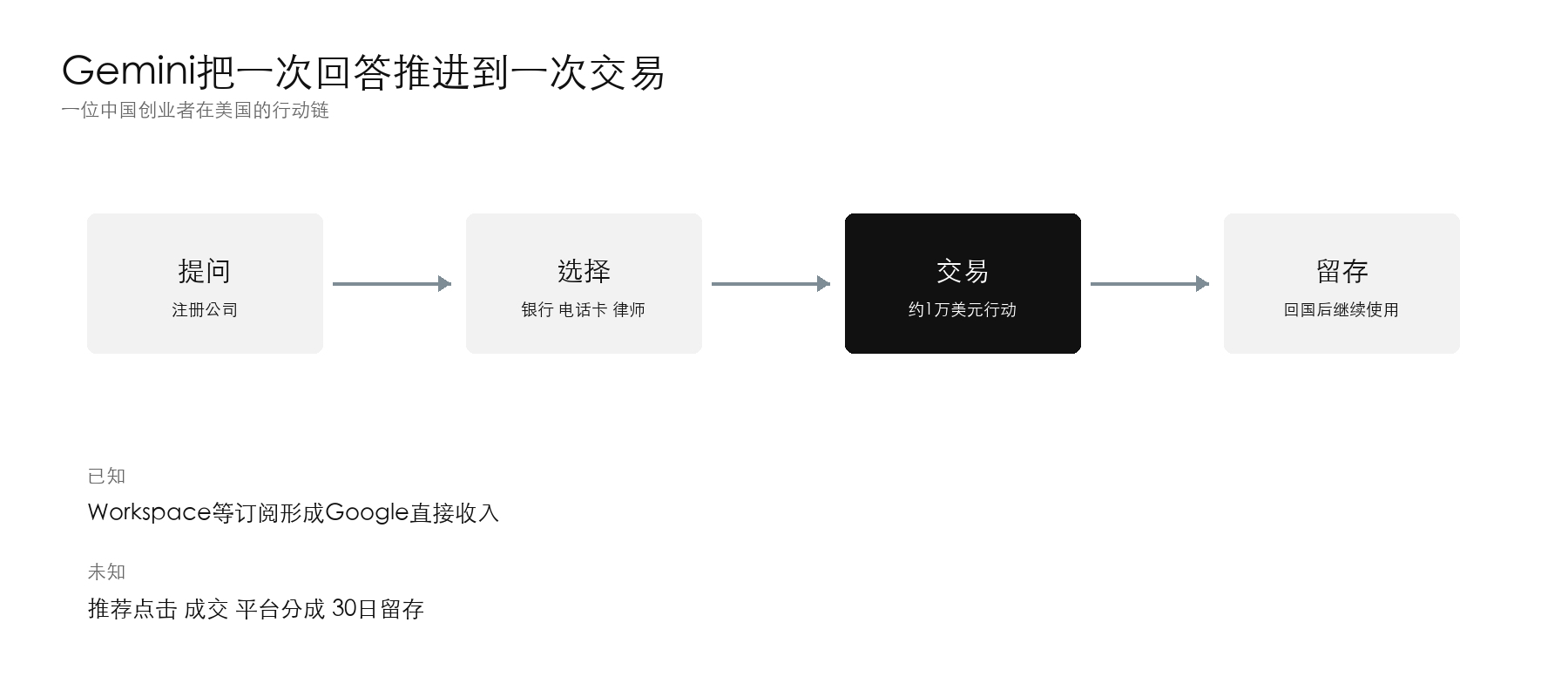
This article argues that the key to determining whether Alphabet is a good deal lies not in Berkshire Hathaway's purchase price, but rather in whether the company's annual capital expenditures of nearly $200 billion can be transformed into sustainable cloud profits and a new generation of business distribution rights. The article discusses whether Google is transitioning from a search advertising company to an AI infrastructure and action distribution platform, by considering Berkshire Hathaway's investments, Alphabet's financing and capital expenditures, Google Cloud's revenue and profit performance, as well as a case study of an entrepreneur using Gemini to accomplish real-world tasks.
The Block
·2026-09-28 16:25:11
9
Jensen Huang refutes Hinton's AI doomsday theory: I love him, but I hate his predictions
NVIDIA CEO Jensen Huang recently refuted in an interview the predictions of Nobel laureate Geoffrey Hinton that the loss of control over AI could lead to social collapse, stating that such claims have no scientific basis and will only create panic. He said that continuously highlighting the threat of AI may make young people pessimistic about the future and even affect their expectations for education and employment.
The Block
·2026-09-28 16:02:33
16
View More