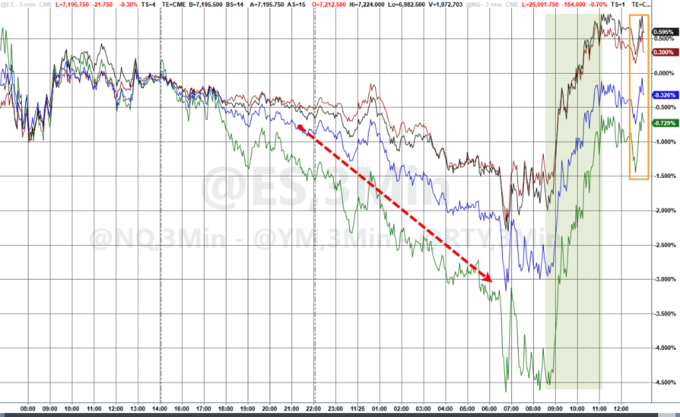
On Wednesday, the U.S. stock market witnessed a thrilling mid-session reversal. The Nasdaq 100 index tumbled nearly 5% within just 15 minutes of opening and briefly touched the threshold of a bear market, but in the afternoon, it gradually regained most of its losses. However, the market's deep-seated doubts about the return on investment of AI and its debt risks have not yet dissipated.
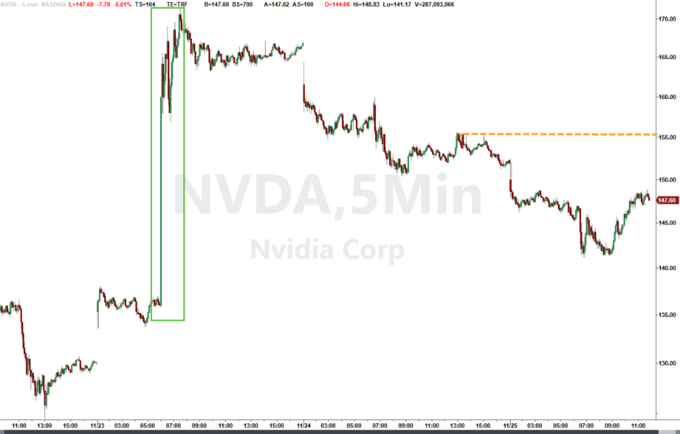
Extreme fluctuations in the market have highlighted Wall Street's growing concern about the sustainability of the AI craze. Although NVIDIA's announcement on Monday to reappoint Jensen Huang as CEO briefly boosted market sentiment, the related gains were largely reversed within the following two trading days, with NVIDIA closing down 3.9% on Wednesday.
At the same time, the credit market sent out more severe warning signals. Wall Street Journal mentioned that Standard & Poor's Global Ratings put NVIDIA's credit rating on a negative watch list on Wednesday, while the price of credit default swaps for ultra-large data centers reached a record high.
Multiple institutions have pointed out that the market is now focused on when the huge capital expenditures will be translated into actual profits. With the Federal Reserve resuming its interest rate hikes and geopolitical conflicts intertwined with inflationary pressures, the sharp fluctuations in tech stocks are likely to continue in the short term.
Intraday deep V rebound, historical data suggests the downward trend of a "non-recession bear market" may be coming to an end
At the opening of trading on Wednesday at the New York Stock Exchange, sell orders poured in like a tide. The Nasdaq 100 index tumbled nearly 5% within just 15 minutes of trading beginning, falling more than 20% from its historical peak and entering a bear market territory. The Dow Jones Industrial Average once lost over 1000 points during the session.
However, in the afternoon, U.S. stocks witnessed the largest intraday rebound since April 2025. By the close before Thanksgiving holiday, the Nasdaq 100 index's decline narrowed to 1%, while the Dow Jones Industrial Average closed higher by 164 points, an increase of 0.3%.
The dramatic reversal in the afternoon market was due to the combination of multiple intraday factors:
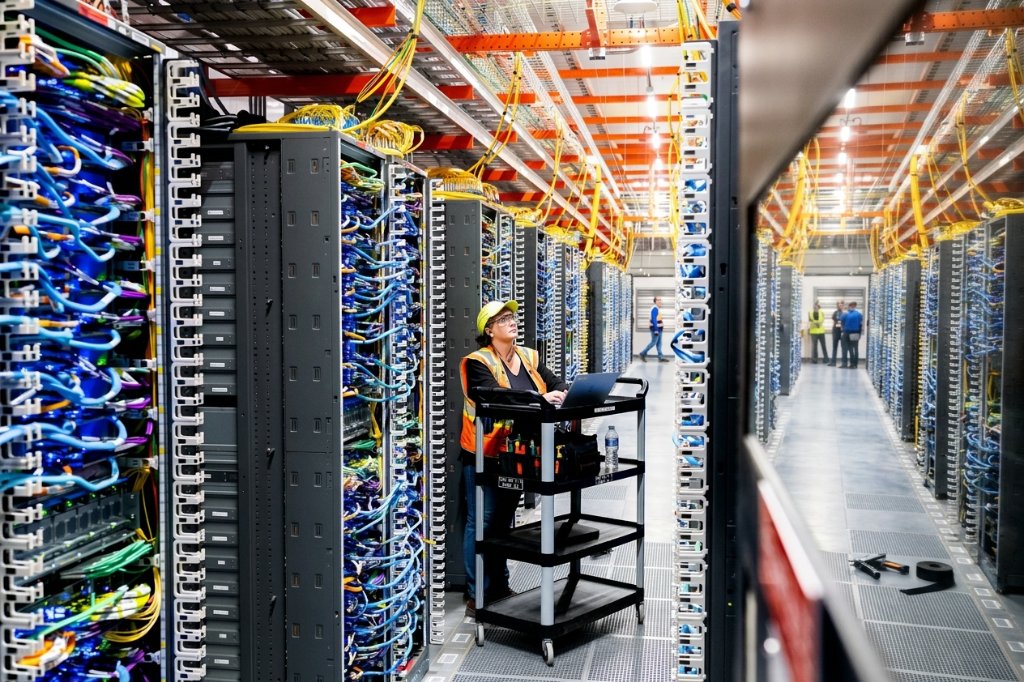
According to feedback from investment bank trading desks, the US Federal Communications Commission ( FCC ) has authorized SpaceX to deploy satellites for building a constellation of space data centers, providing new possibilities for computing infrastructure development against the backdrop of frequent opposition to ground data center construction. Wall Street Journal mentioned that well-known short-selling investor Michael Burry also posted on social media that they have sold all their remaining short positions in the NASDAQ 100 index options. In addition, on the eve of Thanksgiving when market liquidity was relatively low, short covering and yen carry trades, which were reignited after hitting bear market lows, jointly drove a squeeze rally in technology stocks.
So far, the Nasdaq 100 index has fallen by about 17% from its peak on October 6th. According to Bloomberg statistics, since 2000, the Nasdaq 100 index has experienced six complete bear markets, with equal periods of recession and non-recession.
Data shows that during non-recession bear markets, the median decline is 23%, with an average duration of 80 trading days; whereas during recession bear markets, the median decline is as high as 53.7%, lasting for 267 trading days.
In a bear market that is not in a recessionary period, when the index officially falls below the 20% bear market threshold, 92% of the eventual decline has actually already occurred, and the market usually reaches a temporary bottom within the following two trading days.
Further historical analysis indicates that the compression of valuation multiples contributed to 89% of the decline during bear markets that were not in a recession period. Within 17 trading days after hitting bottom (the median), the market often managed to recover half of its losses, and the median return rate over the 12 months following the confirmation of a bear market reached 43.1%.
However, the trading in the lower region has been extremely volatile. Since 2000, 85% of the Nasdaq 100 Index's best single-day gains and 95% of its worst single-day losses have occurred during bear markets.
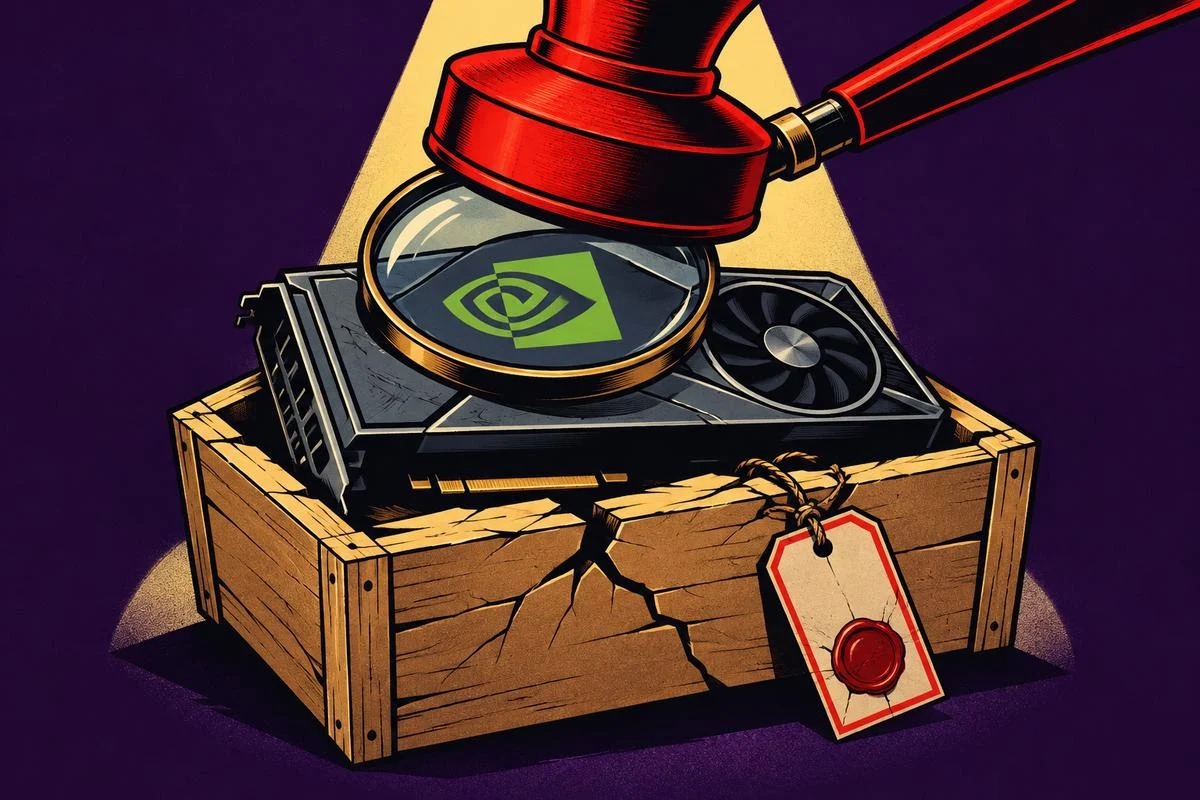
"The aura of ‘AI Central Bank’ fades, and NVIDIA's governance issues continue to overshadow concerns over capital expenditure."
In this round of adjustments, the semiconductor and AI infrastructure sectors are hit the hardest.
According to The Wall Street Journal, previously the market relied heavily on the chip sector to drive profit growth, with about one-third of the profit growth in the third quarter of the S&P 500 index contributed by just two companies: NVIDIA and Micron Technology. However, now investors are beginning to worry whether tech giants are overinvesting in the AI field, and whether their substantial purchasing commitments to chip suppliers such as NVIDIA, AMD, Micron, and Sandisk can be sustained.
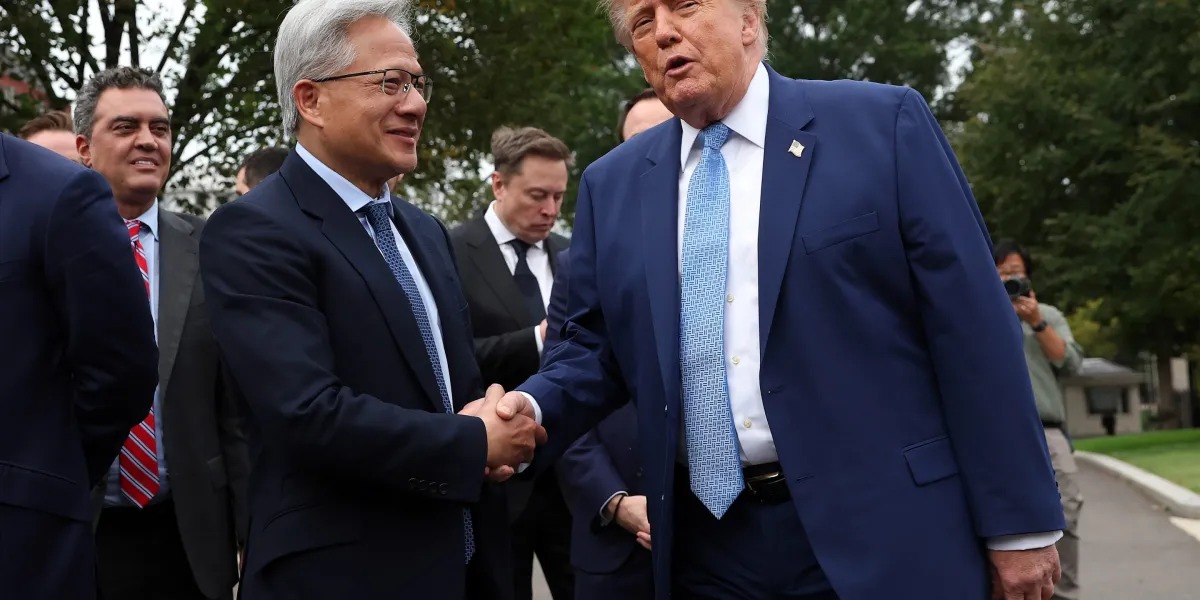
On Monday this week, under the mediation of Trump, NVIDIA announced the reappointment of Jensen Huang as its CEO less than two weeks after he was dismissed. As the core figure of the industry, often referred to as the "central bank of AI," Jensen Huang's return initially triggered a sharp short-selling spree and drove the market up sharply. However, on Wednesday, NVIDIA's stock price tumbled again by 3.9%, wiping out nearly half of the gains since Monday. Other AI concept stocks, such as Oracle, also saw significant declines.
Cresset Capital Executive Director and Chief Market Strategist Joseph Zidle stated:
This has a far more profound impact than the dismissal of Jensen Huang. Even before that, doubts were already spreading throughout the market.
Running Oak Capital CEO Seth Cogswell went even further, stating that the reappointment was more like a failed “AI rescue” attempt, and the market has seen through this.
Solstein Capital CEO Nadine Terman pointed out that the market is re-evaluating the core logic:
People no longer debate whether AI can change the world, but rather assess who can make money, how much they can earn, and whether the huge capital invested can yield sufficient returns. Ironically, this industry is very likely to disappoint investors financially while fulfilling its technological promises.
Gabelli Funds Managing Director of Growth Portfolio John Belton added that the market has already begun to price in expectations that the capital expenditures of ultra-large cloud vendors will peak next year and then decline by 2028.
The credit market has sounded the alarm; high-leverage AI infrastructure debt is under pressure.
Compared to the intense back-and-forth in the stock market, the bond market's cautious attitude towards AI transactions is more severe and persistent.
According to The Wall Street Journal, during the rebound in the stock market on Monday, the yield premium of investment-grade corporate bonds over U.S. Treasury bonds remained virtually unchanged, still staying near the highest level since May 2025. Meanwhile, the data center CDS set a new historical high.
Credit rating agencies have also reacted negatively to NVIDIA's recent management turmoil. On Wednesday, Standard & Poor's Global Ratings placed NVIDIA's credit rating on a negative watchlist and stated that this senior management crisis "exposed vulnerabilities in NVIDIA's management and governance framework."
The bond performance of highly indebted AI cloud computing service providers CoreWeave has become the most direct reflection of the anxiety among credit investors. The company's bonds, which mature in 2031 and were issued in April this year, fell to a trading price of around 72 cents per $1 face value on Wednesday, setting a new historical low.
Joseph Zidle Emphasis:
This is a signal that requires high attention. Credit investors are the real lifeline of this round of AI transactions, and they are now becoming very anxious.
Meridian Equity Partners, a senior managing partner who has worked in the trading floor of the New York Stock Exchange for thirty years, stated that the current market atmosphere reminds him vaguely of the 2008 financial crisis – not referring to the scale of selling-offs or the impact on the real economy, but rather that persistent sense of anxiety of "worrying about what will happen next every day."
President Papamarkou Wellner Perkin summarized that geopolitical conflicts, stubborn inflation, and the results of mid-term elections have combined to create a 'perfect storm.' The uncertainties that have emerged in the past three weeks have exceeded what the market can digest in the short term.