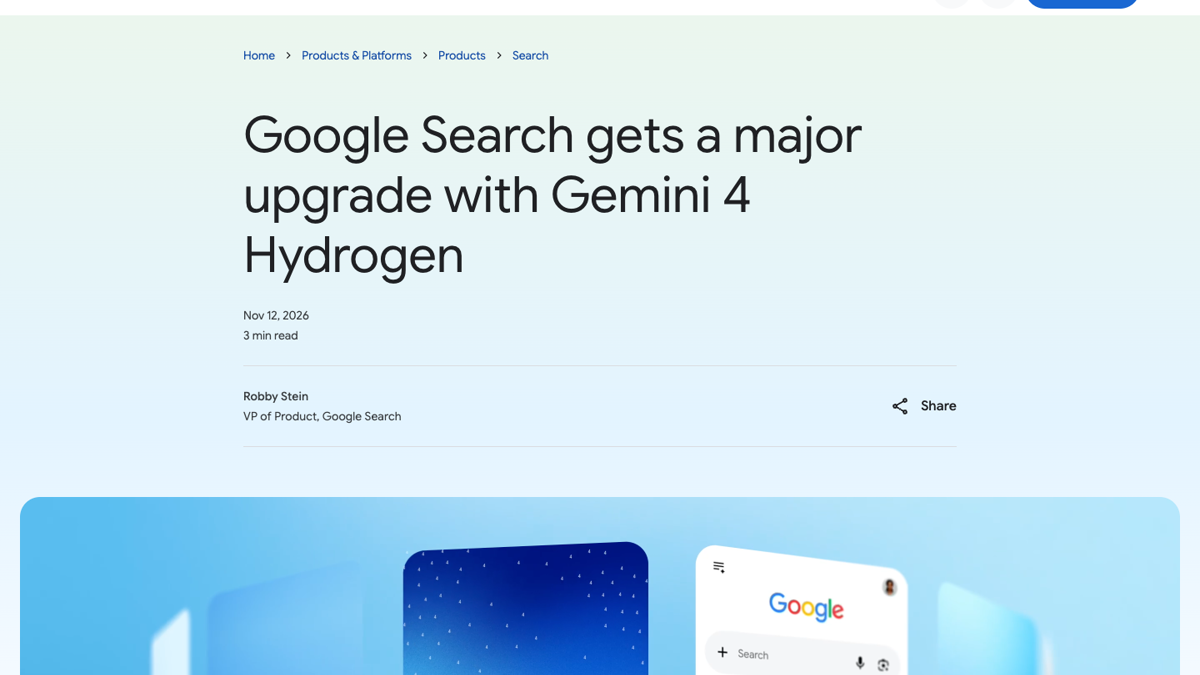


Complex questions are rarely answered by a single search. When a user asks for travel plans for a family of four in three cities during spring, the search system needs to extract information on weather, transportation, accommodation, activities, and budget, and then reorganize this data from various sources. On November 12th, it was announced that Gemini began to be rolled out globally on Hydrogen, with a focus on handling such multi-part questions and generating structured answers, tables, images, and interactive tools on a single result page.
According to Google, the new model will initiate multiple related queries simultaneously to find a wider range of web evidence, and then organize the results according to the needs of the question. The change is not just that the summaries are written longer; rather, search engines have moved the tasks that users used to perform manually in the past, such as "changing keywords, opening multiple tags, and making comparisons," to the backend. Pages still provide links to external websites, but the content that users see for the first time will be more akin to a temporary research report.
When searching, break down the question first and then look for web pages.
Traditional retrieval mainly determines which pages are related to a string of keywords. For more complex tasks, it is necessary to first understand what sub-tasks make up the problem. For example, when comparing two products, the system needs to look for specifications, prices, applicable scenarios, and limitations separately; when planning an event, dates, locations, and personal conditions also need to be considered within the same framework. The notation Hydrogen is used in this context, which represents "query fan-out", meaning that a single request can derive multiple search paths.
Parallel retrieval can increase coverage, but it also amplifies the responsibility for making choices. The model determines which sub-questions to consider, and thus which evidence will be included in the answer. If it overlooks factors such as costs, qualifications, or time boundaries, even if the subsequent tables are neatly organized, they may still give a false sense of completeness. Therefore, structured output cannot replace the visibility of the source information. Users still need to be able to return to the specific pages to verify numbers, publication dates, and original restrictions.
Google also demonstrates custom tools generated based on questions. These tools may help with calculations, comparisons, or explorations of options, but they too rely on inputs and assumptions. For instance, a budget sheet that uses outdated prices, or a health comparison that confuses different groups of people, can both present errors as user-friendly interfaces. When searching for products, it is necessary to clarify where the data comes from, which fields are estimates, and how changes in conditions will affect the results.
A more complete answer will redistribute website traffic.
When tables, images, and conclusions appear directly on the search page, users may be less likely to visit the original website. For content producers, whether their content is cited, whether the links are prominent, and whether the summaries are accurate can all affect actual traffic. Google emphasizes that linking to the answers from a wider range of websites is a strategic direction; however, this does not guarantee that every website will receive more visits as a result.
Web pages still possess irreplaceable value in terms of search summaries. Complete methods, update records, interactive services, purchasing options, and community discussions all take place on the original websites. If search systems compress content too much, they may lose the author's contextual explanations, making it difficult for users to distinguish between primary sources, media reports, and marketing pages. For high-risk issues such as finance, healthcare, or law, the more that an answer resembles a final conclusion, the more important it is to clearly display the uncertainties involved.
Site operators will also face new areas for optimization. In the past, the main focus was on titles, keywords, and page structure; in the future, it will also be necessary to make facts, dates, main content, and restrictions more easily recognizable by machines. Readable, structured content helps models make accurate references, but this does not mean that the user reading experience should be sacrificed for the models. Truly robust pages should be understandable to both users and search systems: what are the facts, what are the opinions, and when is the data updated.
The global rollout does not mean that all answers are equally reliable.
Google uses "global launch" to describe the upgrade of Search, but the functionality may still be affected by language, region, type of issue, and the pace of experimentation. The search system will also determine whether to enable complex generation capabilities based on the query. Users cannot assume that each query is processed by the same pattern, with the same tool, or using the same range of data, just based on the brand name.
Model capabilities cannot eliminate the inherent quality differences between web pages either. Multiple queries may lead to the discovery of more information, but they might also capture erroneous information that is copied from one another. True cross-validation requires identifying the independence of sources, publication times, and original data, rather than simply counting how many pages say the same thing. If search interfaces conceal these differences, larger-scale searches are more likely to create false consensus.
For Google, Hydrogen takes Search one step further towards the task interface: users not only enter keywords but also hope to directly perform comparisons, planning, and calculations. For users, what is most important is not to see more content at once, but to retain a path to return to the evidence. Complex searches can run more queries on their behalf, but they cannot decide which conditions are the most important. A reliable results page should have a structure that helps with understanding, while also keeping the sources, assumptions, and omissions visible.