Key Points
- It is reported that the Trump administration is preparing to restart debt collection efforts.
- Approximately 9.3 million American federal student loan borrowers are in default, with a total default debt of $234 billion.
- Wage garnishment may resume after the mid-term elections in November 2026
Millions of Americans with delinquent student loans may soon face wage deductions. It is reported that the Trump administration is preparing to reinstate more stringent federal debt collection measures.
The U.S. Department of Education and the Treasury Department are reportedly discussing plans to reinstate mandatory collection measures. This could grant the government the authority to deduct payments from the wages of defaulting borrowers, federal tax refunds, and certain benefits.
Some reports indicate that private debt collection agencies may become involved as early as November 2026, but no official date for resuming wage garnishments has been announced yet.
More than 9 million Americans may face wage garnishment
As the default rate on student loans in the United States continues to rise, these potential tightening measures are attracting attention. Federal Student Aid data shows that as of June 30, 2026, approximately 9.3 million borrowers were in default, with an outstanding default debt of about $234 billion.
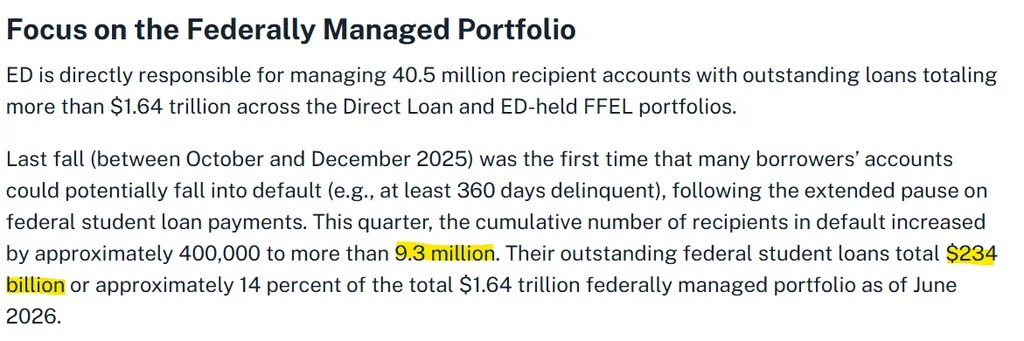
Another 1.5 million borrowers are in serious arrears. This also further increases the number of Americans who may face collection measures.
According to federal law, the government does not need a court judgment to seize up to 15% of a defaulting borrower's disposable income. For someone with a monthly disposable income of $3,000, this means a potential loss of up to $450 per month.
Will wage garnishments for student loans be reinstated after the election?
The proposed measures for recovery have drawn some attention ahead of the mid-term elections in November 2026. Reports indicate that government officials have discussed delaying aggressive recovery actions until after the elections, with wage withholdings possibly resuming in 2027. However, these plans have not yet been confirmed.
In January 2026, the Ministry of Education announced a temporary suspension of mandatory collection efforts to give borrowers more time to adapt to the major reforms in the federal student loan repayment system. As part of the reorganization of student loan management, the government also began to transfer the responsibility for managing delinquent federal student loans to the Treasury Department.
Officials say that this transition will improve efficiency and strengthen debt recovery. On the other hand, critics warn that borrowers may face greater financial pressure.
What can student loan borrowers do?
Borrowers facing potential wage garnishment still have several options. The Federal Student Loan Rehabilitation and Consolidation Program can help eligible borrowers resolve default issues and return to regular repayment.
If wage garnishment causes severe financial difficulties, the borrower may also object to the incorrect collection or apply for a hearing.
As millions of Americans are already struggling to keep up with their student loan repayments, the reinstatement of wage garnishment could put severe financial strain on families.