


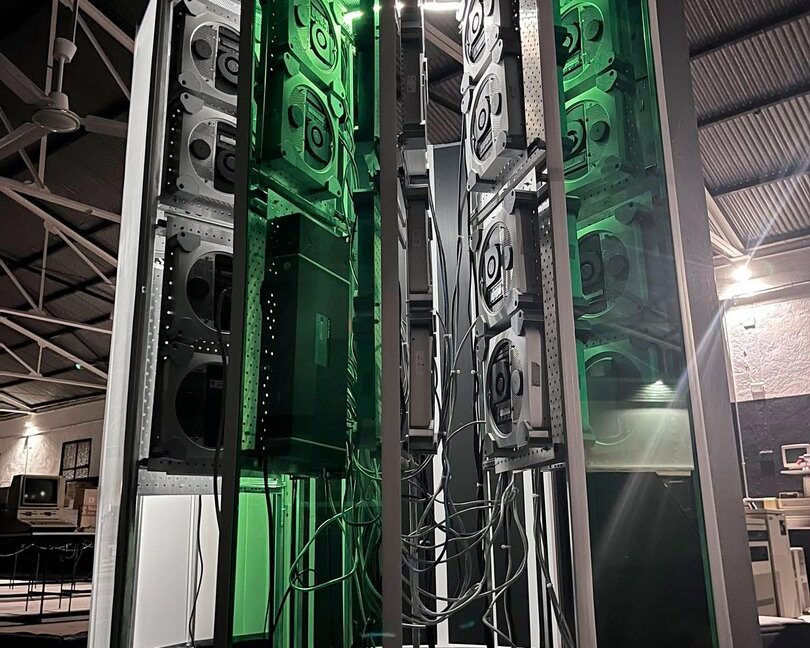
Spanish museum spent 18 months using 30 Apple Mac mini models from 2012 to create a supercomputing visual replica
The Block
1h ago
Ai Focus
News from the home of IT on October 10th: According to technology media Ars Technica, the Spanish Museum of Computer History, in order to commemorate the 50th anniversary of the birth of the Cray-1 supercomputer and the 50th anniversary of the establishment of Apple Inc., used 30 units of the 2012 model Apple Mac mini. After 18 months of work, they replicated a copy of the Cray-1 in appearance, which has now been publicly displayed in the museum.
Helpful
No.Help

On October 10th, technology media Ars Technica published a blog post reporting that the Spanish Museum of Computer History commemorated the 50th anniversary of the birth of the Cray-1 supercomputer and the 50th anniversary of the founding of Apple Inc. By using 30 Apple Mac models from 2012, it took 18 months to recreate a replica of the Cray-1.
IT Note: The Cray-1 is a supercomputer designed by an American Cray Research company, led in development by computer designer Seymour Cray ( Seymour Cray ). The first system was installed at the Los Alamos National Laboratory in the United States in 1976; from 1976 to 1982, it maintained the title of the fastest computer in the world for a long time.
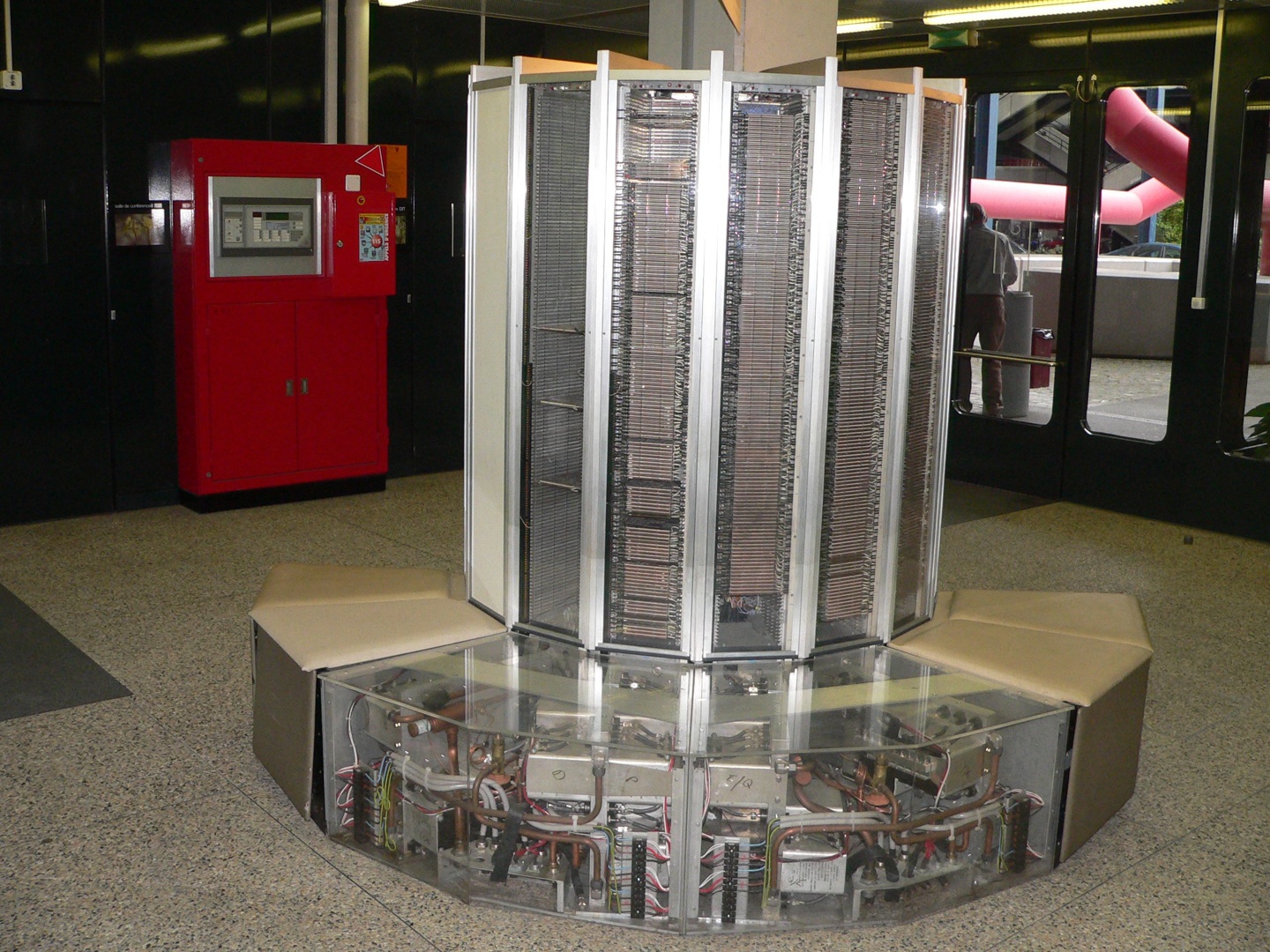
The clock frequency of Cray-1 is 80 MHz, with a main memory capacity of approximately 8 MB. Its theoretical peak performance is about 160 million floating-point operations per second, which is 160 megaflops. It uses a 64-bit word length and enhances vector operation speed through a dedicated register and pipeline design.

To commemorate the 50th anniversary of the release of Cray-1 and also to celebrate the 50th anniversary of the founding of Apple Inc., the Spanish Museum of Computer History created a 1:1 visual replica using 30 Mac models from 2012. The process took 18 months to complete, and the replica is now on public display at the museum.

The visual replica constructed this time consists of 5 quad-core i7 models and 25 dual-core i5 models. In the most recent test, 64 active processing cores were used, achieving a comprehensive performance of 1.3 teraflops. The cluster utilizes macOS and Mojave (10.14), and relies on a message-passing interface (MPI) to enable each node to transfer tasks. Visitors can observe the system running matrix algorithms and observe the performance changes when a single core and multiple nodes operate in parallel.

The museum installed 30 units of Mac mini vertically in steel enclosures and aluminum brackets, utilizing the natural convection formed by rising hot air for heat dissipation. According to the museum officials, almost no noticeable noise is emitted from the entire cluster; the two gigabit Ethernet switches located at the bottom of the exhibits are the main sources of noise, with a sound level of about 30 to 33 decibels.

Tip
$0
Like
0
Save
0
Views 36
CoinMeta reminds readers to view blockchain rationally, stay aware of risks, and beware of virtual token issuance and speculation. All content on this site represents market information or related viewpoints only and does not constitute any form of investment advice. If you find sensitive content, please click“Report”,and we will handle it promptly。
Submit
Comment 0
Hot
Latest
No comments yet. Be the first!
Related
Visa Survey Shows That By 2031, 1.2 Billion People in the Asia-Pacific Region May Adopt Stablecoins
A survey conducted by Visa among 14,250 people shows that consumers in the Asia-Pacific region are becoming more interested in stablecoin payments, but only 6% of the respondents truly understand how they work. The survey indicates that 46% of respondents say they may use stablecoins within the next five years, which is significantly higher than the 16% who actually used them in the past 12 months; concerns about fraud and scams remain the main obstacle.
CoinDesk
·2026-10-10 11:17:41
13
Xiaomi Pegasus OS Beta Recruitment closes on October 14; official version will be rolled out in batches starting from October 15
Xiaomi Pegasus OS 4 Beta version will end its beta recruitment at 12:00 noon on October 14th. The official version will be rolled out in batches starting from October 15th, with the first batch covering models such as the Xiaomi 17 series and the REDMI K100 Pro series.
The Block
·2026-10-10 11:09:29
17
Microsoft Urgent Notice: Google Will Remove XSLT Support Next Month, Which May Affect Remote Desktop Web Access
Tech media NeoWin reported that Microsoft has urgently notified various organizations that browsers based on Chromium may experience failures in accessing remote desktops Web ( RD Web Access ) within Windows Server after the November update. Google stated that it plans to discontinue support for the client XSLT in mid-November 2026, due to low usage rates and security risks. Microsoft, on the other hand, has provided KB5130993 updates and several temporary alternative solutions.
The Block
·2026-10-10 11:09:22
16
NVIDIA Quietly Redefines Free Cash Flow; Its Billion-Dollar Repurchase Plan Hides Some Issues
As NVIDIA expands its repurchase authorization to $235 billion, it has added a new phrase: "free cash flow that significantly exceeds strategic uses." The Wall Street Journal notes that this means that its external equity investments will also reduce the cash available for repurchases and dividends; if expenditures related to strategic equity investments and equity incentives are included in the calculation, its adjusted free cash flow for the first half of the fiscal year will be significantly lower than the official figures.
Wallstreetcn
·2026-10-10 09:27:04
49
View More