

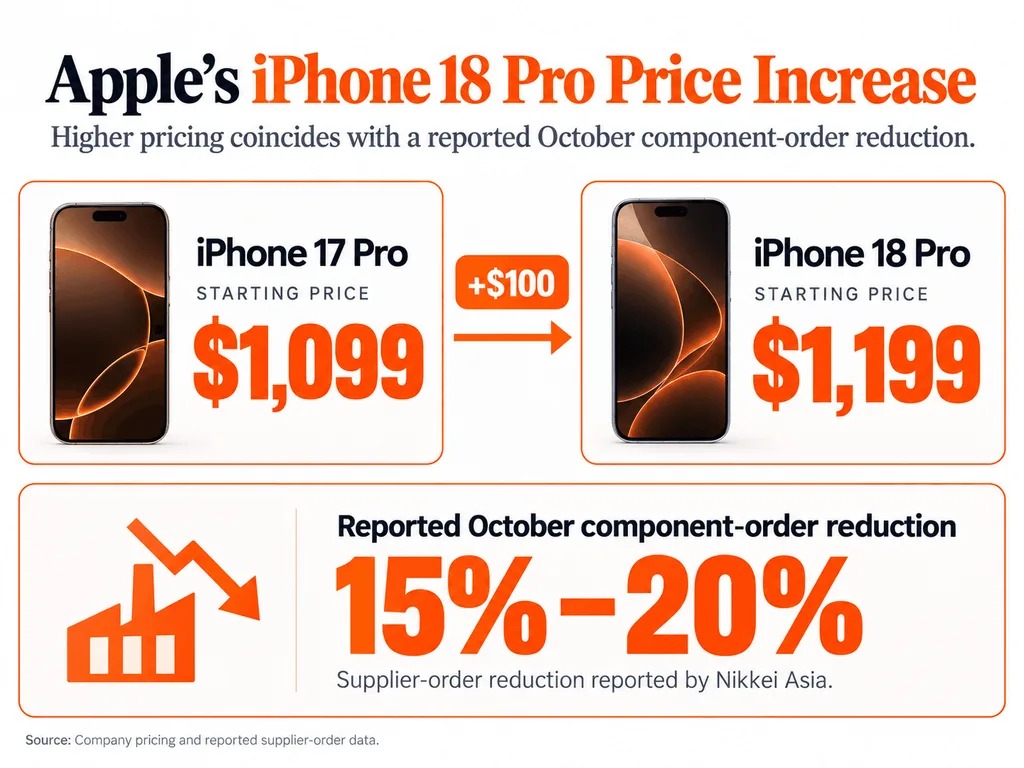
According to a survey by Nikkei Asia, Apple has asked suppliers to reduce the production of components in October, with some orders being reduced by 15% to 20% from the initial demand.
This unexpected pressure highlights an unusual consequence of the artificial intelligence boom: the spending on data centers, which drives semiconductor profit growth, is making consumer electronics more expensive.
Chip shortage drives up prices; Apple cuts iPhone by 18 Pro orders
In September, Apple launched the iPhone 18, Pro, and Pro Max, with starting prices of $1,199 and $1,299 respectively.
The prices of both models are $100 higher than those of their predecessors, partly due to the increased costs of memory and storage.
With the accelerating demand for high-performance chips by the AI infrastructure, price increases have also followed.
Earlier this year, after warning that memory costs were becoming increasingly unsustainable, Apple also raised the prices of several MacBook and iPad models.
However, the reduction in components mentioned in the reports does not necessarily mean that the sales volume of the iPhone finished products will decline by the same proportion.
AI Memory shortages are becoming a problem for Apple
The AI data center requires a massive amount of advanced memory, competing with smartphones and computers for semiconductor production capacity.
This surge in demand has already changed the economic situation of storage chip manufacturers.
Samsung recently estimated its quarterly operating profit to be close to $80 billion, benefiting from the same AI memory boom, which is now compressing Apple's cost margins.
At the same time, TrendForce estimates that the component costs of iPhone 18 Pro may have increased by about 38% compared to the previous generation.
What does this mean for Apple's stock price?
Relevant news about production cuts has raised questions from the outside world: Can Apple's high-end pricing strategy be maintained in the face of ongoing inflation in components?
Apple has also faced supply chain pressures before, but its revenue has continued to grow despite that.