












U.S. President Donald Trump, as previously promised, announced the establishment of a new "super intelligence" task force, stating that the task force will be led by Director of National Intelligence Jay Clayton and other members of the government.
On Sunday morning, Trump posted on his social media platform Truth Social stating: "The task of the Super Intelligence Working Group is to coordinate the efforts of the federal government to ensure that the United States continues to lead the world in the field of super intelligence. Many believe that super intelligence is more important than the Industrial Revolution and the Internet; it will protect the interests of all Americans and improve their lives."
As early as September, regarding the debates surrounding artificial intelligence security – which Trump largely dismissed as a scam orchestrated by “radical left-wing Democrats” – he stated that despite this, he would still establish a AI working group and appoint a AI “tsar” (“only accepting applications from highly intelligent individuals!”).
Thereafter, Trump signed an executive order attempting to rename AI as "Super Intelligence." This designation also seems to have been accepted by the tech executives who gathered at the White House this week to sign a non-binding security commitment, despite some bumps in the process. (There was also a rather conspicuous spelling error in that commitment.)
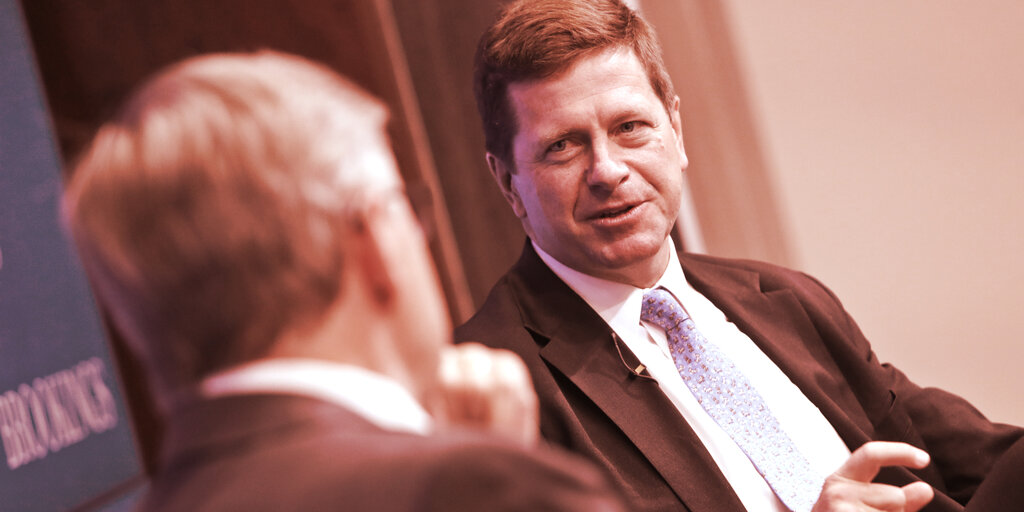
Therefore, it is not surprising that Trump's new working group is named after this new brand. The Wall Street Journal reported that Clayton will serve as the chair of the Super Intelligence Working Group, which is essentially equivalent to the new AI / SI tsar; Andrew Ferguson, the chairman of the Federal Trade Commission, Emil Michael, the deputy secretary for research and development at the Department of War, and Scott Cooper, the director of the Office of Personnel Management, will serve as vice chairs.
It is reported that the working group will have 120 days to prepare a report on the risks and opportunities brought about by artificial intelligence. Clayton has previously stated that it would be irresponsible for the United States to "back off" at a time when countries such as China are advancing in the development of AI; he expressed a similar view in an interview with The Wall Street Journal, insisting that one of the greatest risks is "not being the first."
It is reported that the charter of this working group states that it will "develop plans to address social threats empowered by superintelligence, while preventing over-regulation and regulatory capture from stifling innovation and competition."