Anthropic stated that the yet-to-be-released Claude Mythos Preview model has yielded two new cryptanalysis results, one of which points to the signature scheme HAWK, still in the post-quantum cryptography race at the National Institute of Standards and Technology (NIST). For the crypto industry, this type of research primarily impacts the choice of future on-chain signature schemes, rather than the immediate security of existing networks like Bitcoin.
HAWK attack costs have dropped significantly.
HAWK is a post-quantum digital signature scheme aimed at continuing to be used for authentication and transaction signing in future quantum computing environments. Anthropic claims that the model finds a previously untapped symmetry in the mathematical structure of HAWK, reducing the cost of recovering the private key from 2^64 operations to 2^38 operations with minimal parameters.
According to the company, this means the amount of work required to launch an attack would decrease by approximately 67 million times. The solution to this problem is to roughly double the key size of HAWK, but this would weaken the small key and efficiency advantages that the scheme originally relied on.
This is particularly sensitive in blockchain scenarios. Signature size directly occupies block space, which in turn affects transaction fees and throughput. If public blockchains evaluate quantum-resistant signature alternatives in the future, signature size and performance are usually key metrics.
Anthropic also emphasized that HAWK is not currently deployed in actual systems, and mainstream networks such as Bitcoin do not use this solution, so this result does not affect the security of existing on-chain assets.
The results of 7 rounds of AES were advanced.
The second result concerns AES. AES is a symmetric encryption algorithm widely used in HTTPS, hard drive encryption, and transaction platform back-end systems. Anthropic is not discussing the full 10 rounds of AES-128, but rather a 7-round research version.
The company stated that Claude proposed a new attack strategy under constrained conditions, further advancing the best results achieved by the academic community in 2013, with a speed increase of approximately 200 to 800 times. The paper calls this method "Möbius Bridge".
However, this result remains at the research level and does not mean that AES deployed in reality has been broken. The report mentions that in tests of fully strong cryptography, the performance of each model is still limited; faced with a fully strong cryptosystem for which no publicly known solution has been found, all models scored less than 9%.
Verification takes longer
Anthropic stated that both results were communicated to the algorithm authors before being made public, and that the US government and industry partners were consulted. The findings of HAWK were also disclosed in coordination with NIST.
The company stated that the API cost for a single study is approximately $100,000, while the manual verification of AES results took hundreds of hours. The paper's authors also stated frankly in the paper that most mathematical discoveries were made with AI assistance, shifting the main work of human researchers to guiding, organizing, and verifying.
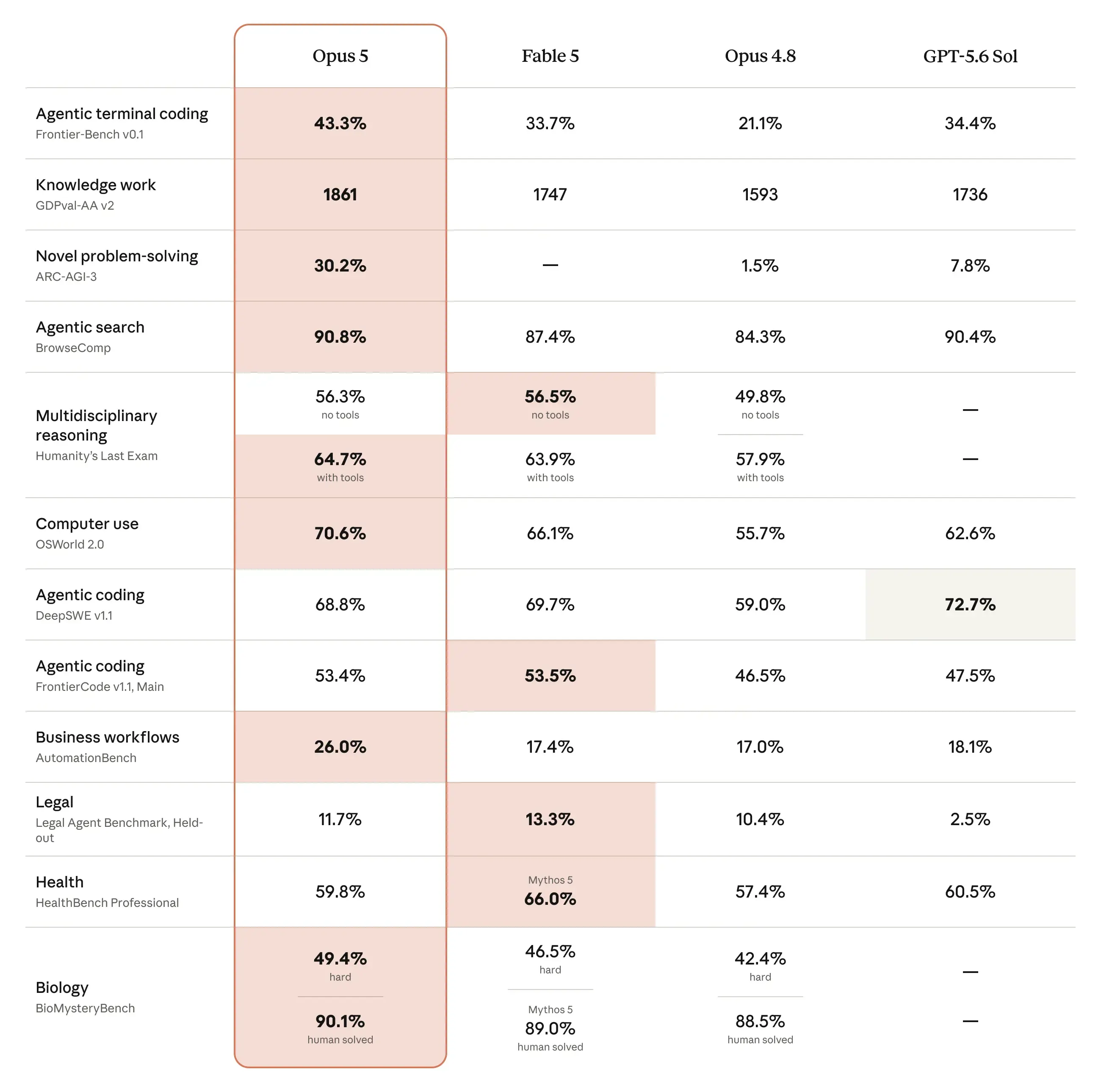
Anthropic also released a test suite called CryptanalysisBench, which includes 191 cryptanalysis tasks to measure whether the model can submit runnable attack scripts. The company disclosed that Mythos 5 achieved an 85.7% pass rate on tasks with known solutions.
This means that AI's role in cryptography is extending beyond assisting coding and vulnerability screening to include more intensive algorithm research. For the crypto industry, the more direct impact is not that existing systems have become ineffective, but rather that the screening and verification of future quantum-resistant solutions may be accelerated.