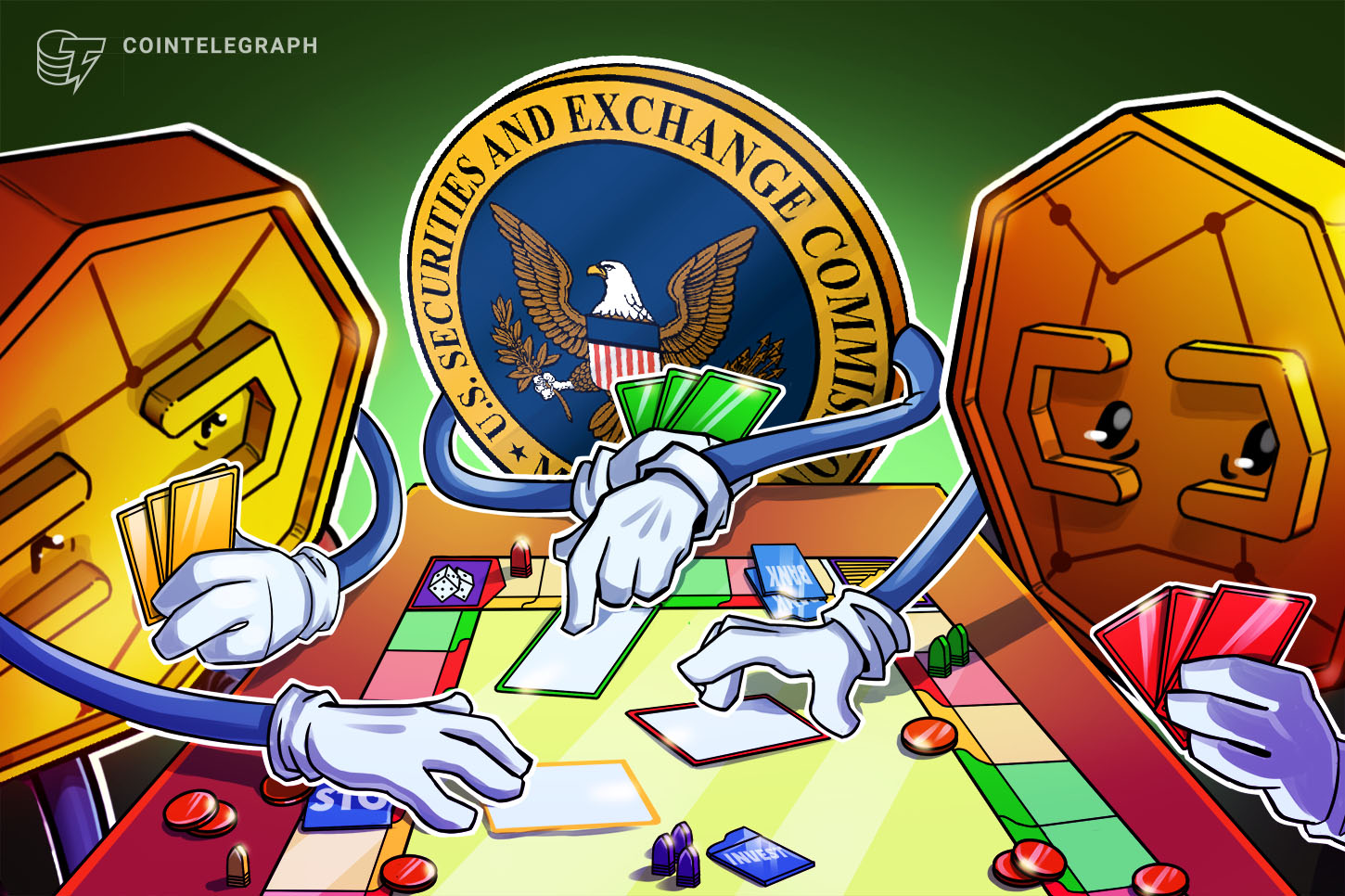


U.S. Senators Elizabeth Warren and Chris Van Hollen, among others, are urging the U.S. Securities and Exchange Commission (SEC) to withdraw a proposal that would allow eligible crypto projects to raise funds from U.S. investors without registering their offerings, as well as to revoke exemptions for tokenized stock platforms.
Two Democratic senators wrote to SEC Chairman Paul Atkins on Tuesday, stating that the organization has exceeded its statutory authority in both of these measures, and that such practices will expose investors to risk.
They stated: "Together, these two letters express concerns about SEC's attempt to carve out special treatment for crypto assets and tokenized securities at the expense of investor protection and market integrity."
Both of these SEC measures have received support from the crypto industry, as at the time they were introduced, the advancement of the CLARITY legislation in Congress was hindered. Proposals for regulating crypto assets were first put forward in August, when this milestone crypto legislation came to a standstill; whereas the exemption for tokenized stocks was introduced in September, just two days after the CLARITY legislation failed to gain the 60 votes required for progress.
Senators warn of the "shadow stock market"
These letters also coincide with another time point: just the day before, OKXICE – a joint venture established by the crypto exchange OKX and Intercontinental Exchange (Intercontinental Exchange), the parent company of the New York Stock Exchange – launched a 24-hour trading venue for tokenized U.S. securities, exempt from certain regulations, on Monday.
Tokenized stock exemptions allow eligible platforms to provide blockchain-based trading of tokenized U.S. stocks without registering as exchanges.
The other four entities listed in SEC that intend to use this exemption include TSV LLC (which began operations in early November), Kephas Corporation, d/b/a Perpetuals.com, Formation Securities LLC, and Fairmint TSV LLC.
Van Hollen, Warren, and two other senators urged SEC to revoke the order, warning that it could create a "shadow stock market" that is not protected by regulations.
They said, "We are particularly concerned that this command exempts TSV from the basic registration requirements."
They also believe that this directive allows third parties to tokenize the issuer's securities without any objection from the issuer within 30 days, imposing an 'unreasonable burden' on listed companies.
They stated: "This actually establishes an opt-out mechanism. Companies must continuously monitor tokenization activities and respond to potential large numbers of requests from different platforms in order to prevent unauthorized trading of tokenized versions of their stocks."
Relevant report: Trump's nominee, Johnson, who supports the establishment of formal rules for tokenized stock trading, is backed by SEC
Senators also believe that these trading venues are exempt from the rule that requires them to display the best prices to traders. “These protections are the foundation of the fairness and efficiency of our stock market,” they said.
Atkins previously described this five-year exemption as a transitional measure aimed at allowing certain U.S. stocks to be traded on the blockchain, while SEC is considering longer-term rules.
Senators target the fundraising exemption proposed by SEC
In another separate letter, Warren, Van Horren, and Senator Tina Smith urged SEC to withdraw its proposal on "Regulating Crypto Assets," stating that the proposal was merely intended to help crypto assets "escape" from SEC's regulatory framework.
This proposal will allow eligible crypto projects to raise up to $5 million within four years through startup exemptions, or up to $75 million within 12 months under another fundraising exemption, without the need to register with SEC for these offerings.
Senators believe that these exemptions will allow crypto issuers to raise funds without prior review by SEC, especially the exemption for startups of up to $5 million, which will enable early-stage projects to raise capital without providing financial statements.
"The proposal defends exemptions for startups based on these ideas originating from startups, with the only limitation being an upper limit of $5 million in issuance. However, this exemption does not truly protect investors—it simply means that SEC is willing to allow investors to be deceived in increments of $5 million," they said.
SEC Previously indicated that these exemptions would require issuers to provide written disclosures to investors, and the federal anti-fraud and anti-manipulation rules would still apply.
Cointelegraph has contacted SEC for comments on this matter.
Magazine: Can the pro-encryption rules of SEC and CFTC be overturned? Legal perspective