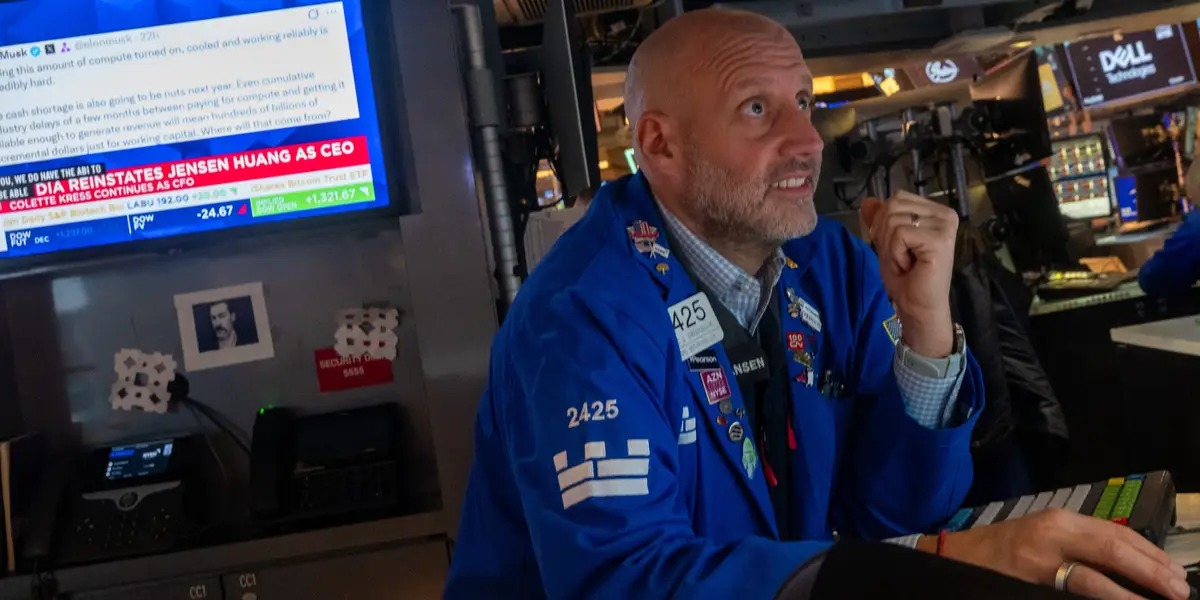
After several weeks of intense volatility, investors are returning to artificial intelligence trading. Tech stocks in the Asia-Pacific region and U.S. stock futures are both rising, indicating a recovery in market risk appetite. Whether this rebound can continue depends on whether market concerns regarding the investment costs and returns of AI can truly subside.
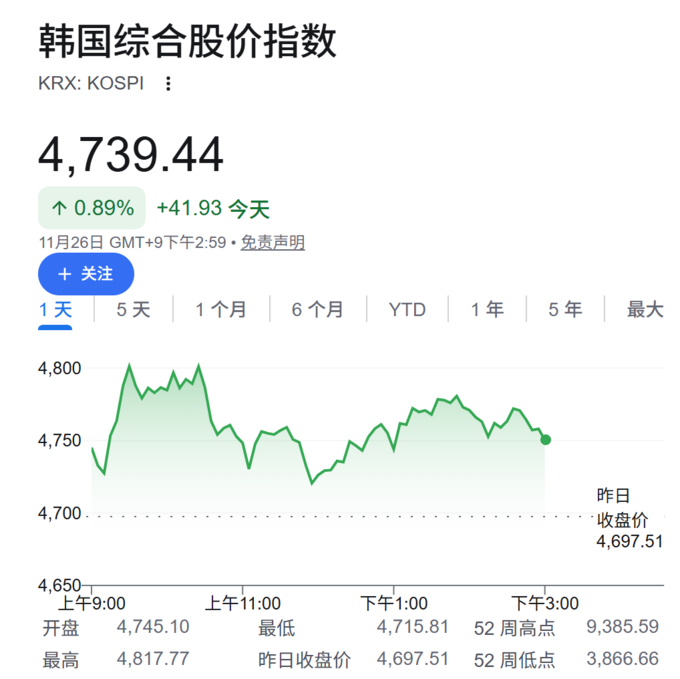
On the 26th, South Korea's composite stock price index rose by 0.89%. The Nikkei average index increased by 1.13%. U.S. stocks were closed on Thanksgiving. Futures of the European Stoxx 50 index rose by 2.2%, indicating that European stocks are expected to open with a gain of over 2%. The MSCI Asia-Pacific index rose by 1.5%, poised to record its second consecutive daily increase in 11 trading days, with technology stocks performing ahead of the pack.
In terms of individual stocks, KaiXia soared 14% in the Tokyo market after announcing a collaboration with NVIDIA to explore GPU memory capacity expansion; South Korean chip giants also saw similar gains. Japan's TSE index rose by 0.6%, and Australia's S&P/ ASX 200 index increased by 0.9%.
This round of rebound carried on from the buying activity at the end of trading on Wednesday, before the U.S. stock market holiday. On that day, the Nasdaq 100 index fell by 20% from its peak during the session, reaching the threshold of a bear market, but then managed to recover most of that loss. On Thursday, the U.S. market was closed due to Thanksgiving, and global spot trading of U.S. Treasury bonds was suspended. The previous day, during the New York trading session, the yield on 10-year U.S. Treasury bonds dropped by 8 basis points to 4.85%.
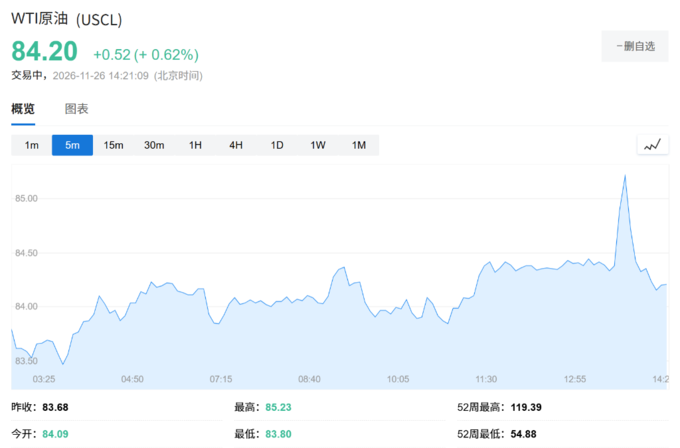
The South Korean Composite Stock Price Index rose by 0.89%. The Nikkei Average Index increased by 1.13%. The yield on 30-year Japanese government bonds fell by 5 basis points to 3.90%, while the yield on 10-year bonds rose by 3 basis points to 2.650%. The yield on 10-year Australian bonds remained relatively stable at 4.82%. In the foreign exchange market, the US dollar spot index was virtually unchanged, the euro declined by 0.1% to $1.0960, and the Japanese yen remained stable at 159.18. Brent crude oil rose by 0.7% to $95.30 per barrel, following a cumulative increase of nearly 6% in the previous two trading days; West Texas Intermediate crude oil rose by 0.8% to $84.39 per barrel. Spot gold rose by 0.2% to $3,594.29 per ounce.
The turmoil has not yet subsided, but the faith of AI is still being rebuilt.
This rebound comes after a dismal November, sending a positive signal that investors are willing to return to the stock market. Since the U.S. mid-term elections, the market has been experiencing severe fluctuations, and the leadership crisis at NVIDIA has exacerbated the turmoil, pushing major stock indices into a correction zone. Questions regarding the construction costs and potential returns surrounding AI still remain.
"We have indeed seen some rebound," said Mia Mai, a partner from Hong Kong's HashKey Capital, "but we would not yet call it a full recovery, mainly because the renewed confidence in AI has not yet arrived. People are still waiting and seeing."
After the Bank of Korea raised interest rates and upward revised its economic growth forecast for 2027, the yield on South Korea's 3-year government bonds edged higher.
Commodities continue to rise: Brent crude oil rose 0.7% to $95.30 per barrel, with a cumulative increase of nearly 6% in the previous two trading days; West Texas Intermediate crude oil rose 0.8% to $84.39 per barrel.
Copper prices rebounded by more than 3% from 11-month lows, following the trend of tech stocks, but there are still doubts in the market regarding the sustainability of the AI craze and the demand for related industrial metals. Spot gold rose 0.2% to $3,594.29 per ounce.
Bitcoin rose 1.2% to $60,893.86, and Ethereum rose 1% to $1,700.45.
According to Bloomberg, the investor Michael Burry who became famous for short-selling the U.S. mortgage market in 2008 has now exceeded his short positions with long stock holdings after closing out his put options on the Nasdaq 100 index. Meanwhile, U.S. chip restrictions are hindering financing for billions of dollars' worth of AI data centers in Asia.
The chief economist of BMI, under Fitch Solutions, Cedric Chehab, stated that increased stock market volatility and steadily widening global credit spreads are beginning to affect growth and interest rate expectations. He pointed out that compared to two weeks ago, the market now expects the Federal Reserve to raise interest rates about one less time by next September.
"A small glimmer of hope on the front line is that, although widening credit spreads and a weak stock market indicate tightening financial conditions, the decline in bond yields and the relative stability of the US dollar index over the past one or two days help to limit some of the tightening effects," said Chehab.