

With the possibility of the United States raising tariffs and personal consumption expenditure (PCE) inflation data exceeding expectations, Bitcoin, cryptocurrencies, and the stock market came under pressure on Wednesday.
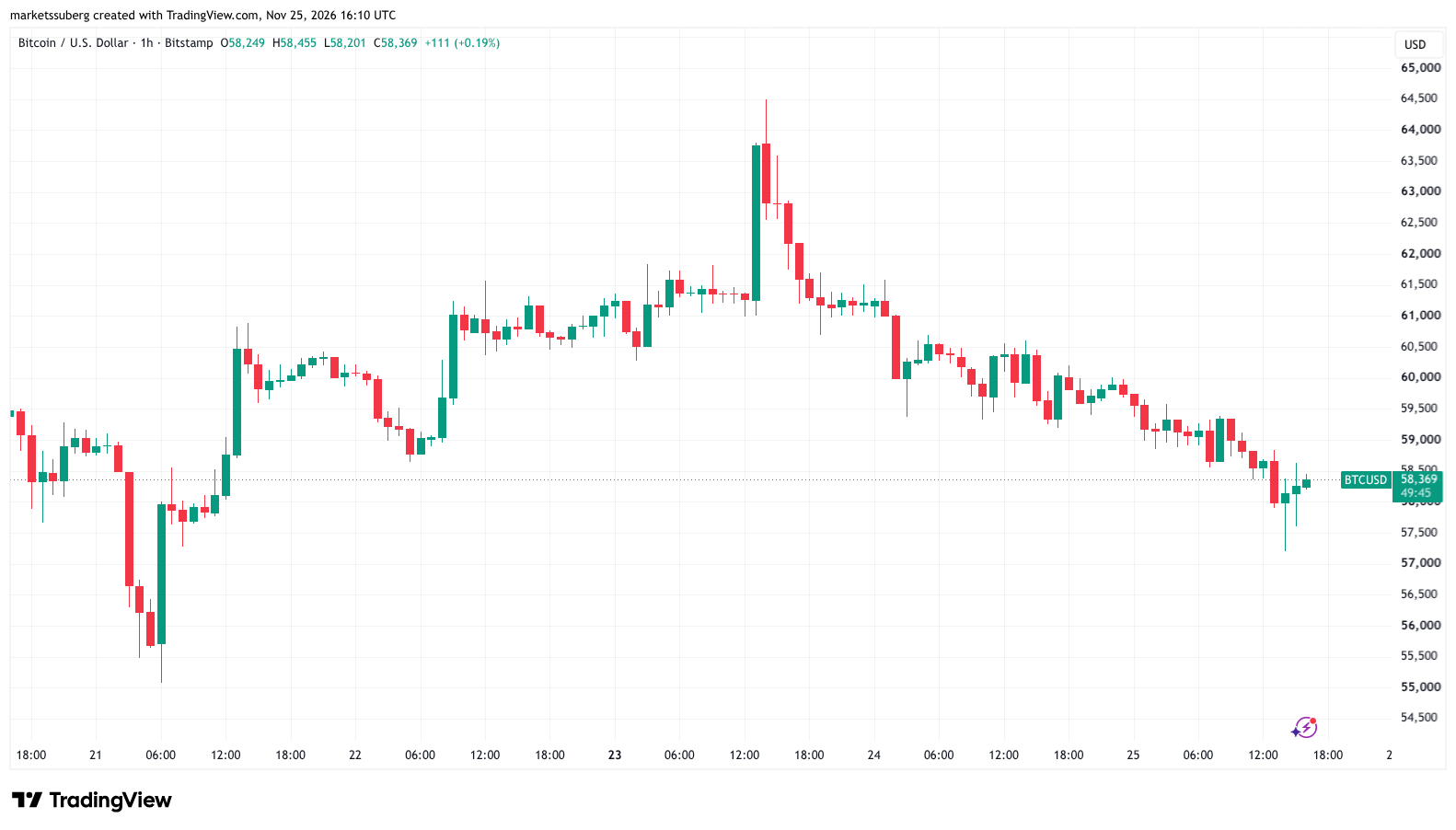
After U.S. inflation data exceeded expectations, Bitcoin fell to $57,000 on Wednesday.
Key points:
- According to Bitstamp data, Bitcoin ( BTC ) fell to a low of $57,209 during the session, with a maximum intraday decline of 4.2%; within the past 24 hours, $512 million in crypto positions were liquidated.
- In October, the core personal consumption expenditure ( PCE ) index rose by 3.3% year-on-year, higher than the market's expectation of 3.2%.
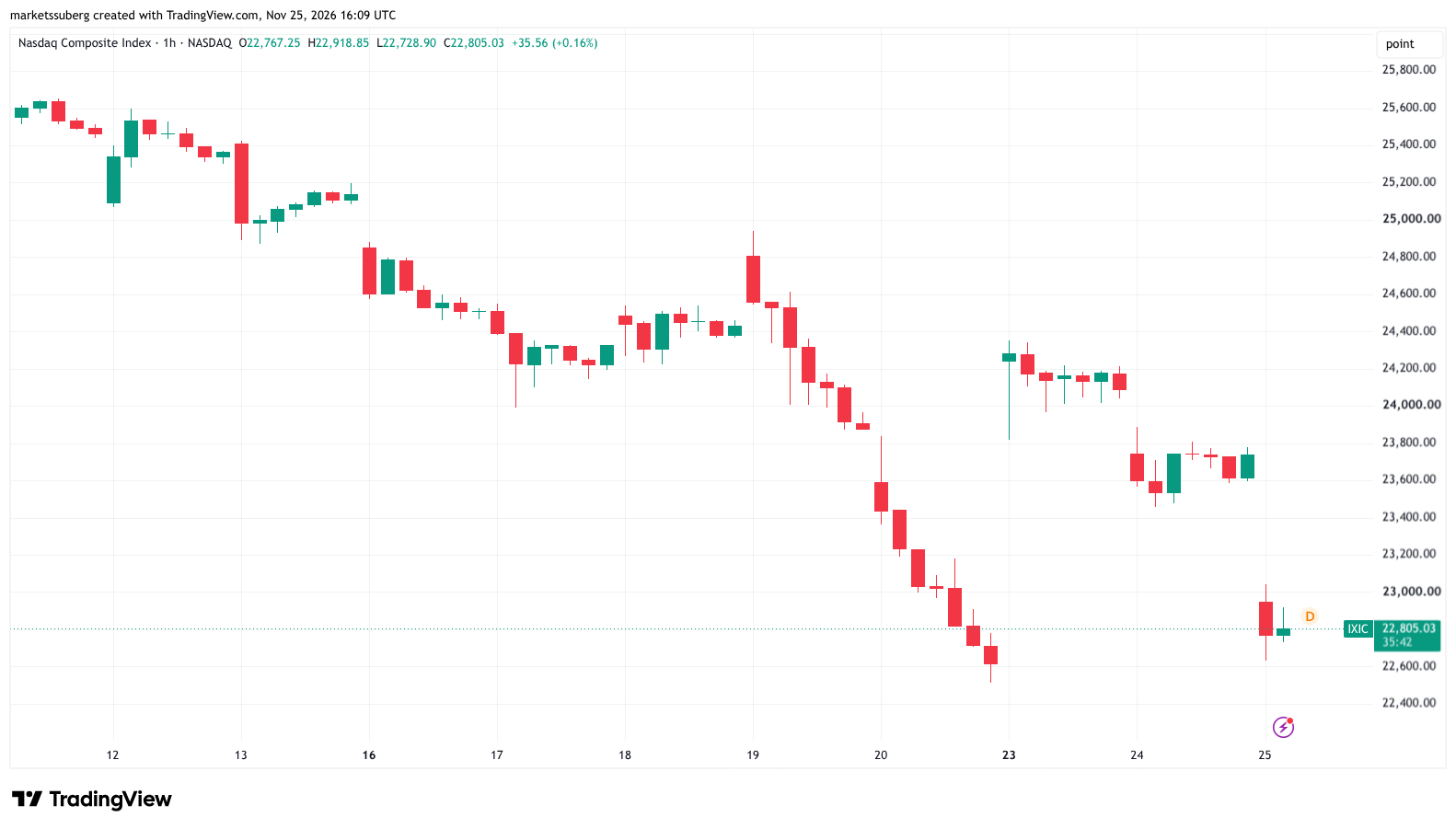
- The Nasdaq Composite Index fell 4.2% to 22,632 points, as traders reacted to the overheated data on U.S. PCE and the threat of a new round of trade tariffs.
Under the pressure of tariffs and inflation, Bitcoin tumbles along with the stock market.
TradingView Data shows that BTC / USD once fell to $57,209 on Bitstamp, with a daily decline of up to 4.2%.
U.S. stock markets opened lower as traders tried to digest relatively high inflation data as well as the possibility of the government raising international trade tariffs. At 4:30 Beijing time (p.m), the S&P 500 index fell by 2.7%, and the Nasdaq Composite Index, which has a higher weight of technology stocks, dropped by 4.2%.
Nasdaq Composite Index one-hour chart. Source: Cointelegraph / TradingView
U.S. Trade Representative Jamieson Greer referred to the proposed tariffs as "supplementary" in an interview with CNBC, with the relevant tax rates typically ranging between 15% and 20%.
He said, "Overall, this will actually only result in an additional few percentage points at most." He also noted that it will take several months for these increases to take real effect.
Data from the Bureau of Economic Analysis shows that in October, personal consumption expenditure ( PCE ) price index rose 3.8% year-on-year, the second-highest reading since April 2023. The core PCE , which excludes food and energy prices, rose 3.3% year-on-year, higher than the expected 3.2%.
U.S. PCE index changes. Source: Bureau of Economic Analysis
Higher inflation readings could put pressure on cryptocurrencies and risk assets, as if the Federal Reserve were to tighten policy as a result, liquidity and the inflow of available funds might decrease. Previously, Cointelegraph reported that markets were already expecting the Federal Reserve to raise interest rates by 25 basis points at its December meeting.
The expiration of options on Friday is seen as further increasing pressure on Bitcoin.
As Bitcoin declines, the scale of liquidations in the crypto market remains high. CoinGlass data shows that the total amount of liquidations over the past 24 hours reached 512 million US dollars, of which long positions accounted for 416 million US dollars.
Crypted settlement and BTC / USD charts. Source: CoinGlass
"I still believe that the main сценарио io is for a relieving rebound within the next 1 to 3 weeks, with a target range of $68,000 to $72,000," he wrote on X.
Since the beginning of September, the correlation between Bitcoin and the Nasdaq Composite Index has remained positive, measuring at 0.73 on Wednesday.
BTC / USD Daily chart correlation with the NASDAQ Composite Index. Source: Cointelegraph / TradingView