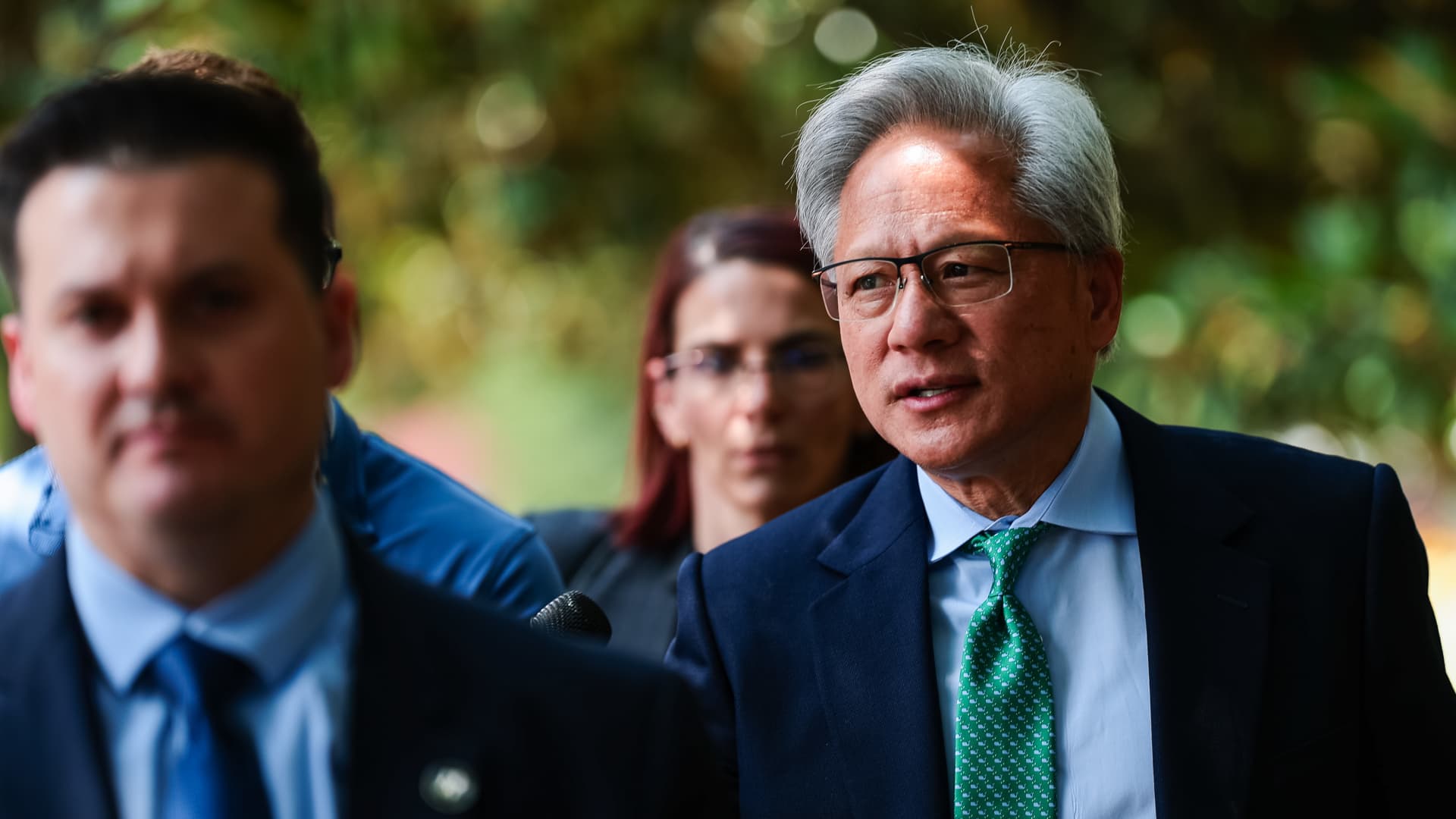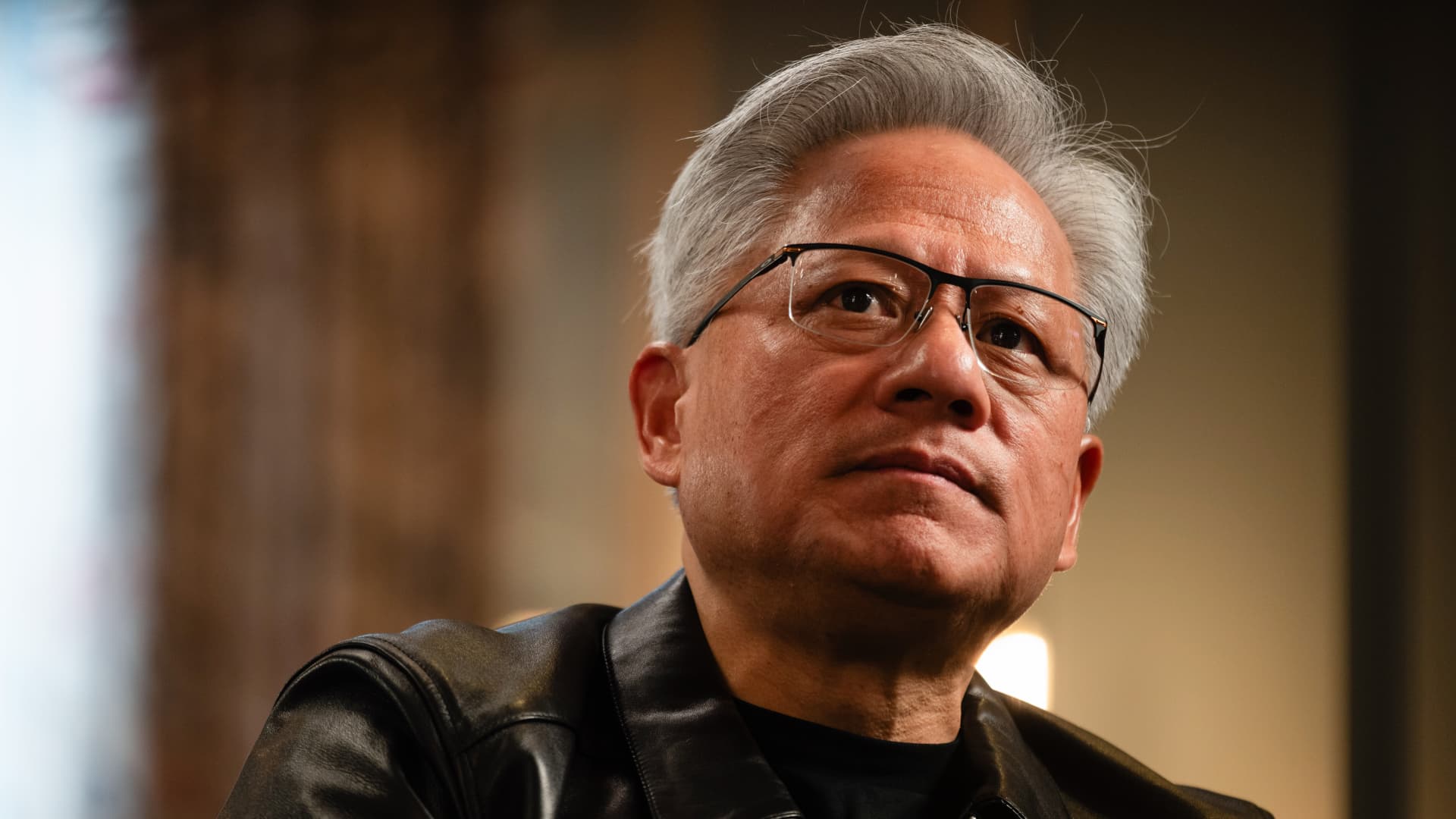


Jensen Huang has once again taken on the role of CEO at NVIDIA. Now, his task is not only to promote the company's vision for artificial intelligence but also to defend himself in Washington.
As NVIDIA employees celebrated the return of this leader to the company headquarters, Jensen Huang said to the gathered crowd, "On my second term as CEO, I will do even better."
In order to address the issues surrounding NVIDIA and the broader AI industry that have been exposed due to Jensen Huang's resignation, Jensen Huang indeed needs to become a "better CEO". These challenges include an increasing number of investigations and hearings from Congress, regulatory agencies, and state officials, as well as technical and competitive questions regarding how much longer NVIDIA's currently dominant graphics processors will be able to remain ahead.
"Nothing will prevent him from continuing to do his job," said Katten, the chairman and former federal prosecutor Gil Soffer. However, Soffer stated that the investigation requires a significant amount of preparatory time. "You can't just walk in there without any preparation at all."
At the NVIDIA GTC conference to be held in Washington next week, the company will attempt to convince customers, partners, and suppliers that it is shaping the future of AI. Meanwhile, legislators will pressure this recently reinstated CEO to inquire about what he knows, and when he learned it, regarding the matter of Megaspeed executive Alice Huang.
Before the scandal, Jensen Huang was scheduled to deliver a keynote speech on December 1st at GTC in Washington, discussing NVIDIA's new products and the development direction of the AI ecosystem. In the past, this two-hour speech has always been a highlight of the conference, attracting a large number of "Jensanity" fans driven by Jensen Huang.
Associate Professor at Babson College, Peter Cohan, stated: "People would hope to see that everything continues as usual, and for NVIDIA's shareholders, that would best mean that Jensen Huang will announce some exciting new products."
Currently, Ian Buck, the vice president in charge of hyperscale and high-performance computing at NVIDIA, is temporarily taking over this role. A NVIDIA spokesperson refused to answer several questions regarding whether Jensen Huang would attend company events.
On the same day, Jensen Huang also plans to have closed-door discussions with three committees of the U.S. House of Representatives: the Foreign Relations Committee, the Select Committee on Strategic Competition between the United States and the Communist Party of China, and the Select Committee on Intelligence. The content of these interviews will be recorded in writing.
In a joint statement, the chairmen of these committees stated: "NVIDIA's brief internal investigation and the reinstatement of Jensen Huang do not eliminate the national security threats and questions that must be addressed." They also mentioned that Jensen Huang has confirmed his attendance at the recorded interview on December 1st.
The interview on Tuesday was just the beginning of this series of investigations.
On December 3rd, as the NVIDIA conference is coming to an end, the U.S. Senate Banking Committee will hold a hearing titled "Protecting America's Advantages in the AI Field: Supervising U.S. Export Controls." The chairman of the committee, Republican Senator Tim Scott from South Carolina, stated that Jensen Huang will be the sole witness testifying publicly.
The Attorney General of California is also investigating Jensen Huang's related statements, and politicians from the Senate Committee on Finance, Intelligence, and Foreign Relations have raised questions regarding this scandal. On the House of Representatives side, in addition to the aforementioned three committees, the Committee on Energy and Commerce has also requested a briefing from NVIDIA on the company's situation. This does not include the investigation by the United States Department of Justice, nor the investigation that is reportedly being conducted by the U.S. Securities and Exchange Commission.
In addition, Jensen Huang must also cooperate with an investigation led by the board of directors, which is being conducted by the law firm Wachtell Lipton.
Competition
At the same time, NVIDIA also needs Jensen Huang to assure investors and the broader AI ecosystem that the company is developing new products with very strong demand. Investors have previously stated that although NVIDIA has completed the design for its products for the next two years, they are concerned that without Jensen Huang, the chip manufacturer's pace of innovation will slow down.
NVIDIA is facing new competition from its largest customers developing their own chips, including OpenAI, Anthropic, Google, Amazon, and Microsoft. These companies have been working on developing their own chips to reduce their dependence on NVIDIA and to control AI costs.
Forrester, Vice President of Group Research, Stephanie Balaouras stated: "There were already concerns that we were spending too much in this area. One of the cost management strategies is to match the workload requirements with the appropriate infrastructure. Not everything needs to be placed on NVIDIA GPU."
Many people in the industry believe that Jensen Huang is one of the most staunch defenders of "open-source" AI; such AI can be used for commercial purposes for free; in contrast, "cutting-edge models" from companies like Anthropic and OpenAI are charged to users according to token.
NVIDIA has also been making significant investments, developing its own open-source model named Nemotron. Currently, NVIDIA's Vice President Kari Briski plans to showcase new Nemotron technologies at GTC.
Investigation
On Monday, NVIDIA's board of directors stated that "high-level" officials from the U.S. government had provided opinions regarding the potential national security risks that Jensen Huang might pose. U.S. President Donald Trump mentioned that he played a key role in persuading NVIDIA's directors to reinstate Jensen Huang and claimed that he had given assurances to the board of directors.
Trump's assistance may attract further scrutiny from Democratic lawmakers; these lawmakers have previously focused their attention on investigating NVIDIA's chip sales.
Democratic Senator Chris Van Hollen said in a conversation with reporters on Monday, "Today's news that Donald Trump played a key role in NVIDIA's rehiring of Jensen Huang is a typical example of political corruption and degeneration at the core of the Trump administration's large-scale technology and AI policies."
As external attention to NVIDIA's sales in China heats up, Republicans have also criticized Jensen Huang's return. Nevertheless, experts say that these investigations may begin to put pressure on NVIDIA CEO.
The senior vice dean of Yale School of Management, Jeff Sonnenfeld, said to CNBC, "How is it possible that he could still do this job?" He mentioned investigations by the Senate, the House of Representatives, and other state-level investigations, not to mention what will happen once Democrats regain control next year.
And Washington's reaction to the Jensen Huang scandal may also begin to affect NVIDIA's sales.
Last week, the US Department of Commerce announced that it would prevent Chinese companies from circumventing export controls by cross-border leasing of NVIDIA chips. On Monday, the Department of Commerce also added Megaspeed to the trade blacklist.
Moreover, it's not just NVIDIA that relies on Jensen Huang to deliver strong performance. The company's investors, customers, partners, and shareholders will also be watching to see if NVIDIA still wishes to remain at the center of the AI ecosystem. Before Jensen Huang was removed from his position, he was responsible for driving NVIDIA's investments in AI startups, selling products to them, and assisting them with infrastructure financing.
NVIDIA's Chief Financial Officer Colette Kress stated last week, during his temporary tenure as CEO, that NVIDIA would "consider very seriously" using its balance sheet to support the AI ecosystem. However, it is still unclear whether Jensen Huang will continue his previous high-profile approach or adopt a more restrained strategy after taking on the role of CEO for the second time.