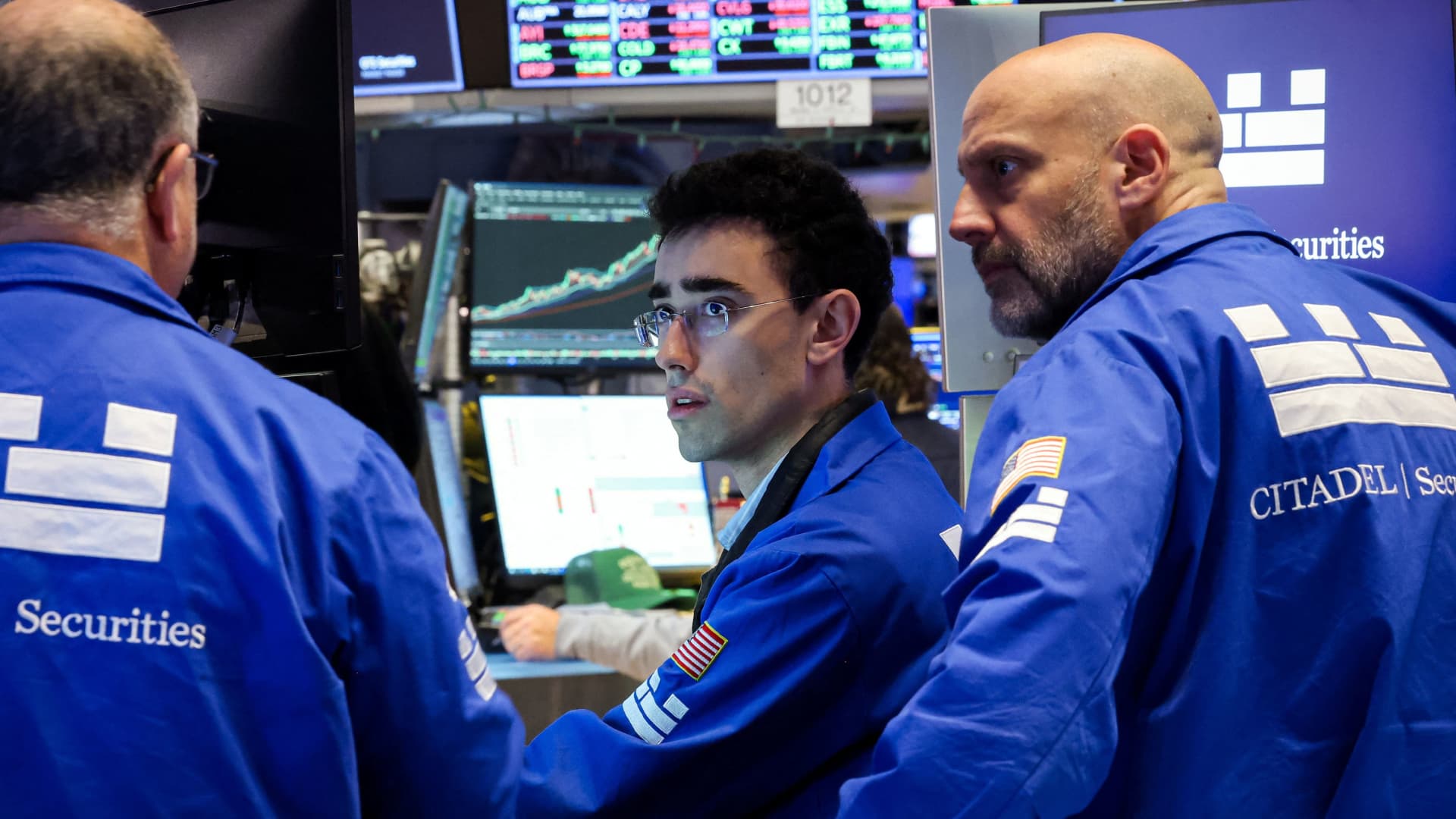
After the market closed on Friday, I asked Claude what to do in the face of a falling stock market. The advice he gave was surprisingly useful: avoid panic selling and instead look for opportunities.
VIX once touched 40, which perhaps could provide such an opportunity. Specifically, a higher VIX, that is, a higher option premium, indicates an increase in panic sentiment, but it also creates opportunities to sell at a higher premium on some stocks with high premiums, such as Amazon.
Amazon's cloud business has seen growth rates that are among the fastest in the past five years. The company's management reported that in the third quarter, AWS revenue increased by 39.3% year-over-year, with backlogs reaching $578 billion. Operating cash flow over the past 12 months grew by 29% to $168.3 billion. However, infrastructure investments have also accelerated, resulting in negative free cash flow of over $42 billion. The tug-of-war between this accelerated growth and the costs required to support it may cause the stock to remain within a narrow range in the coming weeks. Compared to the nearly 19% decline in the Nasdaq Composite Index, Amazon's stock price has only fallen by 14% from its recent high, performing relatively well.
Time and Outlook
- AMZN is currently near the midpoint of this year's second-half trading range. The 235-dollar put option and the 285-dollar call option are respectively close to the highs and lows of the second half of 2026.
- Calculated at a premium of $5.90 per contract, the break-even points at expiration extend to $229.10 and $290.90 respectively, which are close to the low point in July and above the high point in August.
- The next financial report is expected to be released in early February next year, which is much later than the December deadline. However, holiday sales updates may still affect the stock price.
The logic of range oscillation
The demand for AWS has supported the lower boundary of the range. The backlog of orders provides a basis for Amazon to continue expanding, although investors will scrutinize the cash costs associated with these expansions. Cash expenditures may curb the upward revaluation of the stock price.
The next round of price increases may require seeing that new production capacity can bring attractive returns on such a scale, but in the coming months, there may not be sufficient evidence to support this.
Option Trading
Selling the AMZN 235/285 straddle option that expires on December 18, 2026, with a reference premium of $5.90 per share.
- Sell a put option on December 18th at $235.
- Sell a long position on a December 18th call option at $285.
Maximum profit – if AMZN expires between $235 and $285, each straddle combination can profit $590 before deducting fees.
Expiry break-even points: $229.10 and $290.90.
The maximum risk – the risk of not covering the call option is unlimited – but this trade can be understood as follows: if one is forced to go short at a net price higher than $290, the risk is equivalent to a premium of nearly 13% over today’s closing price. If AMZN falls to zero, the downside loss for a single straddle combination would reach $22,910. The premium for this option is roughly equivalent to achieving a 2.3% return within four weeks, with a reference stock price of $260, which when simply annualized is close to 30%. This comparison uses the stock price as the denominator. The actual capital return depends on the margin required as well as the costs of closing or settling the trade.
It's never easy to buy into a bear market that NASDAQ has just entered. But such opportunities don't come often. What would you do?
Disclosure:Tidal holds or owns all the securities mentioned in this text.
All views expressed by the contributor CNBC Pro represent solely their personal opinions and do not reflect the views of CNBC or its parent companies or affiliated companies. These opinions may have previously been published through television, radio, the internet, or other media. This article is provided merely for editorial purposes and as a reference for information only. It does not constitute financial, investment, tax, or legal advice, nor does it recommend the purchase of any securities or other financial assets. The content of this article is of a general nature and does not take into account any individual's unique circumstances. Before making any financial decisions, you should strongly consider seeking advice from your own financial or investment advisor.
This content is for informational purposes only and does not constitute financial, investment, tax, or legal advice, nor is it a recommendation to purchase any securities or other financial assets. The content is of a general nature and does not reflect the unique personal circumstances of any individual. The information provided may not be suitable for your specific situation. Before making any financial decisions, you should strongly consider seeking advice from your own financial or investment advisor.