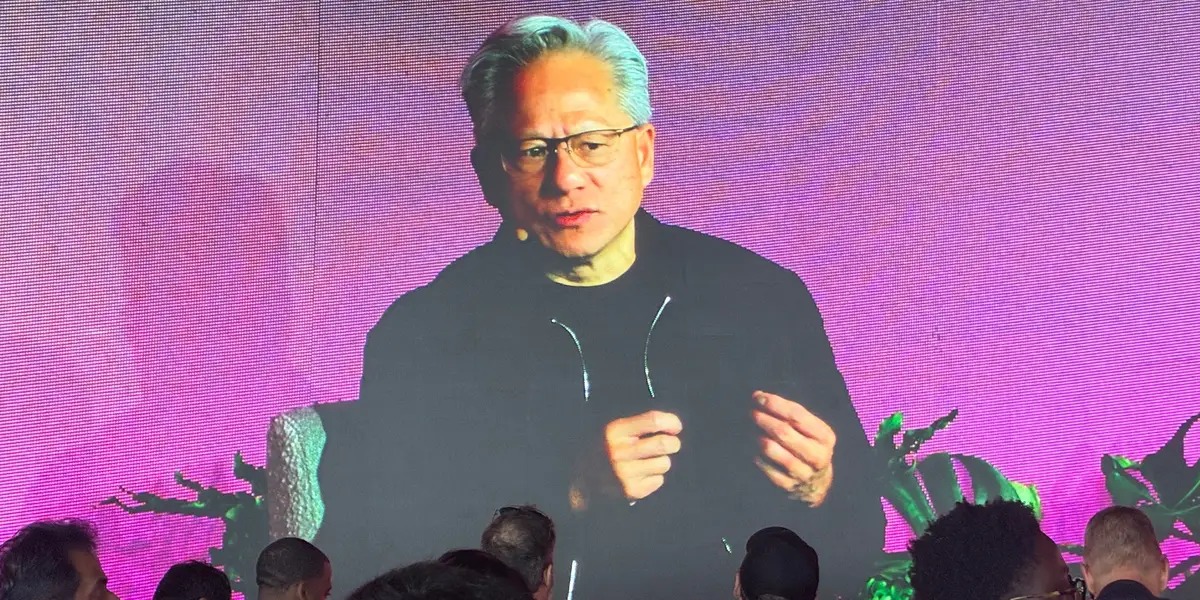
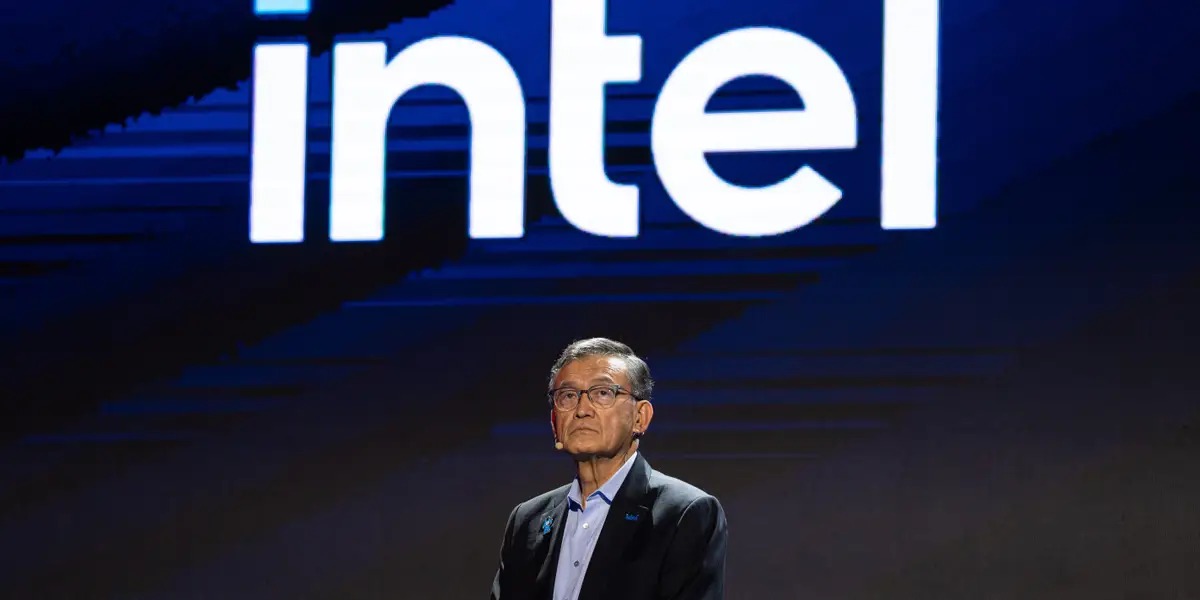
On November 17th local time, NVIDIA ( NVDA.O ) released its financial report for the third quarter of fiscal year 2027. This is NVIDIA's first financial report since Jensen Huang resigned from his position on November 12th ( CEO ). The public's attention is not only focused on the latest quarterly financial data but also on the possibility of Jensen Huang's return, as well as the company's direction after the resignation of its leader.
Although Jensen Huang stated on the same day that he was willing to return to his position at CEO, Harvey C. Jones (Chairman of NVIDIA's Board of Directors), said during the financial report conference call that the board does not intend to reinstate him in his CEO role. "This is an unexpected turn of events," said Harvey C. Jones, but the board's actions were prudent.
Judging from the information disclosed in this financial report and that released during the teleconference, NVIDIA is already brewing changes for the "post-Jensen Huang era." One significant change could be that NVIDIA has become more cautious in its approach to supporting new cloud vendors and other ecosystem partners through financing, guarantees, and other means.
Outstanding financial results beyond expectations
Harvey C. Jones revealed the reasons for Jensen Huang's resignation, stating that Jensen Huang voluntarily stepped down from his positions as President, CEO, and on the Board of Directors after it was discovered that his personal behavior did not conform to the company's code of conduct, standards, and cultural norms. The Board of Directors unanimously accepted his resignation. He stated that the Board is taking proactive measures to address the direct consequences faced by the company and is strengthening future supervisory capabilities. The Board hopes to formally CEO a successor as soon as possible, but will not rush to make an appointment until a suitable candidate is found.
Despite management turmoil, NVIDIA still released a financial report showing strong growth after Jensen Huang's resignation.
Financial reports show that in the third quarter, NVIDIA's revenue was $115.8 billion, a year-on-year increase of 103% and a month-on-month increase of 20%, exceeding the company's previous forecasts; GAAP net profit was $65.3 billion, a year-on-year increase of 105% and a month-on-month increase of 9%; GAAP gross margin was 74.8%. Both revenue and net profit exceeded market expectations.
By business segment, in the third quarter, NVIDIA's data center business revenue amounted to 107.6 billion US dollars, a year-on-year increase of 110% and a month-on-month increase of 21%. Within data center business revenue, income from hyperscale cloud service providers was 60.1 billion US dollars, a year-on-year increase of 71%, while income from AI cloud, industrial, and enterprise customers was 47.5 billion US dollars, a year-on-year increase of 195%. In addition, NVIDIA's edge computing business revenue in the third quarter was 8.2 billion US dollars, a year-on-year increase of 42% and a month-on-month increase of 14%.
"Our development momentum is real, and NVIDIA's drive comes from the continuous innovation of our employees. We had a strong start with Vera Rubin, and the roadmap is progressing smoothly. Our ambitions have never been so grand," said Colette Kress ( Colette Kress ), the company's interim CEO.
Collette Kress discussed more details of third-quarter revenue during a teleconference. She stated that since May, the price of token (term) has dropped by about 60%, which has accelerated the demand for the use and calculation of token. As GPU iterations continue, rental prices are rising. According to multi-year agreements, some GPU are being renegotiated at twice the original price. It is expected that the main cutting-edge laboratories will contribute 15% of the data center revenue this fiscal year.
In the third quarter, NVIDIA's revenue from its autonomous AI more than tripled year-over-year. The revenue from physical AI was approximately three times that of the same period last year, and it is currently on track to exceed the goal of $25 billion for the whole year.
NVIDIA projects that the mid-point of its revenue guidance for the fourth quarter is $130 billion, with a fluctuation of plus or minus 3%. The forecast does not assume that data center revenue will come from the Chinese market. NVIDIA expects the gross margin for the fourth quarter to be between 71% and 72%.
Caitie Kress revealed more of the company's forecasts. She stated that NVIDIA has raised its revenue outlook for the fiscal year 2028, expecting revenue to increase by approximately 75% year-over-year, which is higher than the previous estimate of 70%. The forecast takes into account factors such as the readiness of data centers, the intensity and sustainability of customer demand, etc. It is expected that revenue from the enterprise market will more than double in the fiscal year 2028. In addition, agents are driving a high demand for CPU in the market, with demand far exceeding supply; it is anticipated that revenue from NVIDIA CPU will also more than double in the fiscal year 2028. Currently, the backlog of orders from cloud providers has reached 2.5 trillion dollars, whereas just three months ago, this figure was 2 trillion dollars.
Responding to issues during the transition period
After the departure of core executive Jensen Huang, NVIDIA's operational status has come under close attention from analysts.
Collette Kress responded that NVIDIA's most important consideration at the moment is related to its employees, who are of great importance. The company will take good care of its employees during the transition period to ensure that work can be completed. Over the past week, management has been supporting the employees in their work. This is also a time for the company to reflect on its own leadership.
After Jensen Huang's resignation, there were doubts in the market about whether NVIDIA's supply chain stability could be maintained. NVIDIA also responded to these concerns.
In the comments under CFO, NVIDIA disclosed some data: the company's supply chain commitment increased from $279 billion in the previous quarter to $390 billion in this quarter, mainly relating to memory supply purchases over multiple years.
Collette Kress stated that the company is working closely with partners to accelerate the expansion of production capacity for key components, including wafers, substrates, and advanced packaging. Today, the company also announced new agreements with manufacturers such as Samsung Electronics in the areas of substrates and packaging. At the commercial level, NVIDIA continues as usual, maintaining contact with customers, suppliers, and partners who all support NVIDIA 100%. Customers have expressed their support for the business and are helping NVIDIA through these difficult times. On the supply chain side, TSMC is also doing its best to assist NVIDIA. The NVIDIA CPO (optoelectronic co-packaging) roadmap is still on track and will drive the mass production of CPO.
It is worth noting that on November 16th, NVIDIA also published a blog post stating that Deb Shoquist, the company's Vice President of Operations, has been in charge of the world's most complex manufacturing operations for over 20 years. He spends six weeks each year visiting partners in mainland China, Taiwan, South Korea, Vietnam, and the United States. The post also revealed that NVIDIA is working with some partners to build a CPO (optoelectronic integration packaging) supply chain.
In addition to partners, the outside world is particularly concerned about whether NVIDIA will change its previous position within the AI ecosystem. For example, there is speculation about whether NVIDIA might provide funding or guarantees to support some of its partners. Previously, Jensen Huang focused on pushing for NVIDIA to support the AI ecosystem through financing and guarantees. There are market reports that Collette Kress once held a resistant attitude towards NVIDIA's investments in OpenAI and other AI-related companies, and these investments have been questioned by analysts as "circular financing."
From Collette Kress's statement, it seems that NVIDIA will continue to support new cloud vendors ( neocloud ) and the like, but she emphasized a cautious approach.
Collette Kress stated that Xin Yun is an increasingly important part of the global AI infrastructure ecosystem, and NVIDIA has already supported the development of this ecosystem, continuing to provide selective support.
"We will continue to collaborate with infrastructure and capital partners to establish financing platforms. NVIDIA has thought carefully about how to participate, how to adhere to discipline, and how to invest capital. As the market matures and more sources of capital emerge, NVIDIA is proud of the role it has played in supporting the ecosystem to date," she said. NVIDIA is rigorously evaluating future investments, commitments, and guarantees. Potential future financings must be thoroughly reviewed.
Comments from CFO mention that among new cloud providers and cutting-edge laboratories, many companies are growing at a pace that exceeds what their balance sheets and long-term creditworthiness can support. NVIDIA will assist some customers in obtaining the land, power, and data center capacity needed to support their growth, but this assistance is contingent on emerging vendors securing financing to purchase data center infrastructure products, with the computing power being deployed, put into operation, and then inspected and accepted. If these prerequisites are not met, the amounts and timelines promised by NVIDIA may be affected, and some of these commitments could be reduced or canceled.
"If we encounter challenges in construction, our guarantee will no longer be in place," Colette Kreis added during the teleconference.
Unsolved Mystery
After Jensen Huang's departure, there are concerns that it may have a wide-ranging impact on the AI ecosystem, including potential changes in NVIDIA's support for the AI ecosystem.
Based on NVIDIA's previous support for new cloud vendors in terms of financing, etc., with Jensen Huang's resignation, Steve Eisman (Steve Eisman), the prototypical character from the movie "The Big Short" and a Wall Street investor, believes that the new cloud vendor (AI) may become the loser. He stated that NVIDIA is essentially a "virtual vertical holding company," but it is in the process of disintegration, and as part of this vertical holding company, the new cloud company is about to be kicked out.
Clette Kress's latest statement has, to some extent, responded to NVIDIA's support for the AI ecosystem. In addition to this, there are some other questions for which it may be difficult for the outside world to obtain answers in the short term.
Patrick Mulhaide ( Patrick Moorhead ), chief analyst at research institutions Moor Insights, and, and Strategy as well as CEO, stated that this financial report does not address the core concerns at the macro level. While past performance can sometimes indicate the future, it is clearly not the case now.
Dan Morgan, portfolio manager at investment firm Synovus Trust, stated that the biggest challenge facing investors this week is determining what NVIDIA needs to do in order to overcome the uncertainties surrounding the company and enable its stock price to break through the current trading range.
Lori Daowei ( Rory Dowie ), the stock investment portfolio manager at asset management company Marlborough, believes that Jensen Huang's departure has exposed NVIDIA to greater risks in terms of profitability. His departure may have brought opportunities to competitors, potentially allowing companies like AMD or Broadcom to make some progress.
In addition, Jim Awad ( Jim Awad ), the managing director of investment management company Clearstead Advisors, stated that since the relevant news emerged just about 10 days ago, no one has had the time to take effective measures to influence the stock price trend yet. Until the strategic direction and management team are more clear, NVIDIA's stock price will continue to be under pressure.
Amidst the ongoing concerns about future management uncertainties, it remains to be seen to what extent the confidence conveyed by NVIDIA through its financial reports and teleconferences will be able to counteract the negative sentiment in the market.
Judging from the stock price reaction, on November 17th, NVIDIA's stock price fell by 0.44%, but then rose by over 4% after the market closed.
Article Author
Post-market gains of over 4%, NVIDIA's performance exceeded expectations; Board of Directors: No intention of reinstating Jensen Huang
Jensen Huang issued a statement stating that if the board of directors deems it in the best interest of shareholders, he is willing to re-assume the role of CEO.
NVIDIA has no "number two".
NVIDIA's board of directors has not yet considered reinstating Jensen Huang, but a formal successor has not yet been chosen, and NVIDIA does not have a recognized "number two" to take over.
Jensen Huang's Return Game
Jensen Huang, who resigned just a few days ago, has already discussed the possibility of returning to the company with his close confidants.
Jensen Huang's resignation comes 100 hours later, followed by news of his potential return: "160,000" people have signed a petition for his reinstatement, and the crucial financial report deadline is approaching.
After Jensen Huang resigned from his positions at NVIDIA CEO and the board of directors, the financial reports released thereafter will become a key factor in the market's assessment of the impact of his departure on the company's future.
October exports surged by 35.2%; NVIDIA's market value fell below $4 trillion | Weekly Hot News Review
Other highlights include: The PPI-CPI scissors spread further widened to 5%; personal income tax revenue in October increased by nearly 90%.