

Ecuador is famous for its "extremely rich biodiversity" in the Galapagos Islands, the Amazon rainforest, the Andes mountains, and the Pacific coast. It hopes to protect its natural landscapes in the coming years, but this also means it faces a tricky balancing act.
While protecting nature, this South American country also plans to develop key minerals and continue to extract oil from certain areas of the Amazon. Both of these measures have sparked protests from indigenous peoples and environmental organizations.
Ecuador plans to introduce funds for nature conservation through new financial instruments, such as "debt for nature" transactions and the issuance of its first sovereign green bonds. The country also hopes to enhance its environmental image on the global stage by hosting the United Nations Biodiversity Summit in 2028.
Ecuador, which uses the US dollar, is no stranger to green finance. In March of this year, the Inter-American Development Bank's private sector institution IDB Invest and Ecuadorian lending institution Banco Bolivariano issued a $120 million biodiversity bond to support conservation projects. The government also completed two debt swap transactions in 2023 and 2024—where one country restructured its debt under more favorable terms and committed to using the savings for conservation efforts. These two transactions freed up approximately $1.1 billion for conservation work in the Amazon and the Galapagos Islands.
Ecuadorian Minister of Environment and Energy Juan Carlos Brum stated that the government hopes to issue sovereign green bonds for the first time in 2027 to raise funds for the protection of coastal and mountainous areas, as well as for the people who depend on these regions for their livelihoods. He said that the government is seeking advice from the European Union regarding such instruments. The EU established green bond standards in 2024.
For Bloom, one of the challenges is public awareness. Through a video link, he said to CNBC: "Many of us don't realize how dependent we are on nature, how reliant we are on biodiversity, and how vulnerable we all are in the face of climate change."
Oil and Mining
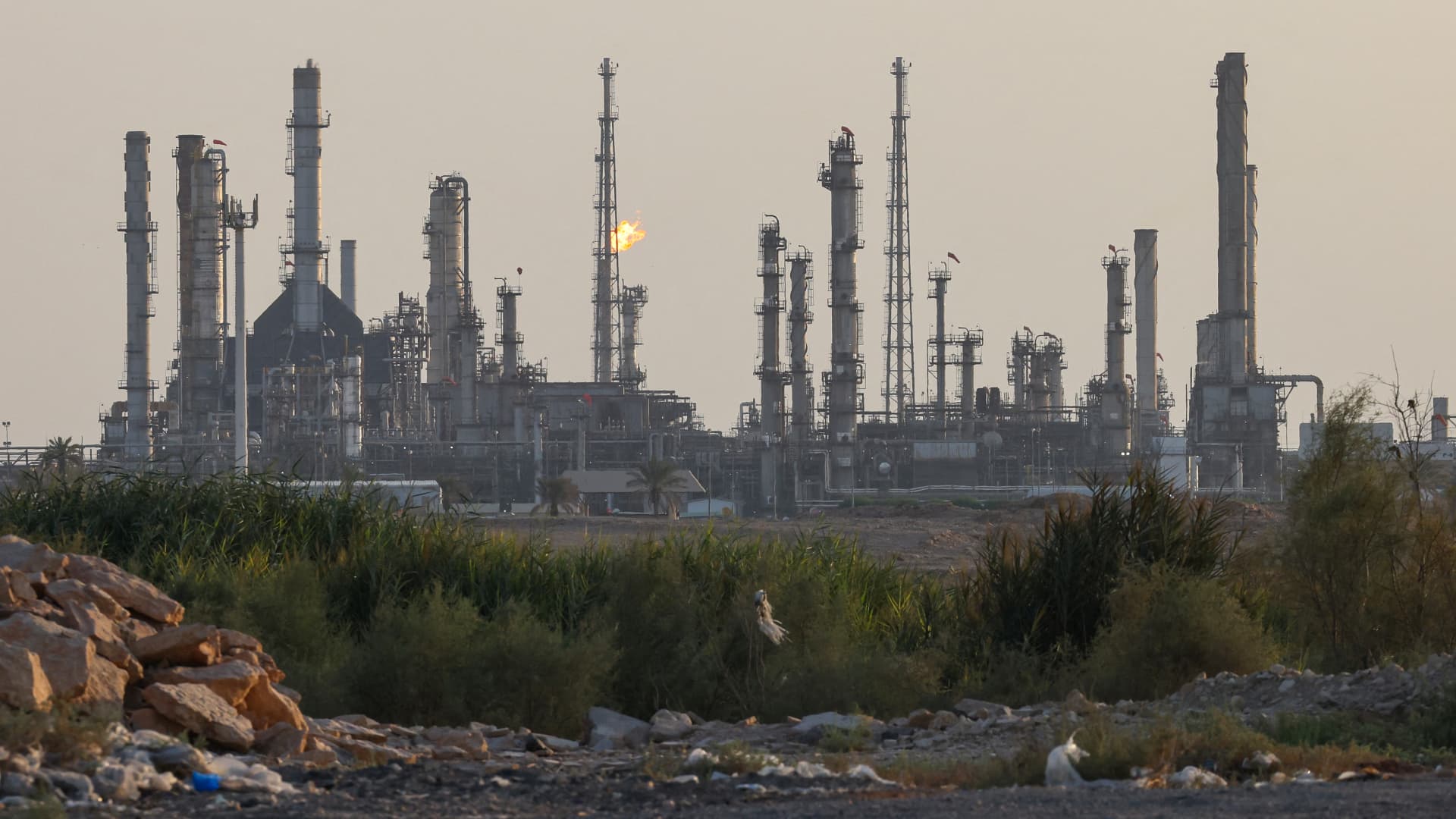
While striving to protect biodiversity, another challenge Ecuador faces is its dependence on oil.
The country is an important oil-producing nation in Central and South America. Local media reports indicate that the government announced in October plans to open new oil exploration bidding in certain areas of the Amazon. The reports state that this news has been criticized by indigenous leaders, who strongly oppose these plans.
Bloom said, "It is a delicate matter to maintain a balance between biodiversity and the use of natural resources, whether they are renewable or non-renewable. My daily work involves dealing with this kind of balance."
Data from the International Energy Agency shows that in 2024, about 80% of Ecuador's energy came from oil and petroleum products, while approximately two-thirds of its electricity was generated from hydropower.
Bloom stated that combating illegal mining is one of the key focuses of his work. He told CNBC that he is aware of the environmental impact of legal mining, but illegal mining is the bigger problem.
Biodiversity Credit
At Ecuador's first Bio Summit held from November 4th to 6th in Quito, a new way of monetizing nature was introduced. This event aimed to help the country's natural assets 'enter the global financial system'.
Event chairman Marcelo Saramé told CNBC that he is pushing a plan to introduce so-called biodiversity credits for the first time in Ecuador, which will be used to “protect and monetize” a 260-hectare (about 640 acres) Prosperina forest located in the port city of Guayaquil, owned by ESPOL University.
Salamé stated that biodiversity is "multidimensional," and this type of credit reflects the entire ecosystem, not just carbon emissions.
The operation of biodiversity credits is similar to the carbon credits purchased by large corporations to achieve sustainable goals, but it tracks a series of indicators such as the number of species in a particular area or the canopy coverage rate. The funds raised are then reinvested in nature conservation.
However, unlike carbon credits that can be used to offset emissions, biodiversity credits cannot be used for that purpose. “Essentially, they provide funding for verified natural achievements, and at least not yet for compensating for damages,” Martin Wakiye, co-founder of Bloomlabs, a Berlin-based company that tracks the biodiversity market, told CNBC.
Jerry Thors, a conservationist and co-founder of the Ecuadorian local non-profit organization Third Millennium Alliance, told CNBC that the carbon market simplifies the ecological value of forests to a single metric: how many tons of carbon they store.
"It can be dangerous, because people will optimize for this one metric at the expense of everything else," he said. Tos hopes that biodiversity credits can capture the subtle differences in ecosystems.
Regenerated cocoa
Tos also operates the chocolate manufacturer To ' ak — which made headlines for producing "the world's most expensive chocolate bar" — using ancient Nacional cocoa beans grown in the Manabí province of Ecuador, and processes them in Quito.
Third Millennium Alliance collaborates with farmers to restore degraded land by planting cocoa under the shade of tall trees. Tos said that To 'The price ak pays to farmers for cocoa is about $1.20 per pound, which is approximately twice the current market price.
Tos stated that ensuring that chocolate production does not deplete natural resources is a "key issue." He said, "Our initial goal was, how can we use chocolate to reverse deforestation?"
Tos said that Ecuador is aware of its "huge" ecological and biological resources. "It is still trying to figure out... how to capture this value in a way that is reasonable for both the Ecuadorian people and the ecosystem."