It has been nearly a decade since Cyanogen ceased its Android operating system business after failing to undermine Google's dominant position for many years. Now, its co-founder Kirt McMaster is turning his attention towards Microsoft Windows, launching a new operating system aimed at users who rely heavily on artificial intelligence in their daily work.
Kora Systems, a company under McMaster, released a desktop operating system based on Linux on Tuesday. This new OS directly integrates the AI model and its own proxy into the computing experience, enabling cross-application functionality, file access, and the preservation of context between different tasks. The software is expected to be launched in 2027 and will be available as a free desktop operating system. It will support existing Intel and AMD processors, as well as devices equipped with Qualcomm Snapdragon chips.
Kora is being developed by about 50 engineers, and relies on programming tools from AI that include Claude of Codex and Anthropic, as well as OpenAI. McMaster told TechCrunch that these tools have increased the development speed by at least five times, with most of this improvement occurring in the past six months.
Microsoft has long dominated the PC operating system market, making it difficult for new entrants to gain a foothold. According to the web traffic data from StatCounter, Windows held approximately 77% of the global desktop operating system market in October, while Apple's OS X accounted for nearly 10%.
However, McMaster believes that Kora does not need to compete with Windows for all users. Instead, he is targeting those who make extensive use of AI and are willing to pay for powerful models and services.
"Microsoft can retain its billion users," said McMaster, and estimates that currently 45 to 50 million people contribute to the majority of AI's usage and revenue. He predicts that by 2033, this market will exceed 200 million users.
McMaster told TechCrunch that his experience at Cyanogen – where he worked for over five years – made him realize how dangerous the company he tried to challenge was. Although Cyanogen offered features that surpassed those of Google’s Android, it still relied heavily on Google Mobile Services. In the end, this limited its ability to build an independent ecosystem.
“If you want to compete with a giant while still relying on it, then you have no chance,” he said.
McMaster indicates that Kora continued an idea he put forward later in Cyanogen. At that time, he began to explore ways to directly integrate third-party services into the operating system. In Kora, he hoped that the AI model and agents could work across applications and access files, rather than being limited to a single application.
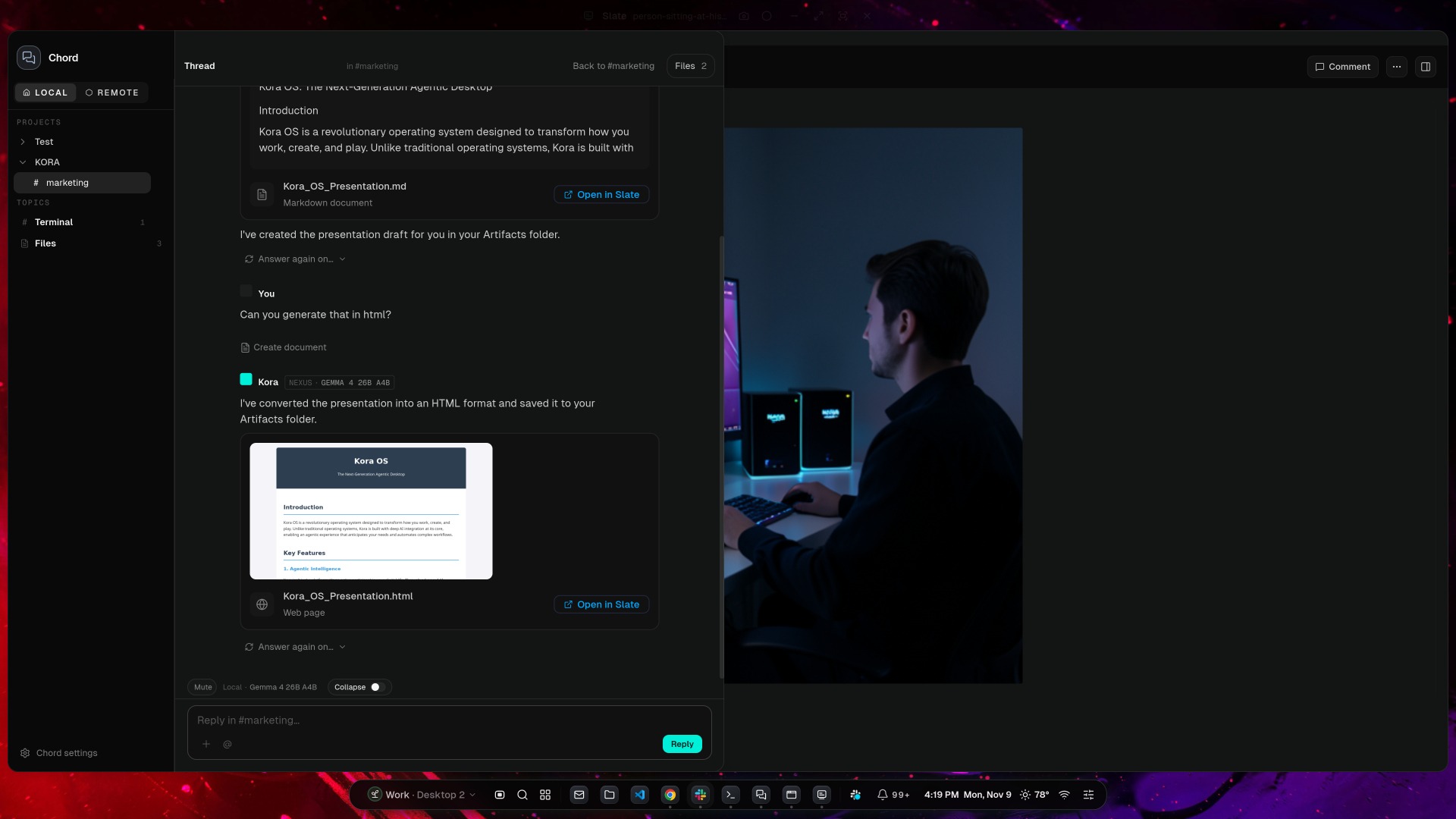
This company was previously known as Playtron, and was led by McMaster. It is a game operating system company. McMaster informed TechCrunch that this company, headquartered in Palo Alto, changed its name to Kora in July 2025 and shifted its focus to AI. At the time of this decision, early companies such as Perplexity and OpenAI were entering the field of web browsers driven by AI. McMaster believed that browsers did not allow AI proxies to obtain sufficient computer access rights to perform more complex tasks; therefore, an operating system was considered a better starting point.
This shift also allowed Kora to continue building upon the work done in the past three years with the game operating system GameOS, which was developed by Playtron and is based on Linux, rather than starting from scratch.
The design goal of Kora is to allow users to use different AI models and proxies across various applications, while tracking conversations, documents, and other information. It also enables AI proxies to run in separate workspaces and restricts their access to files and other resources.
Although McMaster drew on its experience from Cyanogen, none of the engineers at Kora came from Cyanogen. On the contrary, he told TechCrunch that the company recruited a large number of people from the Linux gaming community.
The software with Kora is based on Linux and utilizes Nix. It replaces the Fedora Silverblue foundation that was adopted in the earlier versions of Playtron and GameOS.
Although both Linux and Nix are open-source, McMaster indicates that Kora's own technology, including the Cortex AI engine and desktop interface, remains proprietary. The company stated that it intends to support AI models and services from different providers, but has not yet committed to making its software open-source.
Gaming is still part of the Kora plan. McMaster stated that the company intends to launch a AI development tool to help developers create, release, and play games directly within the operating system. He also added that support for Android applications is also on their roadmap.
McMaster told TechCrunch, that the Kora team has been working closely with Qualcomm engineers for nearly a year, specifically optimizing this operating system for PC devices equipped with Snapdragon processors. The cooperation includes support for Qualcomm's Snapdragon X2 Elite chips.
In addition to Qualcomm, Kora is also collaborating with Saudi Arabian company AI to develop an enterprise version of the operating system, named Humain OS, which is expected to be available on laptops equipped with Snapdragon processors in 2027. Kora also plans to announce a collaboration with PC manufacturers later on, but McMaster has not disclosed any company names or specific timelines.
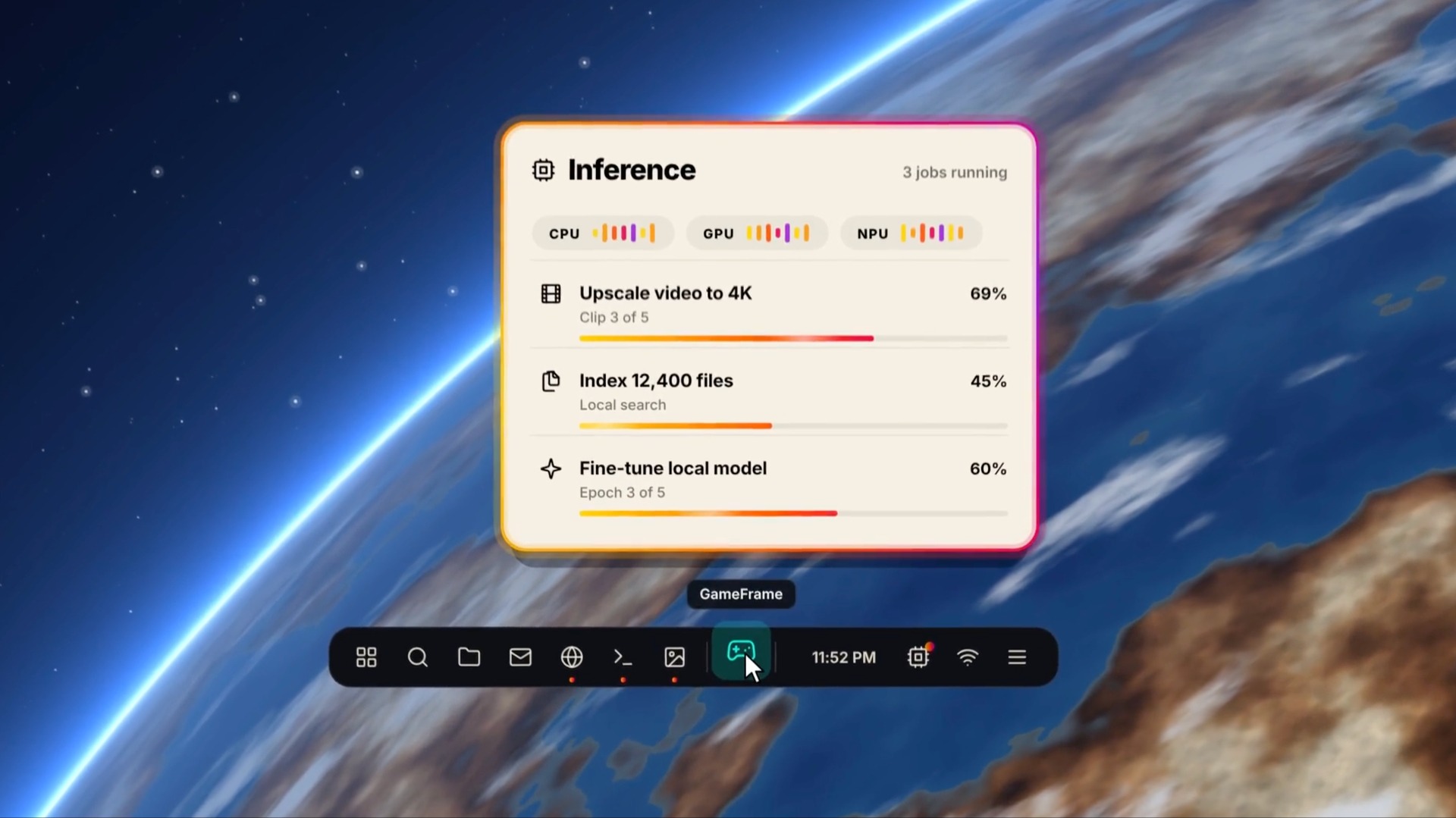
Kora plans to generate revenue by bundling subscriptions to the access rights of the AI model and proxy services. In addition, its Cortex engine is designed to run AI tasks locally whenever possible, and to use cloud models when more computing power is required.
Investors of Kora include Samsung Next, Square Enix, Alumni Ventures, Polychain, VanEck, and Circle; all of these institutions have previously supported Playtron. McMaster stated that since switching to AI, the company has received additional financing. However, he refused to disclose the total amount of financing or the valuation. He mentioned that Kora possesses sufficient funds to support operations for the coming years.