Newsletter
OpenAI has launched the "Power Grid Protector Program," pledging to reduce the electricity demand of future AI facilities in emergency situations of the power grid.
A planned facility in Georgia is capable of reducing electricity consumption by up to 1,000 megawatts during peak demand periods.
At the time of this announcement, OpenAI is preparing to rebrand its data center as the “AI Computing Power Park” in order to address the growing public opposition.
OpenAI hopes that its massive AI data centers can help maintain power supply when the power grid is under pressure. Obviously, the company also hopes that people will stop calling them AI data centers.
This ChatGPT developer announced on Monday the launch of the "Grid Protector Program," a national initiative aimed at reducing electricity consumption in future AI facilities during emergencies and peak demand periods, which could potentially lower costs for other customers.
According to this plan, OpenAI will coordinate with utility companies to determine to what extent their facilities can temporarily stop power supply, how fast they can respond, and for how long. The company is also exploring the use of on-site batteries and power generation facilities to help manage demand.
"Families and small businesses should not be required to pay for the electricity needs of a computing power park," OpenAI stated in the announcement.
The plan addresses one of the biggest controversies surrounding the AI infrastructure boom: businesses are building facilities that consume increasingly more electricity, while residents are worried about having to bear higher electricity bills – as well as water bills – to support these facilities.
OpenAI takes a planned facility in Effingham County, Georgia, as the first case study. The company has signed a 25-year agreement with Georgia Power to cover an electricity demand of approximately 3,200 megawatts, of which up to 1,000 megawatts can be temporarily reduced during peak demand periods.
According to the approved agreement, OpenAI must bear all the infrastructure costs required to serve its facilities, rather than passing on these expenses to existing customers.
Georgia Power also estimates that starting from 2029, customers will be able to save approximately $950 million per year, which is equivalent to at least $15 per month for typical residential customers. However, these estimates cover the utility company's broader portfolio of large electricity consumers and expected growth, not just the project of OpenAI.
The facility in Georgia is still under development, and the related savings are merely projections. OpenAI has not yet disclosed any binding commitments to reduce demands for other facilities under its national plan.
The electricity consumption plan for OpenAI also appeared after a report: it is alleged that the company is undertaking a large-scale public relations campaign in an attempt to change how people refer to these facilities, with the goal of erasing the negative sentiment surrounding the AI data center from collective memory.
According to Axios, OpenAI is preparing policies and public relations activities following the mid-term elections, which include renaming the data center to “AI Computing Power Park.” The aim is to make these infrastructure facilities sound more appealing to the community, and essentially, it is an attempt to solve problems through renaming.
The company has already begun using this term. In its "Grid Protectors" announcements, future facilities are repeatedly referred to as "computing power parks," although the more familiar term "data centers" is also occasionally used.
OpenAI A spokesperson confirmed this naming strategy to Business Insider, stating that this term better reflects the broader role of these facilities in computing, energy infrastructure, and skilled employment.
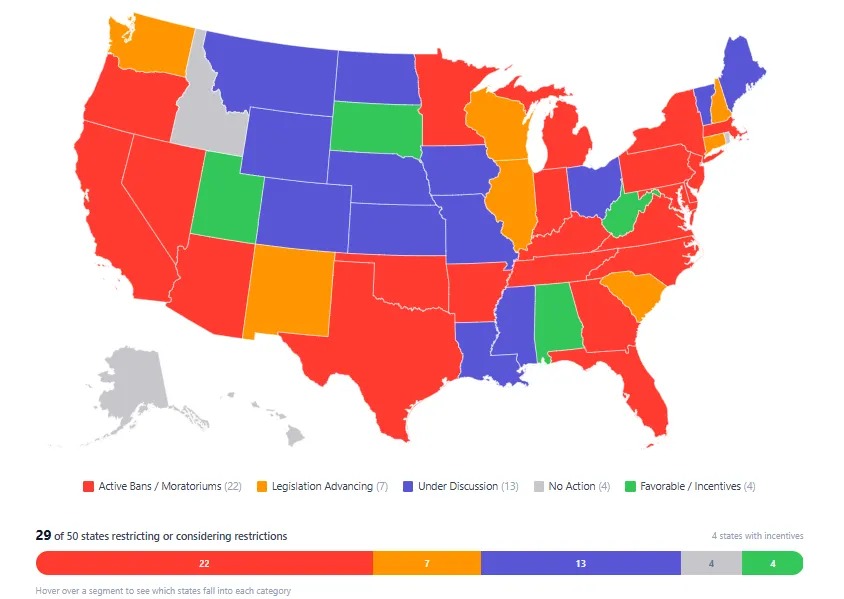
It is reported that this renaming has occurred at a time when opposition to the AI infrastructure projects across the United States has become a political issue. In August, Pennsylvania introduced new restrictions on large data centers, including provisions aimed at protecting residents from higher electricity costs. Other states are also following suit.
OpenAI and six other large technology companies also signed a commitment with the White House in March, stating that they would cover the costs for the electricity and grid upgrades required for their AI projects.
The new plan goes a step further by proposing that AI facilities can become a useful resource for utility companies, rather than just adding pressure to the system. However, this national framework is still mainly at the vision stage at present, and specific agreements still need to be negotiated on a case-by-case basis.
The project in Georgia, OpenAI, will provide early testing for this approach. The planned 3.2 gigawatt facility is expected to begin supplying power in 2028 and will be expanded in phases before 2032.