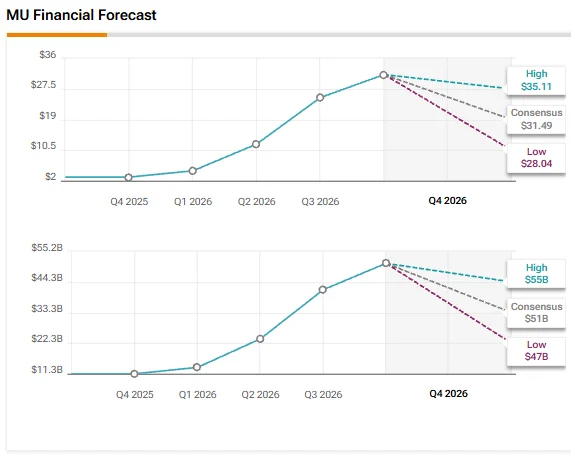


Following Alphabet, it's now Intel and Amazon's turn. Stocks in the memory chip sector have found that even though demand for their products has reached record levels, this demand provides little protection when Wall Street begins to question the companies that are fueling the AI craze. Micron ( NASDAQ : MU ) tumbled another 4.4% after the market closed, following a previous decline of about 5% on Thursday; SanDisk ( NASDAQ : SNDK ) also fell 4.4% after the market closed, after already dropping 5.3% earlier; SK Hynix ( SK : NASDAQ : SKHY ) saw an even larger decline, plummeting 7.5% after the market closed, whereas it had already fallen 1.6% during regular trading hours.
This has been a rather bitter end to the week for storage chip stocks. The sector began the week with three consecutive trading days of gains. Alphabet Disappointing financial reports triggered a reversal on Thursday, and Intel's disappointing prospects, the market reaction following SanDisk's financial report, as well as Amazon's latest performance, further increased the pressure. The common theme is that the market is increasingly concerned about the huge costs of building AI infrastructure and whether these investments will ultimately yield sufficient returns.
Micron bets on the next generation of storage and the US supply chain
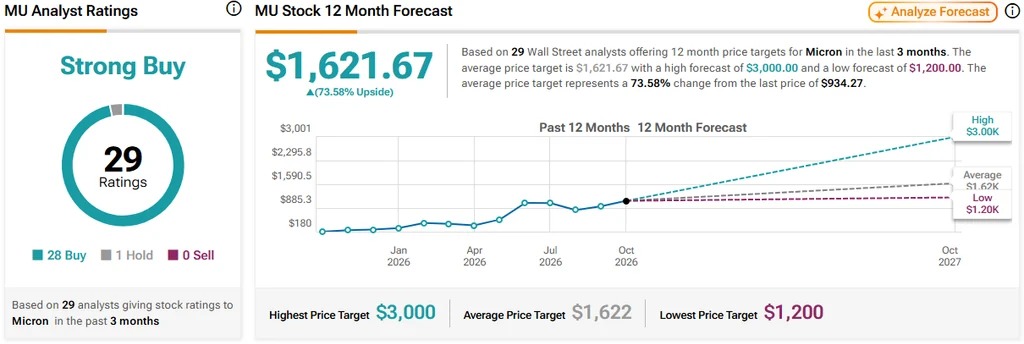
Despite Micron experiencing sell-offs along with other storage chip stocks, the company has not slowed down its efforts to secure a larger role in the AI craze. During a demonstration on October 21, the chip manufacturer outlined its plans: starting from HBM4 in 2026, it aims to launch a new generation of high-bandwidth storage products each year until 2030, ultimately progressing to HBM6 by the end of this decade. This roadmap reflects Micron's determination to gain a larger share in the rapidly expanding AI storage market.
This chip manufacturer is also working hard to ensure that it has the materials needed to support its manufacturing plans. On October 20th, Micron announced an investment in Indium Corporation to expand its key mineral processing capabilities in New York, as part of a broader plan worth up to $3 billion aimed at strengthening the US semiconductor supply chain.
These measures together indicate that, despite investors becoming increasingly cautious about the industry's spending trajectory, Micron's plans have already surpassed the current AI investment cycle.
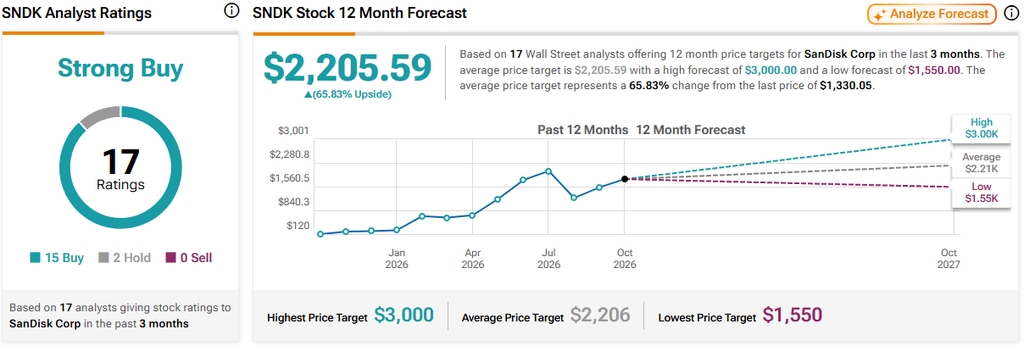
Sandisk's performance exceeded expectations, but it couldn't withstand the harsh market.
This flash memory manufacturer announced that in the first quarter of fiscal year 2027, its revenue amounted to 11.03 billion US dollars, a year-on-year increase of 378%, which was also higher than the market's expectation of 10.72 billion US dollars. The adjusted earnings per share were 49.51 US dollars, also exceeding analysts' forecast of 46.67 US dollars, mainly driven by strong demand from data center customers.
Sandisk's guidance for the second quarter of fiscal year 2027 is also slightly higher than Wall Street's expectations, with revenue expected to be between $12.2 billion and $12.6 billion, while the market generally expects it to be $12.29 billion; adjusted earnings per share are expected to be between $55 and $57, calculated on a pre-split basis, whereas analysts expect $54.69.
SK Hydis' record-breaking profits still couldn't stop the selling pressure
Considering that its record-breaking financial results earlier this week drove up the prices of storage chip stocks, the story of SK Hynix might be the most disheartening among the three companies. The South Korean chip manufacturer reported third-quarter revenue of 104.62 trillion Korean won, a year-on-year increase of 328%, exceeding the forecast of 98.23 trillion Korean won. Operating profit soared by 632% to 83.33 trillion Korean won, which is about 8.3% higher than the analysts' forecast of 76.96 trillion Korean won.
Management also expects that the storage shortage will continue until 2030, reflecting the growing demand for AI computing power, as well as limited manufacturing supply. In addition, long-term agreements have covered more than half of the company's planned production capacity for 2027 and 2028, providing greater visibility for future sales.
Disclaimer and Disclosure Report Issues
Sandisk News More