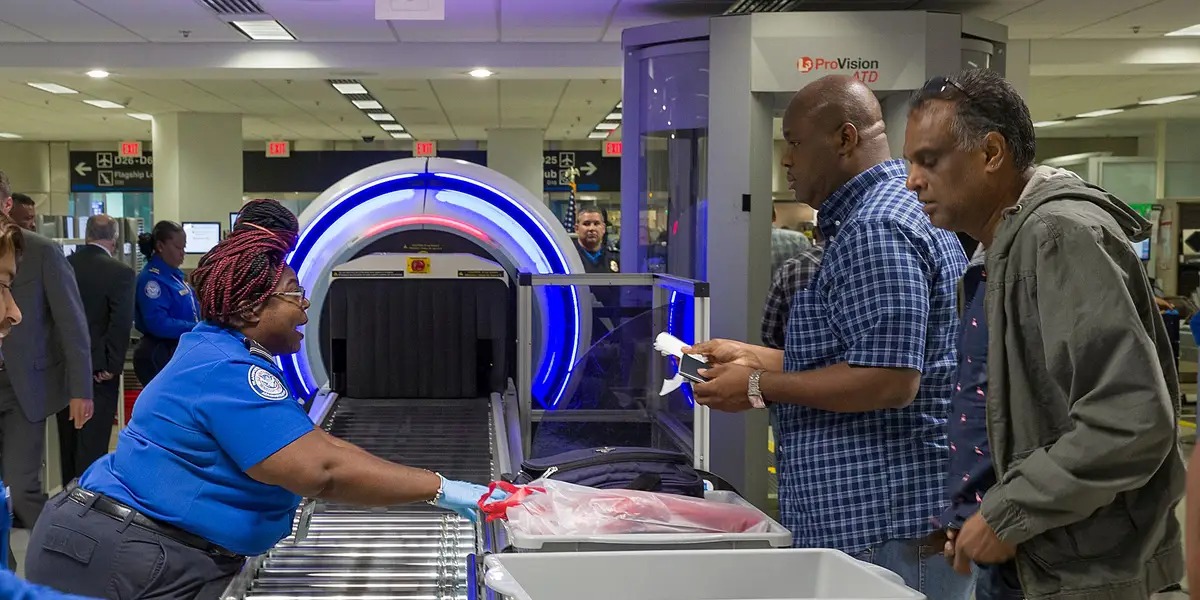
















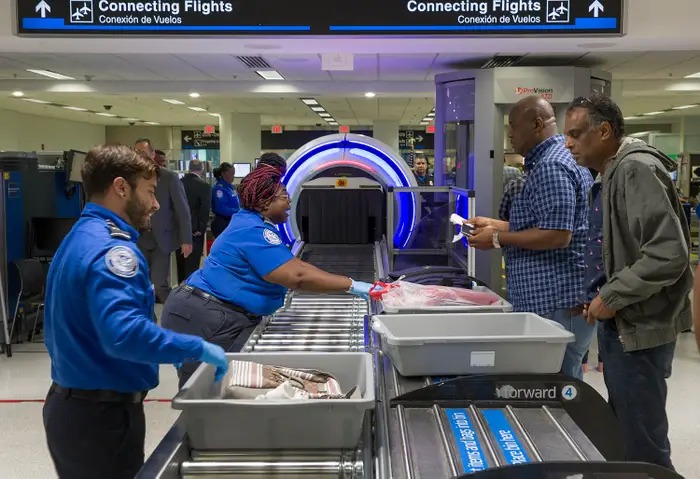
The new generation of X-ray scanners from the US Transportation Security Administration ( TSA ) represents improvements in almost every aspect for passengers, but there is one exception: the smaller opening may not accommodate some personal items.
This new type of 3D computed tomography ( CT ) X-ray equipment has been around for about a decade and began to be deployed on a large scale in 2022. This project, which cost billions of dollars, aims to improve the effectiveness of security screening and to speed up queuing times by allowing passengers to keep items such as laptops and personal toiletries in their bags.
The problem is that the opening of this device is about half an inch smaller than that of the old machines it replaces.
Some reports have warned that this change may force passengers to pay an additional fee for checking luggage that could have otherwise passed through security using TSA, or to purchase a smaller bag that can pass through the new equipment. TSA has also pointed out on its website that the upgraded scanners may mean that some carry-on luggage will now need to be checked in.
But the actual situation is not that serious.
Why is it still very likely that your carry-on luggage will pass through?
The new scanner of TSA – which is currently deployed at nearly 1,200 airports across the United States – has an opening size of 24.5 inches in width and 16.5 inches in height; the depth in the direction of the conveyor belt is continuous.
Comparing the maximum size regulations for carry-on luggage of various airlines in the United States, the standard carry-on limit is usually 22 x 14 x 9 inches, which is mainly based on the size that can be accommodated in the overhead baggage compartment. The dimensions provided by Frontier and Southwest are the most lenient, at 24 x 16 x 10 inches. In any case, as long as the carry-on luggage meets the airline's size requirements, it should be able to pass through this new scanner.
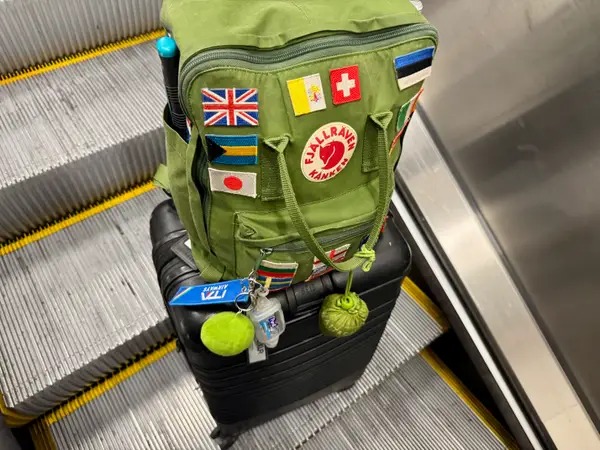
As a frequent flyer who flies several times a month, the author states that they have used these new scanners for security checks at multiple airports, including New York, Boston, Los Angeles, Atlanta, Denver, and Chicago. The author's Beis suitcase measures approximately 23 x 16 x 10 inches, which is slightly larger than the standard size, but they have been able to pass through the machines each time.
Passengers who are truly likely to encounter problems in front of the new scanner are probably already carrying luggage that is too large or overly bulky.
For example, soft-shell bags that are packed tightly and bulge in shape may not be allowed to pass. Expandable bags that cannot be compressed for storage, or bags with bulky handles and wheels, may also not meet the requirements.
First, check the size restrictions of the airline.
TSA indicates that oversized carry-on luggage may be manually inspected by security staff, but passengers may also be asked to return it and check it in instead.
This may cause inconvenience, therefore travelers should do more research before traveling to confirm that their frequently used carry-on luggage complies with the regulations of the airline they are flying with.
If it complies with the regulations, you don't have to worry too much about your luggage not passing through the device – and at the same time, you can enjoy a possibly easier and faster security check experience.
In addition, this change has a positive side effect: as the amount of excess carry-on luggage is reduced, the time wasted on temporarily checking in luggage at the gate may also decrease, which can be considered a win-win situation.