CBN News, October 28, 2026, 14:57:01 - Listen to the news
Author: Hou Xintong Editor-in-Chief: Pan Yinru
The AI transaction continues to experience a decline on a global scale.
A stock index tracked by Goldman Sachs, excluding artificial intelligence ( AI ), rose 12.4% last week, outperforming the overall 12% increase of the S&P 500 index during the same period. Many non- AI sectors of the S&P 500 index have risen this month, whereas the S&P Tech Index has fallen 7% so far this month. It is worth noting that the investment portfolios of large investment institutions such as Oppenheimer and Berkshire Hathaway have shifted towards non-tech sectors.
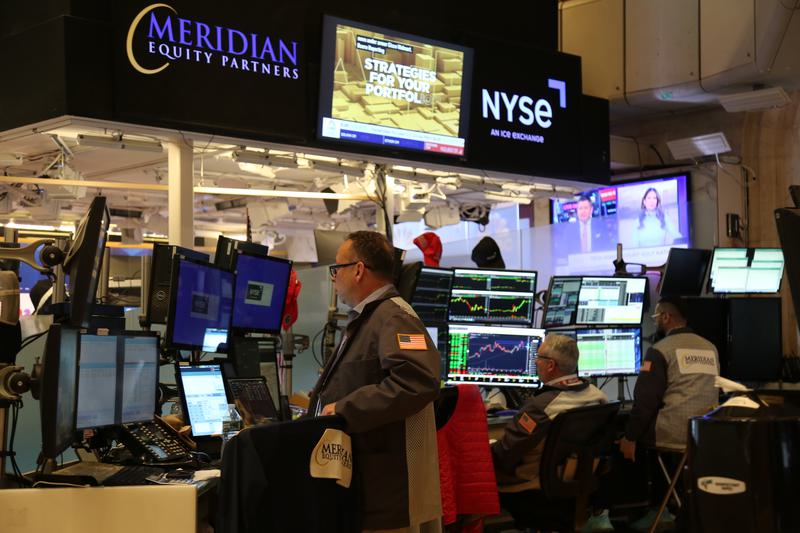
Non-AI empowered indices outperform the market index
Data shows that as of October 22, the proprietary Goldman Sachs index, which tracks the S&P 500 index (excluding stocks classified as “AI enabled”), has risen by 12.4%, higher than the 12% increase of the S&P 500. Goldman Sachs jointly launched this indicator with Standard & Poor's earlier this year, excluding the stocks of companies that are “AI enabled”.
Technology and companies related to AI account for about 45% of the S&P 500 index. This high weight has been a driving force for the index for many years, but recently it has become a burden. The technology sector of the S&P 500 index fell by about 7% this month, while other sectors continued to rise.
Investors are concerned about the debt and equity issued by companies such as CoreWeave and Oracle. On Thursday last week, Meta Platforms fell by 7% to $648.85, and continued to decline on Friday, with a cumulative drop of nearly 8% since before the financial report was released. Just a month ago, it was just a few dollars away from its historical high of $796 set in August 2025. This decline is mainly due to the company's announcement earlier in the week of plans to invest heavily in capital expenditures and issue additional shares. The market is worried that its continuous increase in investment in the AI sector could lead to a bubble.
Companies that provide power and equipment for the expansion of the AI data center have also suffered a heavy blow. Related companies such as General Electric Vernova, Bloom Energy, Rui Zhida (Vistra), and Guangda Service (Quanta Services) have also seen significant declines in their stock prices during recent sell-offs.
Later this week, the Federal Reserve is set to announce its interest rate decision, which will also affect market sentiment and the trend of AI stocks. Cui Xiao, a senior economist at Pictet Wealth Management in Switzerland, told Yicai News that it is expected the Federal Open Market Committee (FOMC) will maintain interest rates at 3.75% to 4.00% this week, in line with the general market expectation of another interest rate hike in December. At subsequent press conferences, Federal Reserve Chairman Jerome Powell is expected to avoid direct comments on market fluctuations related to AI, but will reiterate previous views that AI is boosting demand in the short term and will expand supply in the medium term.
AI not only drives the stock market but also plays an increasingly important role in the credit market. Erui, the fixed-income fund manager at Wellington Investment Management, told a reporter from Yicai that the large-scale infrastructure spending required by AI may still be in its early stages, but its impact on the credit market is becoming increasingly clear: there is a higher capital intensity, an increase in credit supply, and a growing differentiation between industries and issuers.
For investors, she stated that the challenge lies in distinguishing which companies are able to transform AI related investments into sustainable returns, and which ones cannot do so. As AI investments increasingly become an important driving factor affecting market performance, a prudent analysis of capital allocation, financing, and execution risks may be of vital importance.
Although AI infrastructure spending generally supports credit demand, its impact on investments in different sectors varies significantly: investment-grade credit investors focus on the balance between growth and increasing capital intensity; high-yield credit investors observe a growing divergence between issuers that benefit from AI and those affected by AI; securitization credit investors, on the other hand, pay close attention to transaction structures and repayment assumptions.
"As a result, investment opportunities in the credit market are becoming more differentiated, mainly due to market segmentation rather than a general increase in risk," she said. "Companies that are directly related to AI infrastructure construction, such as ultra-large-scale cloud service providers, semiconductor companies, and infrastructure providers, are generally benefiting from stronger growth, and the fundamentals of some of these companies have also improved. However, the situation is more complex for those companies that make large-scale investments merely to maintain their competitiveness. If there is uncertainty regarding the path to realizing these investments, high capital expenditures can put pressure on cash flow and leverage ratios. This disparity may further exacerbate the differentiation within the investment-grade credit market and highlight the importance of issuer-level analysis and prudent capital allocation."
Switch to non-technology sectors
For most of this year, the proprietary Goldman Sachs index that tracks the S&P 500 index (excluding stocks classified as “AI enabled”) lagged behind the S&P 500 index, as investors have long favored chip manufacturers, cloud computing companies, and other firms that benefit from substantial AI expenditures. However, this advantage has been narrowing steadily over the past month and completely disappeared last week.
At the same time, investors are shifting towards defensive sectors. This month, Dow Jones Consumer Goods Select Industry SPDR ETF, Dow Jones Health Select SPDR ETF, and Dow Jones Utilities Select Industry SPDR ETF among others ETF have seen gains of 7% to 10%. The energy sector also saw an overall increase of 10%.
Many analysts suggest shifting investments to companies that are not AI in order to diversify investments and protect investors from further losses due to the decline in tech stocks. Wald ( Ari Wald ), a technical analyst at Oppenheimer, wrote in a report on October 24th, "Over the past two weeks, the pendulum of AI investment has tilted towards non-AI stock exposures." The two industries currently favored by Oppenheimer are business services and insurance. Last week, the firm upgraded its ratings for these industries to "overweight" and recommended several individual stocks in these sectors, including Republic Services, Cintas, Verisk Analytics, Broadridge Financial Solutions, Metropolitan Life, and Arthur J. Gallagher.
Berkshire Hathaway is also shifting its focus to non-technology sectors, with its Class B shares rising by 8% this month. Berkshire currently holds a multitude of operating companies, including the insurance giant Ge and the Burlington Northern Santa Fe Railway Transportation Company (BNSF Railway). It also owns a stock portfolio worth $364 billion, which includes companies such as Apple, Coca-Cola, Alphabet, and Bank of America. If technology stocks drag down the S&P 500 index, this diversified investment portfolio will help Berkshire continue to outperform the broader market.
Institution Trivector Research has seen the potential of “non-technology comprehensive companies.” Eli Lilly, a giant in healthcare, is one of its favored investment targets. Due to the strong performance of Eli Lilly’s weight loss drugs, the stock has risen by 22%. The company is developing more medications, including a next-generation weight loss drug that it plans to submit for approval to the U.S. Food and Drug Administration (FDA) in early 2027.
Cruise operator Viking Group is also being favored by an increasing number of institutions. The company stated during its August earnings conference call that reservations were on the rise for 2027, and "in recent events, our customers have shown resilience." Viking's stock price has risen by 15% this year and may still have room to increase further. The average target price on Wall Street is $109, which is higher than the recent price of around $82. Barclays Bank recently raised its rating to "overweight" with a target price of $102.
Article Author
Tech stocks powered the Dow Jones to rise by over 300 points, Musk ignited AI trading, and Meta rose by over 3% after its earnings report were released.
Tesla had positive free cash flow in the third quarter.
Close | Shanghai Composite Index rises 0.12%; humanoid robot sector active
Over 3,700 individual stocks in the entire market rose in value.
US Stock Gold | AI Debt Panic Meets Rising Oil Prices! When Will the Turmoil in Tech Stocks End?
The Panic Index VIX soared by over 20% on Friday.
On the eve of the Federal Reserve entering a period of silence, did Walsh's remarks in Bangkok reveal a "dove-like" stance?
"This further strengthens our judgment that the Federal Reserve will keep interest rates unchanged this month."
Shanghai Composite Index at 3,700 points in a tug-of-war: External factors impact A-shares, broad-based index ETF withstands against the trend
Market style rebalancing, or a shift in the main trend?