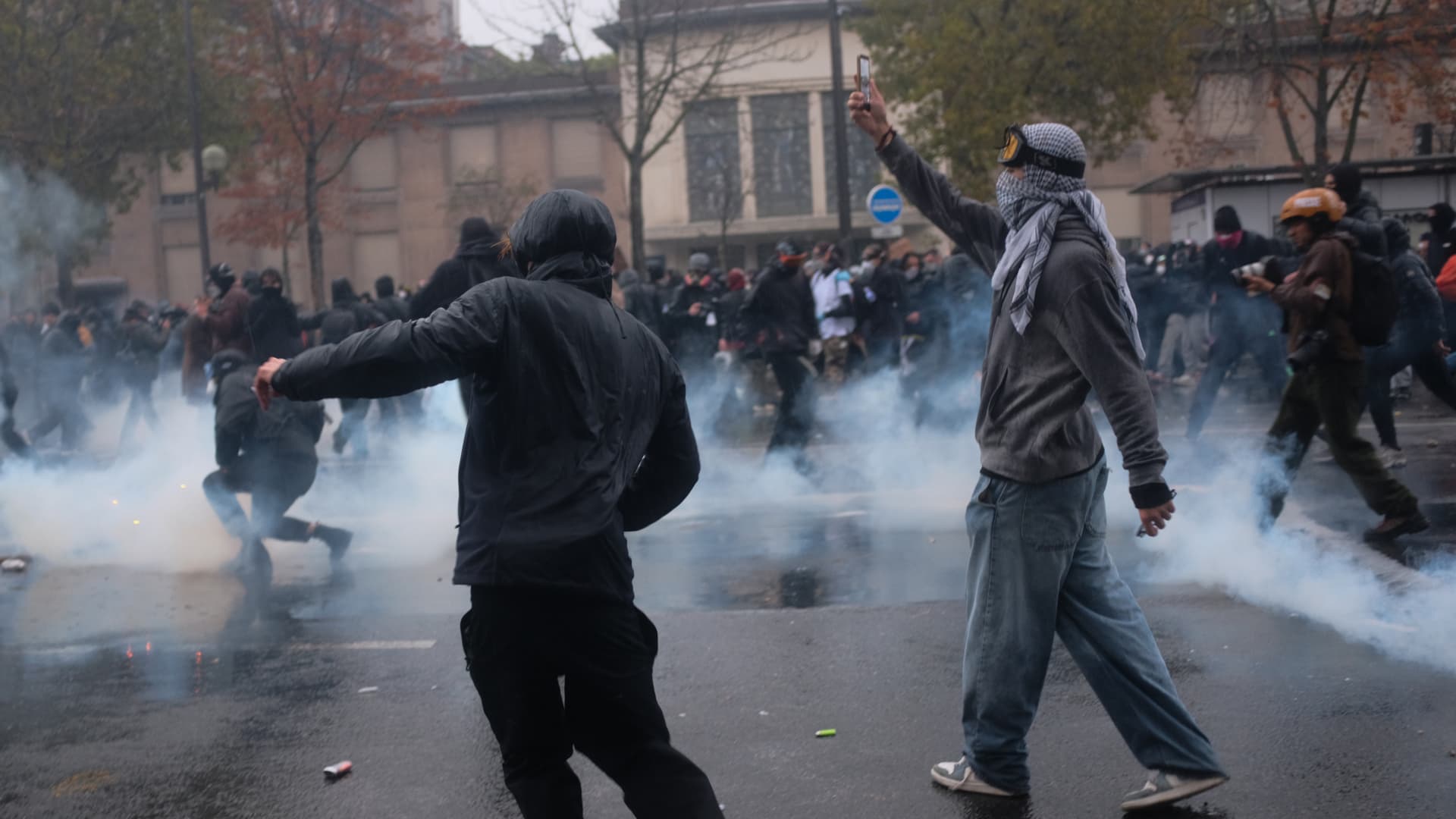
The Saudi-led coalition in Yemen stated that on Sunday, Saudi Arabia intercepted drones and missiles launched by pro-Iran Houthi forces, which were targeting multiple cities including the capital Riyadh.
Amid ongoing clashes between Houthi militants and Saudi forces, statements made last week by U.S. President Donald Trump have also exacerbated market concerns. He hinted that the United States and Israel are planning new strikes against Iran following the mid-term elections on November 3, which pushed crude oil prices to a six-month high on Friday.
Saudi state news agency quoted Turki Maliki, a spokesman for the Saudi-led coalition in Yemen, as saying that two drones and one ballistic missile were "intercepted and destroyed" on their way to Riyadh.
The news agency also quoted Maliki as saying that 10 ballistic missiles launched by Houthi forces towards southern Saudi Arabia were also intercepted, in addition to a cruise missile aimed at the city of Khamis Mushait, which was also blocked.
Houthi militants stated in a post on Telegram that they "carried out seven high-quality military operations using multiple ballistic missiles and drones."
Houthi militants claimed that the targets included Riyadh's King Khalid International Airport, Saudi Aramco's facilities in Yanbu on the western coast of Saudi Arabia, as well as other airports and energy facilities within Saudi territory.
King Khalid International Airport announced in a notice to passengers that operations will resume on Sunday, with Terminal 1 being used for domestic flights and Terminal 2 for international routes.
The airport was temporarily closed on October 10 due to an attack. That attack resulted in at least 13 deaths and about 300 injuries, making it the deadliest attack Saudi Arabia has experienced in over a decade.
Saudi Aramco did not immediately respond to the request for comment on CNBC.
Will Iran's attacks lead to a "quick" restart?
Despite Houthi militants and Saudi Arabia continuing to launch attacks on each other in recent weeks, investors are increasingly concerned that the United States may soon resume its strikes against Iran.
Amidst continuous attacks by Houthi militants, the United States ordered non-essential government employees and their families to leave Saudi Arabia last week.
Trump said on Wednesday that the United States is not in negotiations with Iran and claimed that something will happen "soon."
The president's vague statement came at a time when American officials told The New York Times that the United States and Israel have plans to launch new strikes against Iran after the mid-term elections.
The founder and director of the energy consulting firm Energy Aspects, Amrita Sen, stated on Friday in the CNBC program “Squawk Box Europe” that, “I believe there is an increasing concern about the escalation of tensions in the Middle East.”
"We've been asked by clients all the time: 'Will it happen before the midterms, or after the midterms?' So it's not a question of 'whether' or 'not'. What people are asking is 'when.' Our opinion remains that the likelihood of it happening after the midterms is greater than before."
Geopolitical tensions, concerns about supply disruptions, and fears of potential new strikes by the United States and Israel against Iran helped drive Brent crude oil to a six-month high on Friday.
Brent crude oil futures rose 3.1%, closing at $116.72 per barrel, the highest international benchmark closing price since April 29. West Texas Intermediate (WTI) crude oil in the United States rose 3.8%, closing at $103.27 per barrel. Brent crude oil has risen 6.2% this week, marking the third consecutive week of increases; WTI has also risen 2.3% this week.