

A joint report released by RWA Foundation and Token Terminal indicates that during the week from October 18 to 25, 2026, there was a localized reallocation of capital in the tokenization of real-world assets ( RWA ). Although trading volume on Ethereum infrastructure decreased, funds began to flow into other blockchains, and new investors turned their attention to those platforms as well.
The main beneficiary of this change is Solana, which has shown significant growth in the tokenization fund sector. This network attracted $453.5 million, accounting for 73% of the total inflows of the top 10 blockchains; closely following it, Stellar saw an increase of $124.5 million.
In contrast, XRP Ledger performed more conservatively: although the network made it into the top ten, the result was only $131,000, indicating a clear gap in attracting capital during the reporting period.
At the same time, changes have also occurred in the tokenized stock market, with Ethereum's market value decreasing by 26 million US dollars. The released liquidity flowed towards BNB Chain (an increase of 135.9 million US dollars) and Solana (an increase of 55.8 million US dollars).
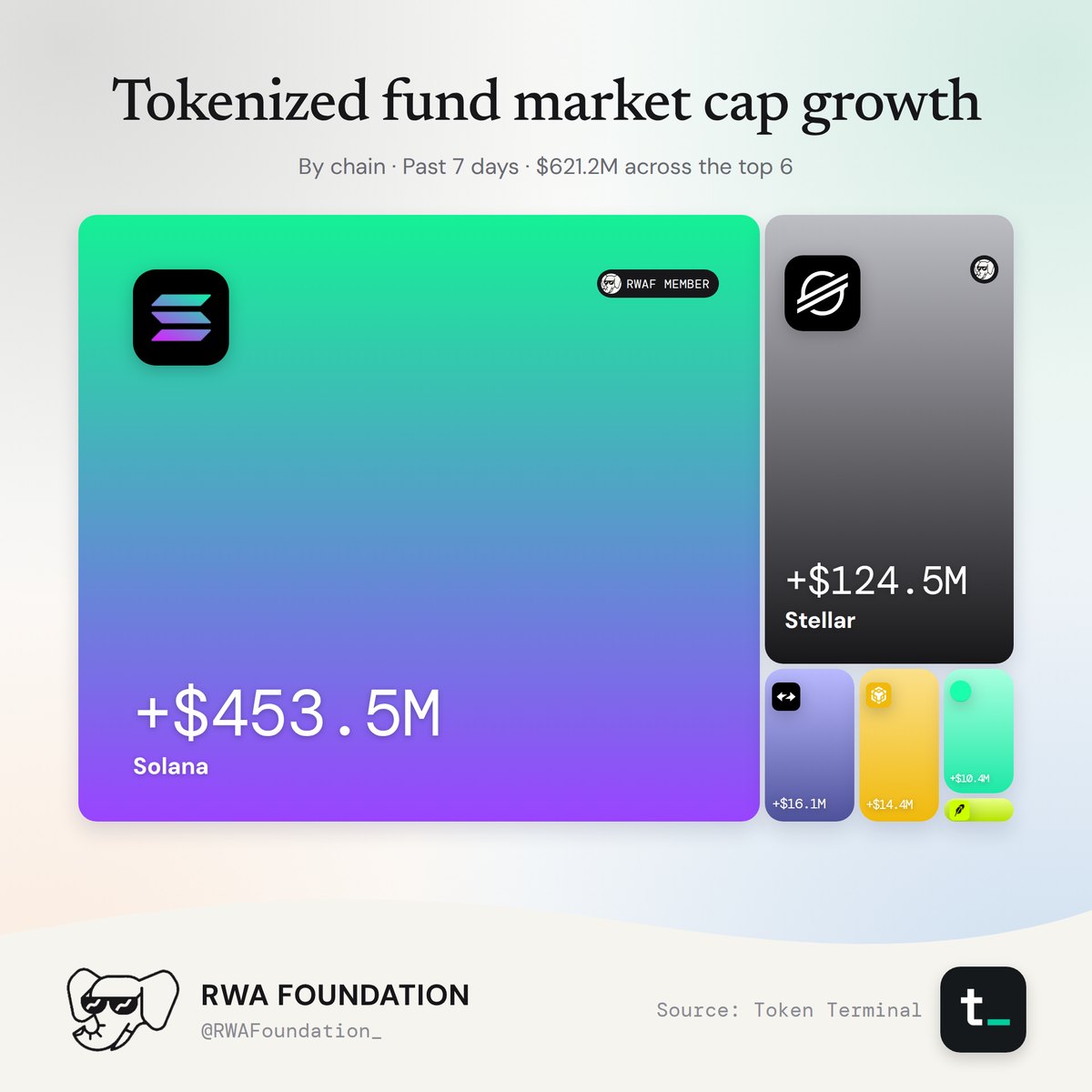
In terms of the flow of real funds on the blockchain, the stablecoin market shows a divergence between the scale of issuance and the rate of user growth. Issuer Paxos has become a leader in capital inflows, with its market value increasing by $249.8 million, accounting for 65% of the total growth of the top 10 issuers. This growth is mainly distributed across the Arc and Solana networks.
Institutional capital continues to flow steadily into the tokenized fund sector: financial giant Franklin Templeton saw an increase of $33.9 million, and J.P saw an increase of $33.6 million; together, they contributed nearly half of this week's growth. Meanwhile, independent fund Spiko led in attracting new investors, with 491 new addresses added.
The data for this reporting week indicates that the local liquidity in the RWA sector now strictly depends on two factors: capital and new users will choose issuers with the largest supply, or they will opt for blockchain platforms that can offer the lowest transaction costs.