

Please note that for those preparing to apply, Google DeepMind, the graduate candidates they wish to hire are not determined solely by their degree.
Google DeepMind Chief AI Officer in Charge Lila Ibrahim stated at a media luncheon in September that the company is placing increasing emphasis on candidates who can demonstrate a record of continuous learning outside of the classroom.
She said that whether it's researchers, engineers, or other positions, a degree is still important, but companies are increasingly paying attention to additional qualifications and experiences listed on candidates' resumes.
“One qualification can only tell me what you have learned, but multiple qualifications indicate that you have a learning mindset,” says Ibrahim.
She stated that today's graduates tend to display in more detail on their resumes what they have learned outside of formal educational settings, presenting this information alongside their work experience and educational background.
"Whenever I look at the resumes and curricula of some newly graduated individuals, I can't help but think, 'Oh my god, these are so different from those of my generation.'"
She said that this additional information is very important for the recruiters of Google DeepMind, as it reflects whether the candidates are curious and whether they "are already prepared to lead a life of lifelong learning."
Ibrahim says that another benefit of having a diverse learning experience is that people become better at asking questions. She believes this is a very valuable skill in a work environment driven by AI, but schools do not teach this ability very well.
"You'll find that many people in schools haven't really learned how to ask questions, how to ask good questions, or how to truly delve into the 'why' behind things."
She added that even if a person is technically adept at using AI, these human skills are still important. “Today, the cost of obtaining answers is very low, but it is becoming increasingly difficult to truly know how to ask very good questions.”
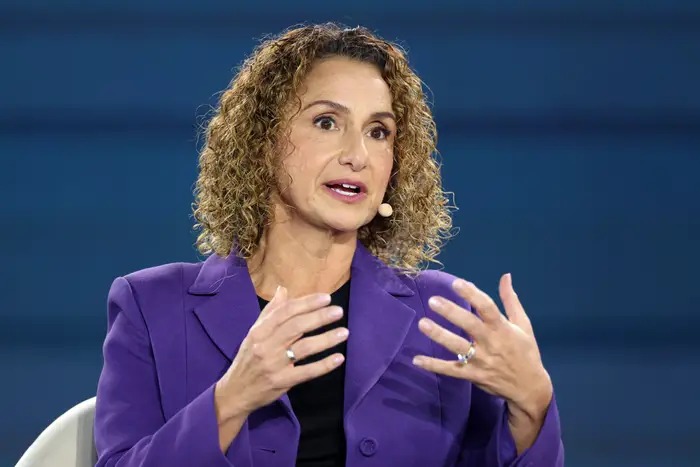
Ibrahim summarized the requirements for applicants as put forward by DeepMind: "Curiosity, the courage to embrace completely new and unpredictable things, the ability to work in dynamic environments, and the capability to collaborate with others."
Humanities or STEM?
Ibrahim previously served as the Chief Operating Officer of Google DeepMind, holding this position since 2018. By early 2026, she was promoted to the role of Chief AI Preparation Officer. She stated that she established this position to help bridge the growing gap between the technology being developed and the society's readiness to embrace it.
Google DeepMind The founder, Demis Hassabis, has always been at the forefront. AI is one of the executives in the field who has warned society that it needs to prepare as soon as possible before technology moves on to the next stage.
Hassabis once stated that STEM and the study of computer science are still important, but AI the world also needs humanities disciplines such as philosophy, economics, and ethics.
In an interview at a business conference in London in July, he said, "I believe that in the world we are about to enter, we really need them."

Ibrahim indicates that Google DeepMind is looking for interdisciplinary talents who are able to collaborate well with others.
She said that having a combination of “neuroscientists, ethicists, and biologists” has greatly helped with some of the technological breakthroughs of DeepMind. She also mentioned that the laboratory has hired many philosophers and added, “You need to pair them with operational staff in order to turn these ideas into action.”
So far, it's not difficult to find these skills in the UK, says Ibrahim. "Compared to my more than 30 years of experience in Silicon Valley, I've seen a more diverse range of talents here, as there is a strong emphasis on philosophy, political science, and these other skills."
A latest study by Coursera and Udemy on over 300 million registered learners has found that the speed at which companies are deploying AI has surpassed the rate at which people need to develop the skills required to effectively use AI.
Although nearly 75% of organizations have deployed or are piloting this technology, only 18% of respondents stated that the majority of their employees participated in AI skills enhancement or retraining over the past year.