US spot Bitcoin funds recorded a net inflow of $524.8 million on October 21, but turned into a net outflow of $635.6 million on October 22, and there was another withdrawal of $137.9 million on October 23.
According to the data from Farside, on October 21st, US spot Bitcoin ETF attracted $524.8 million in funds, and on the following day, $635.6 million flowed out. On October 23rd, another $137.9 million left the market. Despite two consecutive days of capital withdrawals, there was still a net inflow of $301.2 million over the five trading days from October 19th to 23rd.
The fund-by-fund table of Farside shows that IBIT of BlackRock and FBTC of Fidelity together accounted for $471.6 million in outflows on October 22. SEC has allowed for the redemption of physical Bitcoin since July 2025; therefore, the withdrawal of funds from ETF does not necessarily mean that the fund must immediately sell Bitcoin in the spot market.
Farside Investors Data listed item by item for each fund shows that issuers such as BlackRock, Fidelity, and Ark Invest have all undergone changes, but this table is unable to identify who the buyers on the other side of the Bitcoin sell orders are.
Investors can sell ETF shares to another investor without actually having to transfer a Bitcoin. Market makers can temporarily hold these shares, and authorized participants can also redeem a basket of shares for cash or Bitcoin. Only a portion of these pathways require the immediate sale of assets in the underlying market. The total daily capital flow reflects the results at the fund level, and most of the transaction pathways themselves are not visible.
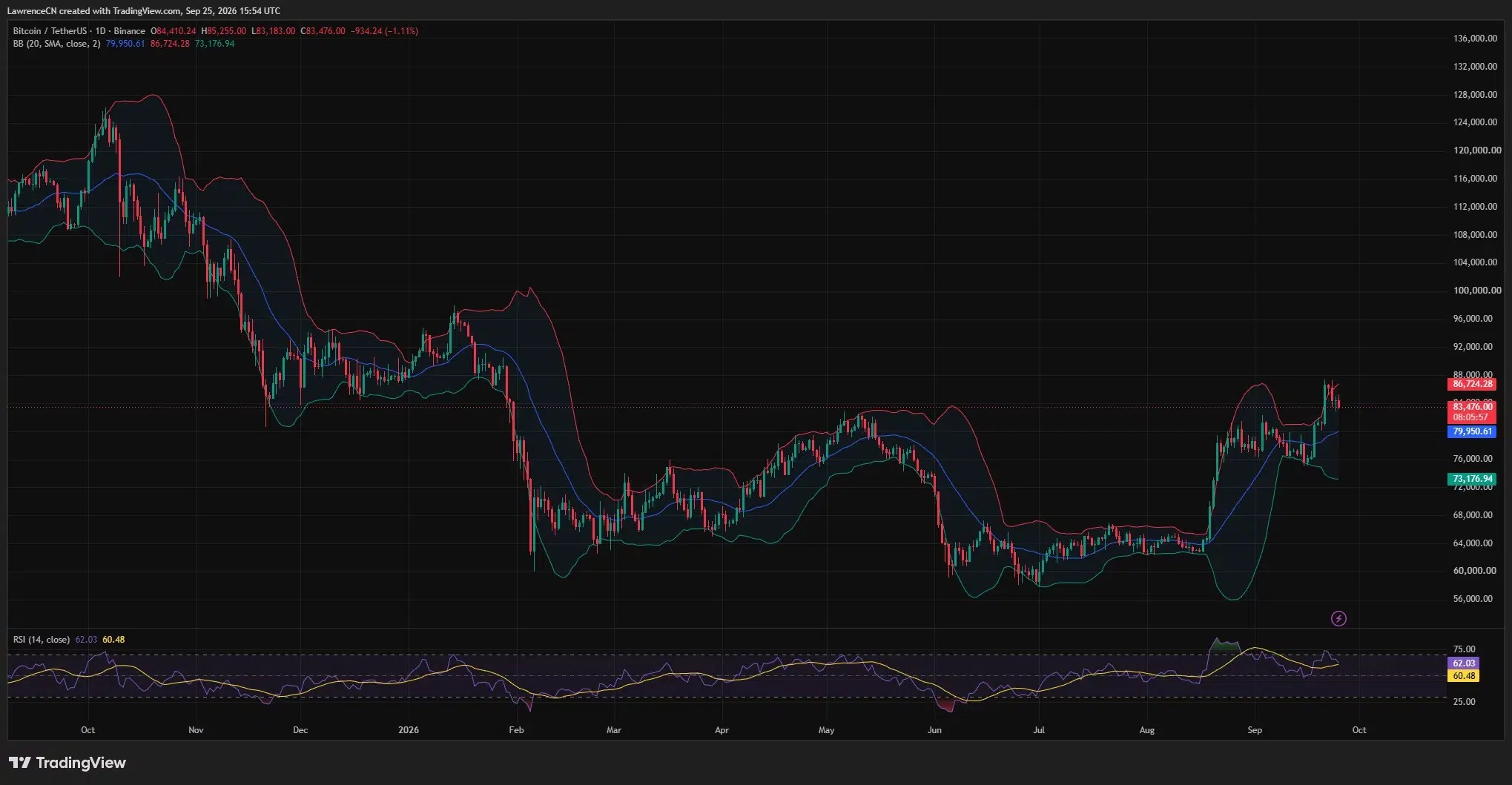
At the time of these withdrawals, the price of Bitcoin was hovering around $80,000 to $82,000. The fund withdrawals coincided with a decline in Bitcoin prices, but this does not necessarily mean that Bitcoin worth $773.5 million was sold on public exchanges during those two days. The redemption process of the issuer, the timing of hedging, and the identity of the ultimate buyers will all determine how much of this pressure is transmitted to spot trading.
In two days, most of the inflows from the previous three days were wiped out.
According to records from Farside, on October 19th, $526.7 million in spot Bitcoin products flowed into the US market; on October 20th, it was $23.2 million; and on October 21st, another $524.8 million flowed in. Over these three days, a total of $1.0747 billion was invested. Subsequently, on October 22nd, $635.6 million was withdrawn, and on October 23rd, another $137.9 million was taken out, resulting in a total withdrawal of $773.5 million, which is approximately 72% of the increase seen in the previous three days. After subtracting these amounts, there was still a net inflow of $301.2 million over the five trading days. The calculations here use the daily total in dollars rounded to the nearest whole number from Farside. On October 23rd, one entry for a particular issuer still displayed a dash, which may be revised later on.
From a net inflow of $524.8 million on Wednesday to a net outflow of $635.6 million on Thursday, there was a swing of $1.1604 billion in daily net traffic. However, this does not equate to a redemption of $1.16 billion. crypto.news previously cited SoSoValue stating that the outflow on October 22 was $635.49 million, and the inflow on October 21 was approximately $528.4 million. There is a slight difference between the two sets of data, therefore, for the total of these five trading days, the figures from Farside are used throughout this article.
As shown in the table of Farside, on October 22nd, IBIT had an outflow of 254.1 million US dollars, and Fidelity had an outflow of 217.5 million US dollars, totaling 471.6 million US dollars, which accounted for about 74% of the day's net outflows. Ark Invest and 21Shares' ARKB had an outflow of 109.4 million US dollars, Bitwise's BITB had an outflow of 27.4 million US dollars, and Grayscale's GBTC had an outflow of 29.5 million US dollars. On the other hand, Morgan Stanley's MSBT recorded a net inflow of 2.3 million US dollars. In other words, the net value can mask the situation where one fund is seeing inflows while others are experiencing redemptions.
On October 23rd, IBIT saw another outflow of $110.3 million, FBTC had an outflow of $31.8 million, while the fund Morgan Stanley saw an increase of $4.2 million. A negative daily net outflow only indicates which fund's shares have decreased after offsetting creations and redemptions; it does not reveal the identity or motives of any particular investor selling shares in the public market. Institutional portfolios, retail accounts, arbitrage desks, and market makers may all trade the same shares.
During this three-day ETF net inflow period, Bitcoin failed to maintain a trend of moving towards $85,000. Subsequently, Lookonchain and Farside provided different daily statistics for this time frame. The chart from Lookonchain labels the data as October 22nd, but does not indicate whether it corresponds to the entire US trading session; the line for October 21st in Farside shows $524.8 million. These two sets of numbers correspond to reports with different labeling methods.
ETF shares can be traded, but it is not necessarily accompanied by Bitcoin transactions.
Ordinary investors sell ETF shares through securities brokers, and the buyers take over at the stock exchange. However, the bitcoins held by the funds do not change as a result of this transaction itself. As long as another investor, trader, or market maker is willing to buy at an acceptable price, the secondary market can absorb a large amount of selling orders.
Next, it will be interesting to see how buyers handle these shares. Market makers may sell their inventory to others, or they may use derivatives to hedge against Bitcoin price risks, or they may gather enough shares to redeem a basket of shares. Authorized participants are financial institutions that deal directly with the trust; they can submit these baskets and receive the designated redemption proceeds. A fund can have multiple participants, and one participant can also operate for multiple clients at the same time. Therefore, the process from when investors place orders to the final redemption does not occur automatically, nor is it directly displayed in the daily ETF cash flow statement.
The IBIT prospectus submitted by BlackRock to SEC specifies that only authorized participants are able to redeem the basket. The trust can be redeemed in part in cash, in full in cash, or, at the discretion of the sponsor, in the form of physical Bitcoin. The document states that this choice may depend on the participants' capabilities, preferences, and tax considerations. Holders who are not authorized participants cannot directly request Bitcoin from the trust.
If a share of IBIT worth $100 million is sold to another investor, it will only increase the trading volume and not change the number of Bitcoins held by the trust. Such secondary market transactions do not require a redemption basket. Only when authorized participants return a basket of shares to the trust in exchange for redemption benefits will the number of circulating shares decrease. Even then, the redemption benefits may be in the form of Bitcoins or cash, and how the counterparty trades subsequently will not be disclosed in the daily capital flow figures.
The existing ETF shares represent a claim to the trust that already holds Bitcoin. Share transactions do not require the trust to buy new Bitcoin; instead, they involve the creation and redemption of shares and the corresponding assets. Secondary transactions involve the transfer of risk exposure between holders. Confusing these different levels leads to a misinterpretation of who holds the securities at the close of trading, which is then misconstrued as an unproven claim that a certain order appears simultaneously on the spot book of an crypto exchange.
The redemption path determines where the sell orders will occur.
Cash redemptions and physical redemptions involve different types of immediate transactions. In the case of a full cash redemption, the trust is required to pay in cash to the authorized participants, which may result in the trust instructing an agent to sell Bitcoin. This selling action, along with the location and timing of it, are separate from the publicly available statistics on share redemptions. For physical redemptions, the trust can directly transfer the Bitcoin to the authorized participants or their designated agents. The balance in the trust’s wallet will decrease, but whether the recipient then holds, sells, hedges, or hands over the coins to another customer is up to them to decide.
In July 2025, the U.S. Securities and Exchange Commission (SEC) approved the creation and redemption of physical assets for spot cryptocurrency exchange-traded products. This decision ended the "only cash" requirement that applied to spot Bitcoin products when they were first introduced in January 2024. At that time, it was stated that physical handling would help to reduce costs and improve efficiency. However, being approved for use does not mean that every fund will necessarily adopt this method every day.
Commissioner Mark Uyeda once stated that the past structure, which required only cash, might have forced issuers to sell Bitcoin in order to raise cash for redemptions. Physical settlement eliminates this specific forced sale at the trust level, but the party receiving Bitcoin can still sell it later on their own. The daily cash flow dashboard does not show whether the redemptions on October 22nd consisted of cash, a combination of cash and Bitcoin in physical form, or solely Bitcoin payments.
The prospectus for BlackRock stipulates that the deadline for physical redemption is 2 p.m. Eastern Time on trading days. Other cash and partial cash orders follow their respective deadlines, and payments for earnings are generally expected to be made on the next working day after the redemption request is accepted. Market makers may start managing their positions before the basket is submitted, or they may close them out afterward. If each withdrawal of $1 on October 22nd is correlated with a sale of Bitcoin during the same New York trading session, these time differences are overlooked.
Since SEC made its decision in 2025, some funds have adjusted their processes. Physical transfers allow for the separation of fund outflows from the sale of Bitcoin on the same day as the trust is sold. Each fund's prospectus explains the options it provides, but the publicly available daily capital flow data does not specify which method was used for a particular basket on October 22nd.
Who might be on the other side?
Every executed Bitcoin sale has a buyer, but the publicly available financial flow data does not identify who that buyer is. If a trust sells Bitcoin for cash, the direct counterparty could be a trading company, a customer of an exchange, or a dealer that provides liquidity for institutional orders. The dealer can then sell those positions to multiple customers. If the trust delivers Bitcoin in physical form, authorized participants receive the coins first and can then hold them, use them for hedging, transfer them to other customers, or sell them directly. The ultimate buyer may not complete the transaction within the same hour in which the ETF redemption occurs.
Price itself is one of the ways these counterparties conduct transactions. At a certain bid price, the buying interest may not be sufficient to match the volume desired by the seller, so the next lower bid will be even lower. A transaction only occurs when both the buyer accepts the bid and the seller agrees to the price. The outflow of $635.6 million in funds does not tell us how many bitcoins were sold, or if any were sold through the public order book, nor does it indicate the depth of the order book at any given point in time. It is not possible to attribute all fluctuations in the Bitcoin price to a single type of seller.
Glassnode mentioned in its market research on October 21 that after the pullback on October 15, there was buying interest in the market around the range of $80,000 to $81,500. Its analysts based the estimated cost of US spot ETF holdings and corporate treasury holdings in this area, and also believed that there might be a concentrated area of selling and forced liquidations between $85,000 and $87,500. The cost base is an average calculated for a group of holders, not the real-time buy orders placed by each individual holder. The research shows where buyers have appeared before, but it does not identify who the buyers were who redeemed on October 22 or 23.
The same study also mentioned that on October 19th, ETF had a net inflow of $653 million, while the trading volume on that day was relatively low. This figure differs from the $526.7 million reported by Farside. Such discrepancies do exist in public datasets and should not be simply overlooked. Different providers may have varying coverage areas, initial timestamps, or methodologies; however, neither source provided the identity of the buyers for each individual transaction. The calculations for these five trading days in this article consistently used Farside.
Direct spot demand may come from individual customers, exchange users, corporate treasuries, or trading companies that arbitrage between different trading venues. It is impossible to discern their respective motivations based solely on the total amount of ETF. On-chain ledgers can show transfers between addresses, but exchanges and custodial wallets often hold coins from many customers. An address that receives Bitcoin does not necessarily represent a new bullish investor; inflows into exchanges also do not automatically equate to market sell orders.
Reasoning that net outflows represent real selling pressure
Redemption indeed removes shares and assets from the fund, and this process can still create selling pressure. Those who receive the physical Bitcoin may sell it in exchange for US dollars, and the fund itself, which is paid in cash, may also sell its Bitcoin holdings. Market makers that have purchased ETF shares may also hedge by selling Bitcoin futures or spot Bitcoin. Even if these transactions do not neatly correspond to any particular daily fund flow data, the selling and hedging activities will still put pressure on prices.
On October 22nd and 23rd, the decline in Bitcoin coincided with the withdrawal of funds by ETF. Analysts from Bitfinex had previously warned that despite the falling prices, the number of open futures contracts was still increasing, posing a risk of forced liquidation. Price reports on October 23rd indicated that after a rebound from the $84,000 to $85,000 range, Bitcoin hovered around $81,450. CoinGlass recorded that the total amount of liquidations in the broader crypto market exceeded $400 million. Forced liquidations, which occur independently of fund redemptions, can lead to additional passive selling or covering purchases. At the same time, tech stocks and other risky assets were also weakening, as mentioned in related market reports. The existing data does not indicate how much of the decline in Bitcoin was due to redemptions by ETF.
Farside records show that there was a net outflow of $773.5 million within two days. As the fund size shrinks, traders or other investors must take over these shares, or assume the resulting inventory of Bitcoin. It is a fact that demand for fund shares has weakened, but public data does not show how many Bitcoins the fund or market makers have actually sold in response to this situation.
Authorized participants sometimes can temporarily hold the coins in their accounts while waiting for the other party, but there are costs and risks associated with holding such inventory. These risks increase significantly during times of rapid fluctuations in Bitcoin prices. If the price gap widens or if traders back out, sell orders that could be quietly absorbed in a stable market may become more prominent and exceed the available buy orders. On October 22nd, the scale and capacity of these intermediary institutions were not disclosed in the fund flow statements. The price fluctuations are consistent with the level of pressure, but they do not reveal the source of that pressure.
Glassnode It is recorded that after the callback on October 15th, buying orders appeared around $80,000. The buying orders on that day do not indicate how much they will buy in the next round of selling. Macroeconomic news, strong support, and further redemptions can all change the price that buyers are willing to accept. Estimating the cost base around this level with ETF does not mean that it will definitely be held.
The total fund amount masked a week of mixed gains and losses.
On Thursday, a withdrawal of $635.6 million exceeded the inflow of $524.8 million on Wednesday, but there was an additional inflow of $526.7 million on Monday. On Friday, an outflow of $137.9 million reduced the weekly increase without erasing the previous net inflow. As a result, the last two trading days showed a net outflow, yet the total for the five trading days was still a net inflow. Choosing different time frames will change the description of the demand for ETF, but it does not tell us how many bitcoins are being traded outside of the fund.
As shown in the table on October 23rd by Farside, the cumulative net inflow of these overlay funds amounted to 57.251 billion US dollars. This historical total does not represent the amount of Bitcoin they currently hold, nor is it the amount that investors would receive if all shares were sold. The value of the assets fluctuates with the price of BTC, while the cumulative net outflow of GBTC of Grayscale in that provider's sequence is approximately 28 billion US dollars. The cumulative amount of dollars in inflows and outflows of shares addresses a question that is different from the quantity of coins held by the custodian or the current market value of those shares.
The differentiation among issuers also makes the claim that "all institutions are selling simultaneously" untenable. On Thursday, IBIT and FBTC led to withdrawals, while MSBT actually increased its holdings by $2.3 million. On Friday, MSBT added another $4.2 million, yet larger funds still showed negative values. The simultaneous occurrence of these opposite trends may reflect different clients, different authorizations, different fees, or different execution choices; the table does not provide any evidence to support one particular explanation. At the very least, it is sufficient to rule out the notion that all funds conducted a single transaction in unison.
The discount or premium of the ETF shares relative to their net asset value can indicate whether there is a deviation between the exchange price and the underlying holdings. As long as the price difference is sufficient to cover the costs, authorized participants may arbitrage by creating or redeeming these shares, thereby helping to realign the two markets. A slight discount does not necessarily mean that the redemption has been completed; if trading or settlement becomes difficult, a larger discount may persist. The issuer's pricing and the NAV disclosures, when combined with funding flow data, are useful, but they still do not represent a detailed record of each transaction involving authorized participants' Bitcoin dealings.
SEC's approval in 2025 provided market participants with another way to bridge price differences. However, BlackRock's current prospectus still leaves the redemption method at the discretion of the sponsors, and authorized participants are not obligated to place orders. The daily fund statements record the results, rather than the settlement methods for each basket or the transaction details of authorized participants.
What can prices and on-chain data tell us?
Market data can only provide partial answers. Exchange transaction records indicate the time, price, and volume of each trade, and some platforms also show whether it was the active buyer or seller who crossed the price gap. The order book displays the available buy and sell orders, which may disappear or change before a trade is executed. Neither type of data will label a Bitcoin transaction as IBIT or inform readers whether market makers are closing out previous hedging positions.
On-chain transfers can indicate whether Bitcoin has left a known custodial address, but this is only possible if the address recognition quality and the custodial settlement schedule are reliable enough. Wallet transfers between custodians and authorized participants may represent physical redemptions, internal reorganizations, or other operational transfers. Transfers made through merged addresses require extra caution. Without individual confirmations from the fund or participants, matching amounts and timestamps can only be considered clues, not evidence.
The holdings of ETF itself, the circulating shares, and NAV can provide more reliable cross-validation at the fund level. If the circulating shares decrease and the Bitcoin holdings also decrease accordingly, this is consistent with net redemptions. When comparing consecutive reports, it is also necessary to adjust for fund fees, pricing timestamps, and other assets or liabilities. The amount of Bitcoin that moves is a better indicator of changes in trust inventory than the share trading volume chart, but it is still not sufficient to identify who the ultimate buyers are.
The October research for Glassnode also provided additional information on the estimated cost basis of holders, the distribution of coin age on the chain, and the areas of leveraged positions that may be forced to close. Such models describe the investor landscape, not individual identities. Observations regarding buybacks near the low point on October 15 indicate that there were indeed buyers at that time; however, this does not prove that the buyers on October 22, when the outflow of ETF was announced, were still the same group of people.
Assuming the price of Bitcoin is fixed at $81,000, the net outflow of $773.5 million recorded over two days by Farside is equivalent to approximately 9,549 BTC. This calculation is simply done by dividing $773.5 million by $81,000 to measure the scale. However, due to differences in fund share valuation, fees, cash balances, and redemption methods, 9,549 BTC does not represent the actual number of coins sold.
Even though the flow of funds is made public, the identity of buyers remains confidential.
Public disclosure can show that Bitcoin has left trusts, but it is usually not possible to reveal the names behind each share order and subsequent coin transactions. Broker records keep customer identities confidential for intermediary institutions, but these records do not appear in the summary tables of Farside. Market makers can hedge positions across multiple markets or derivative contracts. If a trader receives Bitcoin in a redemption process and they already have customer orders to fulfill, then at the time of delivery, there may not be any obvious selling orders from the exchange at all.
The publicly available fund data for October 22nd and 23rd does not identify the buyers. It could be another investor, or perhaps a trader who purchased the shares of ETF. If a certain basket is redeemed, authorized participants may first receive Bitcoin, and then choose to hold it, sell it to clients, or trade it on an exchange. To identify the ultimate buyer would require transaction records for each individual transaction or disclosed trades, which are not available in the fund statements.
Holding ETF shares and directly purchasing coins are two different forms of exposure. Just because someone buys shares from a seller does not mean that the number of bitcoins held by the fund will change. Another person can receive the bitcoins in physical form from a trust and then transfer them without touching public exchanges. Those who purchase directly at a lower price can also absorb subsequent spot sell orders. Each of the above paths may contribute to the phenomenon of a net outflow of ETF and a decline in the price of bitcoin; therefore, a complete transaction chain cannot be reconstructed based solely on price charts.
The table for Farside will continue to show whether the net redemptions continue after the close of trading on the next day, provided that there are no subsequent corrections. The fund's holdings and the number of shares can indicate which trusts are reducing their positions. Trading volume, price spreads, and the direction of active transactions can show how the Bitcoin market responds. By examining these figures separately, it is possible to distinguish between "funds leaving investment products" and "coins being traded in the underlying market."
What needs attention?
- Next complete set of fund data: Check the issuer entry for Farside to see if there are any revisions on October 23rd, and then consider the net inflow of $301.2 million over the five trading days as the final conclusion.
- Shares and Holdings: By comparing the circulating shares, Bitcoin holdings, and NAV of each issuer at the same timestamp, it is determined whether the redemption has changed the trust inventory.
- Redemption Disclosure: Check the latest prospectus and updates from the issuer to confirm whether cash, a portion of cash, or physical assets are used for redemption; being approved for physical asset redemption does not mean it will be used every day.
- Spot liquidity: Pay attention to the trading volume and order book depth in the range of $80,000 to $81,500. Glassnode recorded buying orders in this range on October 15th, but don't consider it a guaranteed bottom.
- Price and Fund Demand: Compare the completed ETF capital flow with Bitcoin trading ranges and settlement data, while also maintaining attention to other market driving factors.
Frequently Asked Questions
On October 22, did Bitcoin ETF sell $635.6 million worth of Bitcoin?
Farside reports a net outflow of $635.6 million from the fund, not the total amount of Bitcoin actually sold on exchanges after auditing. Cash and physical redemptions will result in the relevant inventory being handed over to different individuals, and these may be completed at different times.
How much of Bitcoin ETF flowed out on October 22nd and 23rd?
The total amounts displayed as Farside are $635.6 million and $137.9 million respectively, totaling $773.5 million. Since on October 23rd, during the review process, one of the issuer entries was still displayed with a dash, the subsequent totals may change.
Has Bitcoin ETF been in net outflow throughout the week?
According to the data from Farside from October 19th to 23rd, there was a total inflow of $1.0747 billion over three days and a total outflow of $773.5 million over two days. Nevertheless, the net inflow for the five trading days still amounted to $301.2 million, assuming that there are no subsequent revisions to the fund entries.
When investors sell ETF shares, who will buy them?
Another investor, or an intermediary institution in the securities exchange, will take over this transaction. Only authorized participants can directly create or redeem shares in the form of a basket thereafter.
What is physical Bitcoin redemption?
Authorized participants are required to return a basket of ETF shares and receive Bitcoin in accordance with the fund procedures. SEC will allow spot crypto products to adopt this structure in July 2025; whether participants choose to hold or sell these coins thereafter is another matter.
ETF Will net outflows drive down the price of Bitcoin?
When funds or intermediaries liquidate their Bitcoin positions, net outflows can lead to selling pressure or hedging pressures. However, the amount of a single-day net outflow alone cannot measure this pressure, nor can it be distinguished from other selling activities, including derivatives settlements.
Can a cost base of $80,000 provide support?
Not possible. Glassnode estimates that the average cost for ETF and treasury holders is around $80,000 to $81,500, and there was buying activity observed after the rebound on October 15th. However, historical average costs and past buying instances do not guarantee future demand.
Can public data identify who has bought the redeemed bitcoins?
Public ETF tables, disclosures by issuers, and on-chain records can narrow down the range of potential buyers and measure changes in fund holdings, but it is usually not possible to identify the ultimate buyers. To obtain direct answers, detailed transaction information from the relevant funds or intermediary institutions is required. This article is for informational and educational purposes only and does not constitute investment advice.