

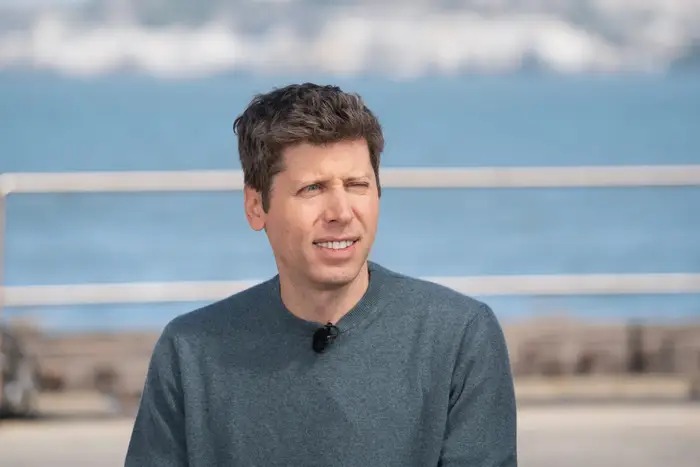
OpenAI CEO Sam Altman stated that after OpenAI began to make a major entry into the field of mathematics, the reaction of mathematicians went through several stages, similar to a process of grief.
First, there was disbelief, and then came pain.
Ortman said, “The reaction on the first day was probably, ‘We’re done, this field of ours is over.’” He said, “‘We’re telling graduate students to change their majors.’”
What follows is anger.
In a recent speech at Stanford University, Ortmann said, “By the third day, the reaction might have turned into: ‘OpenAI doing such a thing is terrible.’” At that time, there were hundreds of students in the audience who felt uneasy about the feasibility of their future careers.
However, according to Olertman, by the fifth day, mathematicians began to gradually accept the role of AI that he described as being inseparable from research in numbers and proofs today.
Oltermann said, "We can already see that many people are starting to say that, in fact, they will continue to develop their careers as mathematicians in a different but hopefully better way."
Altman's optimistic judgment stands in sharp contrast to the kind of transformative shift with existential implications described by some people in the mathematical community.
Two scholars—one from New York University and the other from Anthropic—have accused OpenAI of using data from their chat records to help solve this problem. The mathematicians also complained that even though the AI model may have solved the problem, it did not show the solution process, leaving them to undertake a less commendable task of verification.
And after this series of controversies, even more disputes emerged.
Recently, Terence Tao, a mathematical genius from the University of California, Los Angeles, stated that with top scholars like him beginning to adapt to a work process that requires the verification of AI results rather than solving problems independently, the “romantic era” of mathematics has come to an end.
After solving over 700 more problems this month, as indicated by OpenAI, Terence Tao said, "Some things are beginning to be lost."
Meanwhile, Altman, who stood on the other side of this debate, adopted a subversive optimism.
Regarding the reorganization of the workforce caused by AI, Altman said, "I don't think there will be such an employment apocalypse." However, he also noted that in the field of mathematics, this impact is more rapid than in other disciplines and industries.
He said, "This is, in my opinion, the fastest time we have all seen a sector go through such a cycle."