















IMF has discovered that tokenizing U.S. stocks enables 24/7 trading and fractional ownership. More than half of the transactions occur outside of regular trading hours, and approximately 80% of the transactions involve less than one share.
IMF indicates that tokenized stocks are still a very small and fragmented market. Although they may improve settlement and enable automation, they require stronger legal frameworks, greater liquidity, and better interoperability.
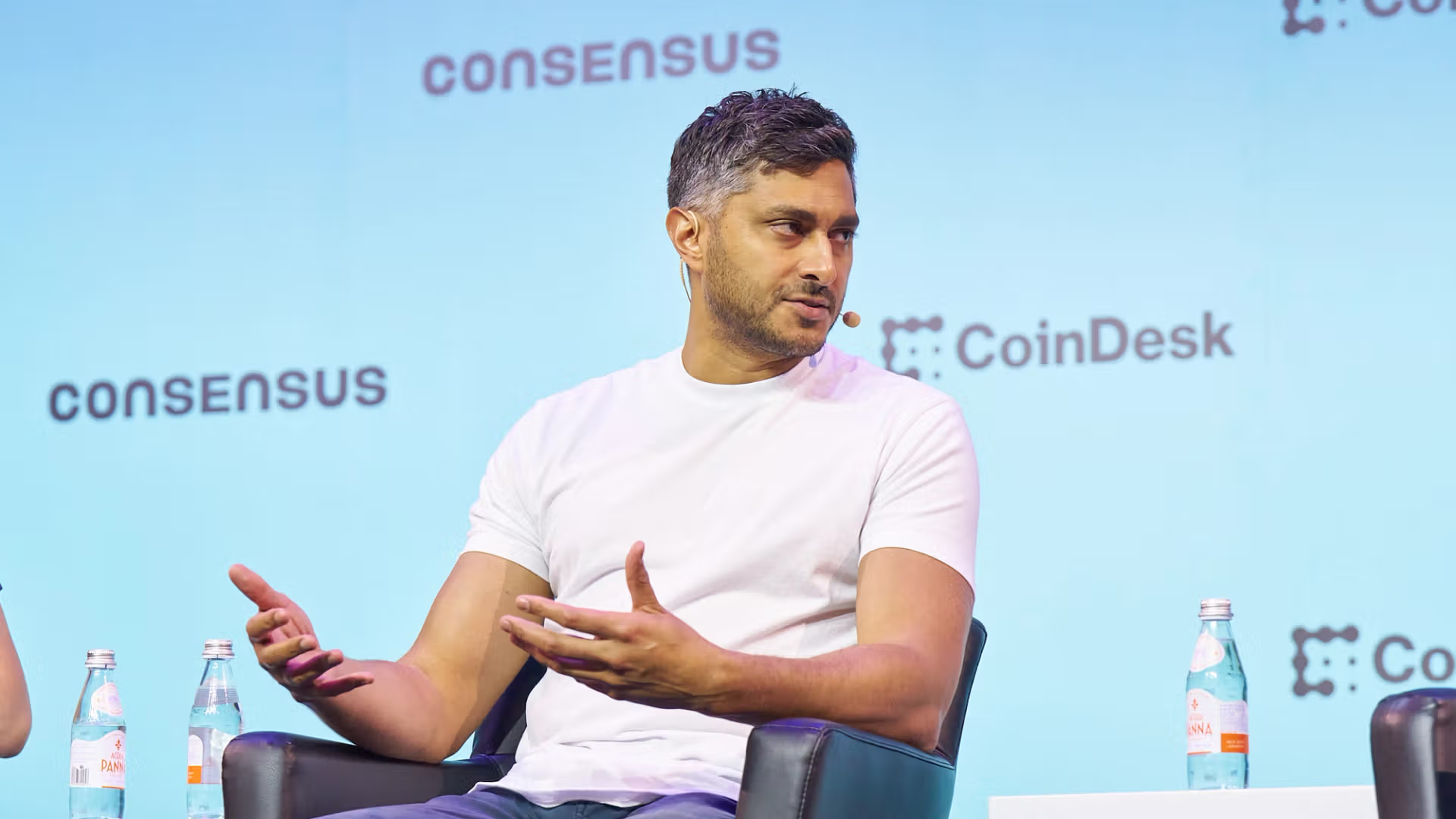
Bitget CEO Gracy Chen stated: "Moving assets onto the blockchain is just the first step. The bigger question is, once the capital is there, how efficiently can it operate?"
The message conveyed by IMF is that, although this use case is indeed real, the market is still in its early stages. IMF states that the market for tokenizing real-world assets (RWA) is growing rapidly, with an estimated size of around 65 billion US dollars as of July 31. Of this, tokenized stocks account for about 2.3 billion US dollars. Data from the Securities and Financial Markets Association of America (SIFMA) indicates that the global stock market value will be slightly less than 160 trillion US dollars by 2025.

However, the number of tokenization projects is still growing. Bullish, an encryption company based in Gibraltar (which is also the parent company of BLSH), launched tokenized stock trading in August. Earlier this month, OKX and Intercontinental Exchange (which owns and operates the New York Stock Exchange, known as ICE), submitted plans to launch a platform that will provide 24/7 trading of tokenized U.S. stocks.
It's not just them doing this. Crypto exchanges Coinbase Global ( COIN ), Kraken , and Binance also offer tokenized stock trading, and the same goes for Robinhood Markets ( HOOD ).
The problem is not merely that the blockchain market is small. To realize the cost and time savings promised by tokenization, there needs to be a sufficient number of issuers, investors, trading venues, and settlement assets on compatible systems. The current market is scattered across private platforms, public chains, custodians, and settlement tools, which often do not communicate with each other.
IMF indicates that tokenization can replace some of the manual work that companies use for bookkeeping, automate tasks such as dividend payments, and speed up the transfer of collateral. IMF warns that automated margin calls and liquidations, the flow of collateral between different platforms, and 24-hour trading may make market shocks more difficult to control.
According to IMF, since the tokenization market is still very small, the associated risks are currently limited as well. However, the report suggests that before the market further expands, it is necessary to establish legal rules regarding ownership, ensure liquidity, create connections between systems, and make arrangements for settlement.