On Friday, U.S. stocks rose supported by the technology sector. Traders attempted to recover from a turbulent week. This week, U.S. Treasury yields and oil prices remained high, and stocks in the artificial intelligence ( AI ) sector also saw declines.
The Nasdaq Composite Index rose by 0.64%, the S&P 500 Index rose by 0.59%, and the Dow Jones Industrial Average increased by 423 points, with a gain of 0.83%.
U.S. President Donald Trump stated that Russian President Vladimir Putin has agreed to supply diesel to the United States and global markets. Following the announcement, U.S. stocks reached their intraday highs. Oil prices closed slightly higher on Friday, with the futures price for West Texas Intermediate crude oil (WTI) in the United States approaching $92 per barrel, and the futures price for Brent crude oil exceeding $104 per barrel. However, after Trump made the aforementioned statement, oil prices fell slightly in after-hours trading.
Elon Musk's space and satellite company SpaceX announced a deal to acquire a portfolio of radio frequency spectrum assets across the United States, which drove up the stock price of SpaceX. In contrast, the stock prices of AT &T, Verizon (Verizon), and T-Mobile fell as investors feared that the deal might intensify market competition.
On Friday, other tech stocks also rose along with SpaceX. Software stocks led the gains, with Palo Alto Networks (Palo Alto Networks) rising nearly 5%, and CrowdStrike and Palantir Technologies rising by 4% and 3% respectively. Microsoft rose 2%, and Amazon, also a member of the "Big Seven Tech Companies," also increased by 2%.
In addition to the technology sector, the healthcare sector also performed outstandingly, with stocks of Merck ('Merck') and Gilead Sciences ('Gilead Sciences') both rising by nearly 3%. It is reported that the National Institutes of Health ('NIH') in the United States are advancing research related to cancer vaccines, and the market is optimistic about this, which has driven a significant increase in vaccine stocks such as Moderna.
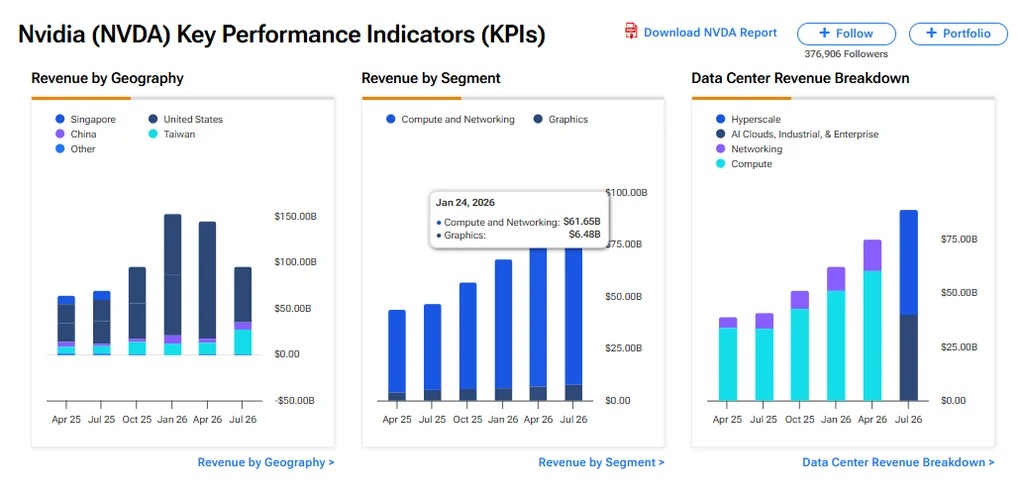
On Thursday, tech stocks, particularly those related to artificial intelligence, became the main drag on the market. Previously, OpenAI had informed investors that as of the end of September, its annualized revenue had reached $50 billion. Last month, the market widely reported this figure as $68 billion, but a person familiar with the matter stated that the latter also included the total revenue of its partners.
The Nasdaq index fell more than 1% on Thursday, recording its largest single-day decline since mid-August. This is also the second consecutive trading day that the index, which has a high weight of technology stocks, has declined, after it reached a record high earlier this week.
Adam Kressafulli ( Adam Crisafulli ), from Vital Knowledge, wrote: 'This sell-off reflects an extreme imbalance in market positions, and we believe that there is still room for further adjustment in this imbalance. Therefore, it is unlikely that the entire technology sector related to AI will see a rapid and sharp V-shaped rebound.'
He added, "In terms of artificial intelligence, the main issue is not whether the annual recurring revenue (ARR) is calculated on a gross or net basis, but rather: 1. Independent cutting-edge artificial intelligence laboratories are increasingly becoming unattractive business models; 2. There are more and more signs that the market is beginning to resist the wave of debt and equity financing related to artificial intelligence."
Despite the long-term U.S. Treasury yields hitting a 24-year high this week, followed by market fluctuations, all three major stock indices are still expected to record gains this week. The Dow Jones and the Nasdaq both rose by less than 1% this week, while the S&P 500 index rose by about 1%.
Next week, as banks begin to release their financial reports one after another, the U.S. corporate earnings season will officially kick off. In addition, well-known companies such as Johnson & Johnson and UnitedHealth Group will also announce their financial results. These two companies plan to release their earnings on Tuesday, and on the same day, firms like Wells Fargo and Citigroup will also disclose their financial figures.
Michael Monahan ( Michael Monaghan ), who goes by the username Founder ETFs, is optimistic about the performance of the U.S. stock market before the end of the year, as he expects companies to achieve "strong growth." However, he still believes that conflicts in the Middle East and their impact on oil prices could drag down the market. This week, Trump stated that the United States would not attack Iran before the mid-term elections at the beginning of next month, but Monahan still holds the same view.
This portfolio manager stated that the conflict in the Middle East is "one of the factors hindering the market from fully reflecting the strong profitability prospects of companies in recent times."
He added, "The market has not yet factored in the risk of a more violent war with more intense military actions and the spread of fighting to more countries into its pricing."