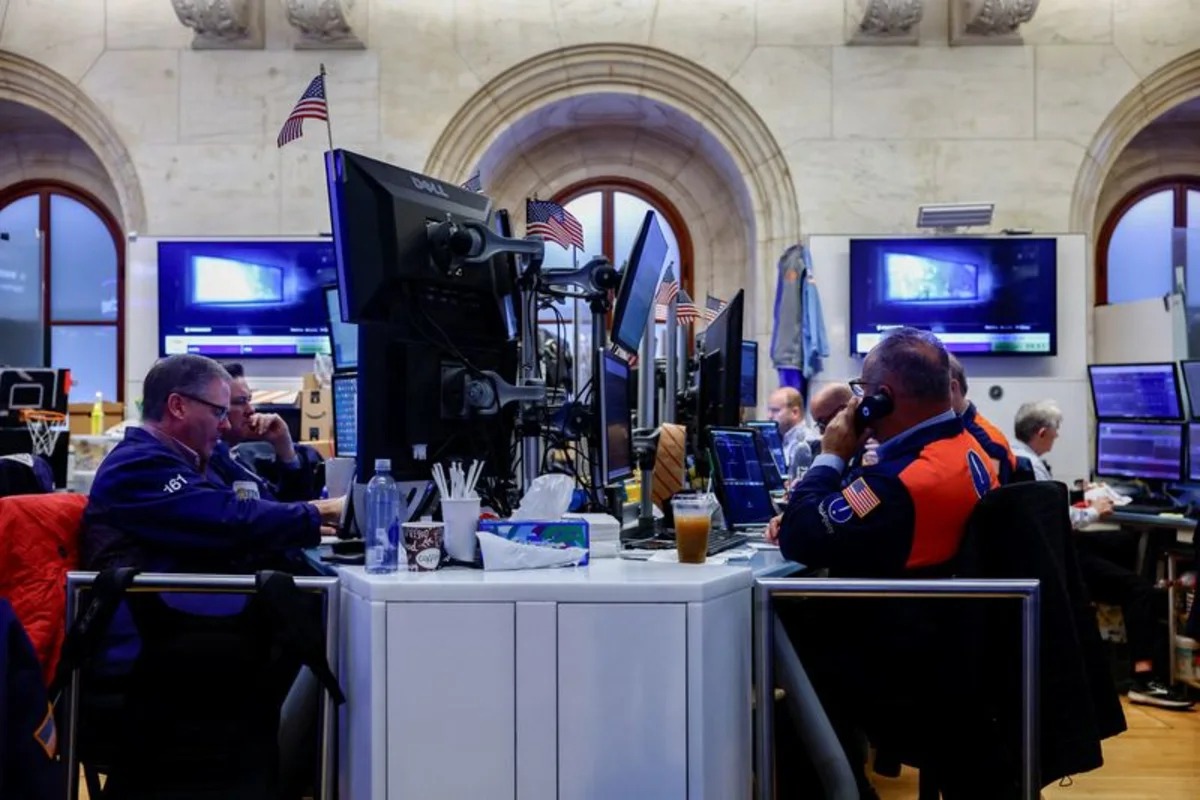


New York, October 8 (Reuters) – U.S. stocks fell on Thursday due to escalating tensions in the Middle East and a reduction in U.S. production that drove up crude oil prices, sparking concerns about inflation and interest rate hikes, while semiconductor stocks weakened significantly.
Among the major U.S. stock indices, the Nasdaq index recorded the largest decline at the close. Just two days ago, this index, which has a high weight of technology stocks, had just set a new closing record high. The decline of the S&P 500 index was relatively small, while the blue-chip Dow Jones Industrial Average managed to close higher.
Chip manufacturers have seen a rise of over 80% so far this year, but their performance on that day was significantly lagging behind, falling by 3.4% due to a report in The Financial Times. The report stated that the annualized revenue of OpenAI was $20 billion lower than the signals previously released by the company.
"The market is currently in a sideways consolidation phase, waiting for the third-quarter earnings season that begins next week. At the same time, the ongoing conflicts in Iran are also driving up oil prices," said Terry Sandven ( Terry Sandven ), the chief equity strategist at Bank of America's wealth management division based in Minneapolis. "It's also worth noting that so far this year, the most likely path for the stock market has been upward."
Due to a series of attacks on shipping in the Strait of Hormuz, coupled with reduced production in the United States caused by hurricane activity, concerns about supply have driven up oil prices in the market.
In recent months, WTI crude oil and Brent crude oil have closed higher by 3.6% and 4.1% respectively.
During the Iran War, global crude oil supply remained tight, driving up U.S. crude oil prices by more than 60% so far this year and exacerbating inflationary pressures. To address these pressures, the Federal Reserve raised interest rates for the first time since July 2023 in September.
Financial markets currently expect that the Federal Reserve will keep interest rates unchanged this month, while according to the CME FedWatch tool, the probability of a rate hike in December is 69.2%.
This corresponds to the interest rate hike path anticipated by the European Central Bank. Federal Reserve governor Christopher Waller ( Christopher Waller ) also stated that further interest rate hikes are likely to be necessary, but the timing of these hikes is "flexible".
The Dow Jones Industrial Average rose by 51.77 points, or 0.10%, to 51,231.64; the S&P 500 Index fell by 36.41 points, or 0.47%, to 7,765.36; the Nasdaq Composite Index fell by 345.35 points, or 1.25%, to 27,193.34.
Among the 11 major sectors of the S&P 500 index, energy stocks led the gains, while technology stocks suffered the largest decline due to the drag from chip stocks.