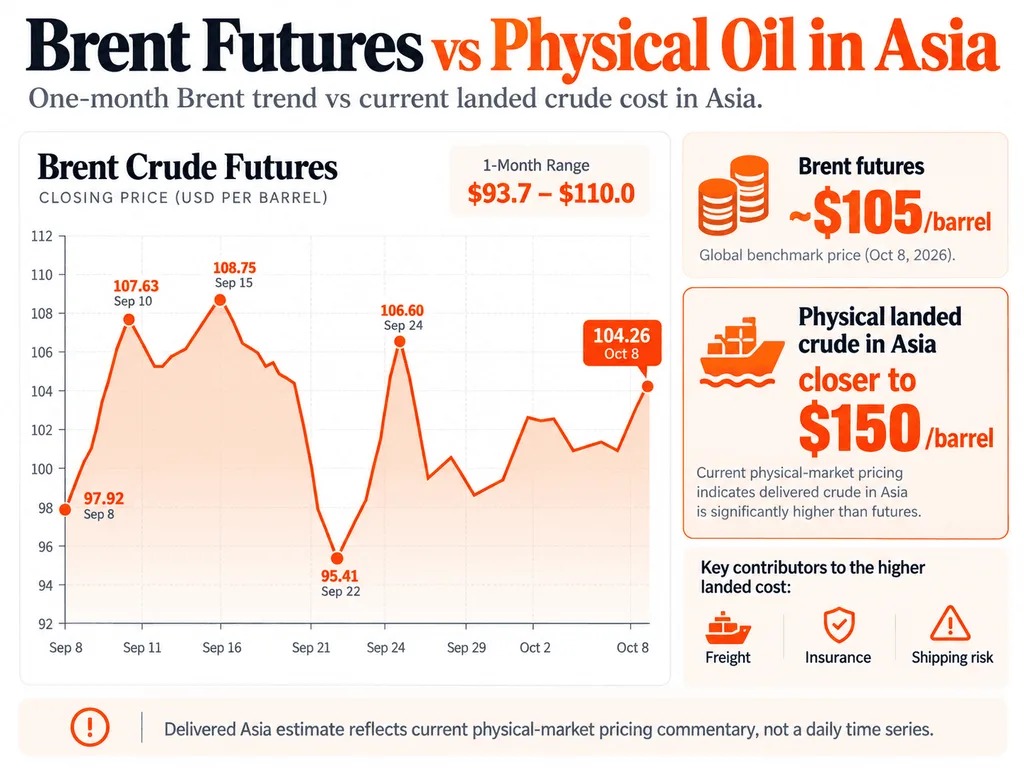
Chevron CEO Mike Wirth stated that the physical crude oil arriving in the Asian market is now closer to $150 per barrel, rather than $100, highlighting the widening gap between the global futures benchmark and the actual cost of transporting crude oil through disrupted supply chains.
Wirth made the aforementioned remarks at the Energy Intelligence Forum held in London. He warned that as the conflict in the Middle East enters its eighth month, the global oil and fuel reserves are becoming thinner.
Why physical crude oil may be much more expensive than Brent crude oil
Brent futures represent the benchmark price and do not include all the costs required to deliver a barrel of crude oil to a refinery.
With attacks on oil tankers near the Strait of Hormuz and the resulting increased risks, these costs have risen significantly. The flow of crude oil through the Strait of Hormuz has decreased by about 27%, to 10.1 million barrels per day. However, alternative routes via the Gulf of Oman and the Red Sea have helped to maintain overall Middle Eastern exports at levels close to those before the conflict.
This also explains why Brent crude oil can be maintained at around $105 per barrel, while the cost of crude oil delivered to its destination is much higher.
The oil market's cushion is diminishing.
Due to the abnormally low inventory as well, this price difference is becoming increasingly important.
Industry executives estimate that global commercial crude oil inventories have fallen below 6 billion barrels, of which only about 10% can be quickly mobilized in the event of disruptions. During the crises in the Middle East and Ukraine, more than 1 billion barrels of crude oil were released from emergency reserves.
This makes the market more sensitive to relatively small disruptions.
An explanation article by Coinpaper regarding oil inventories points out that even before a clear global shortage occurs, the depletion of inventories can amplify price fluctuations.
Governments around the world have begun to respond. The G7 recently approved the release of 100 million barrels of emergency reserves in an effort to ease the pressure on the crude oil and diesel markets.
Maya Bennett
Maya Bennett is a financial journalist whose reporting covers areas including cryptocurrencies, stocks, and broader market trends. Her focus includes Bitcoin, major digital assets, the stock market, monetary policy, and economic developments that influence investor sentiment. She is adept at transforming rapidly changing market news into clear and concise reports.