This significant debt financing transaction once again demonstrates the enormous scale of funds invested in chips and other infrastructure to support artificial intelligence.
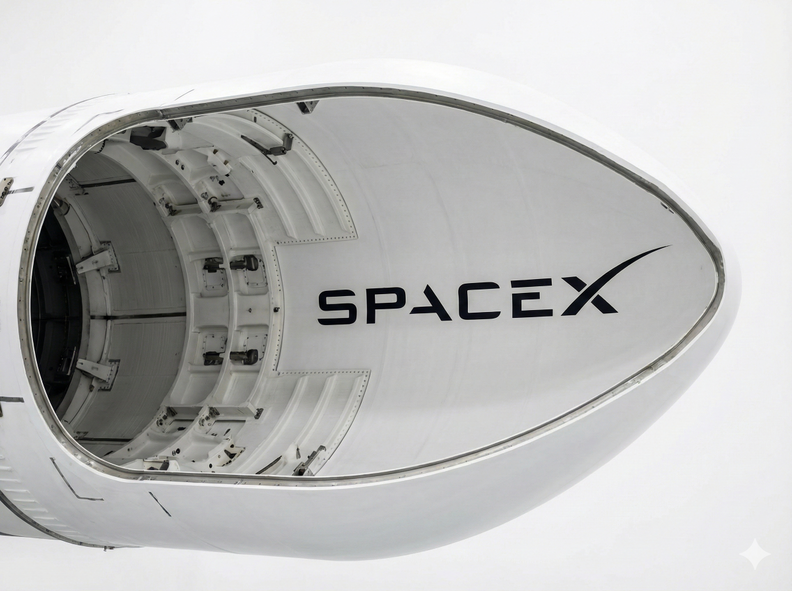
Elon Musk's SpaceX is seeking to raise $40 billion through a financing plan led by Apollo Global Management to purchase NVIDIA chips. As this artificial intelligence and rocket company increases its bet on NVIDIA's advanced technologies, its relationship with this chip manufacturer is also deepening further.
According to people familiar with the matter, the company is seeking to raise approximately $10 billion in bank loans and $30 billion in investment-grade bonds to fund this massive chip order.
Insiders say that the private equity group Apollo is expected to lead this transaction and help sell these debts to a wide range of investors. The bond investment group Pimco is one of the few lenders involved in the negotiations and may provide funding for the transaction. It is anticipated that this transaction will be completed in 2027.
The financing plan for SpaceX highlights the enormous scale of funds raised for investments in data centers, chips, and other infrastructure that supports artificial intelligence.
Since SpaceX holds a credit rating of BBB, which is the second lowest level among investment-grade ratings, insurance companies and pension funds will be able to purchase its bonds. In contrast, such funds typically have much more limited exposure to junk-grade bonds.
Apollo and Pimco declined to comment. SpaceX and NVIDIA did not immediately respond to requests for comments.
This transaction will further strengthen the relationship between SpaceX and NVIDIA. Previously, Musk has pledged to increase investment in NVIDIA's technology further within his artificial intelligence projects. At the same time, this will also be a victory for NVIDIA, as the company is facing increasingly fierce competition from other chip manufacturers that are trying to challenge its dominant position in the field of advanced semiconductors.
During the SpaceX earnings call in August, Musk stated, "We have decided to build entirely on NVIDIA, as we believe the Vera Rubin architecture is the best one." He was referring to NVIDIA's most advanced artificial intelligence platform.
"We believe this to be the best artificial intelligence computer, and we place great importance on our close collaboration and partnership with NVIDIA at multiple levels."
Shortly after conducting its initial public offering (IPO) in June for $86 billion, SpaceX received an investment-grade rating. Less than two weeks later, the company issued another $25 billion in high-grade bonds. However, due to investors' concerns regarding its growing debt and high capital expenditures, these bonds saw a sell-off in the following days.
According to MarketAxess data, the bond maturing in 2056 is currently trading at about 85 cents on face value, with a yield about 2.27 percentage points higher than that of U.S. Treasury bonds, and is close to the level of junk bonds.
In the past, Musk's limited disclosure of financial information has caused some investors to be cautious about purchasing SpaceX debt.
Investors who were previously approached by SpaceX to discuss financing for their billions of dollars in chip purchases stated that they only received a brief two-page transaction memorandum, which included space images and arrows indicating that the company planned to build a data center "somewhere in the universe."
One of the individuals said, "How could we possibly present something like this to the investment committee?" The "investment committee" mentioned here refers to the internal committee responsible for approving transactions.
Apollo has made lending to higher-tier companies a major pillar of its $800 billion credit business and has taken the lead in completing financing transactions worth billions of dollars for groups such as Intel and Bayer. Its life insurance and annuity-related company, Athene, typically purchases a large portion of these offerings.
In June this year, Apollo also led a $35 billion chip financing deal to purchase processors produced by Broadcom, a competitor of NVIDIA. At that time, this deal became the largest private credit transaction.
In August this year, NVIDIA announced that it was collaborating with some of the largest institutions on Wall Street to create a financing platform worth $500 billion, and has already signed memorandums of understanding with Apollo, BlackRock, Blackstone, Brookfield, Goldman Sachs, and KKR.
The consortium aims to establish a third-party capital pool to provide financing for the purchase of NVIDIA chips and for the construction of a broader range of artificial intelligence infrastructure, thereby helping its smaller customers reduce their financing costs. NVIDIA may provide support amounting to up to 25% of the value of the chips.
Responsible Editor: Li Antong