

The S&P 500 index hit a new high on Tuesday, but the driving force behind this rebound was extremely concentrated: a handful of technology giants betting on artificial intelligence almost single-handedly supported the entire market, while other sectors such as healthcare, banking, and consumer goods were declining. The continuous narrowing of the market breadth is raising concerns among investors about whether this rally can continue.
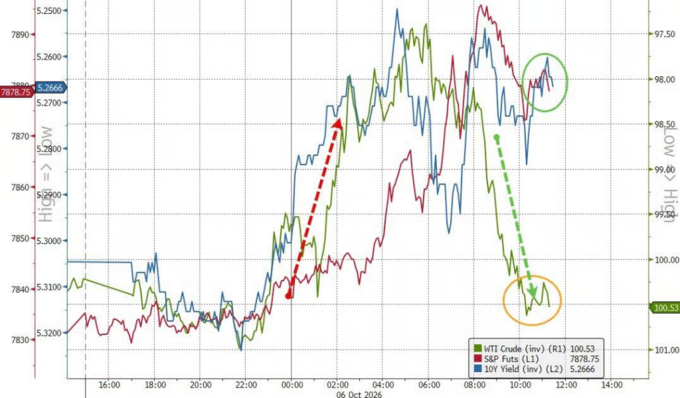
On Tuesday, the S&P 500 index closed at a record high, marking the first time it has surpassed this level since August 13th. The Nasdaq Composite Index also set a new closing high for the second consecutive trading day. The combined market value of the "Big Seven Tech Companies" ( Magnificent Seven ) approached $25 trillion, and according to Dow Jones Market Data, NVIDIA alone has a market value of over $5.76 trillion. Meanwhile, the yield on 10-year U.S. Treasury bonds fell slightly by 4 basis points to 5.270%, following a large-scale sell-off in the bond market that had pushed Treasury yields to nearly their highest levels in over two decades.
However, behind these new record highs lies a divided market landscape. According to Dow Jones Market Data, as of Tuesday, less than half of the components of the S&P 500 index closed above their 200-day moving averages, a proportion that has been on the decline since August. Small-cap stocks, blue-chip stocks, and even weight-based indices such as the S&P 500 are lagging behind the main benchmarks, with the Russell 2000 index performing significantly weaker than the S&P 500 over the past month.
AI Narratives reignite, tech giants reclaim dominance
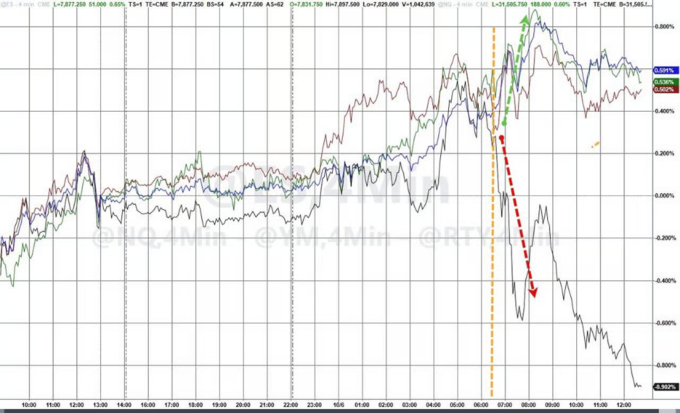
After several months of sideways consolidation at the beginning of the year, the "Seven Tech Giants" are making a strong comeback. NVIDIA has risen by 4.5% in the past week, setting a new record high; Meta has accumulated a gain of 24% since the previous high of the S&P 500 on August 13th. The stock prices of the "ultra-large cloud providers" represented by Alphabet, Amazon, Microsoft, and Meta have rebounded to four-month highs.
The large-scale energy agreement reached between Alphabet and Constellation Energy – just a week after Amazon announced a similar deal – further strengthens the market narrative of continuous expansion in AI's infrastructure capital expenditures, boosting sentiment in the tech sector. Sectors related to the AI ecosystem, such as data centers and optical networks, have performed exceptionally well.
Horizon, the person in charge of research and quantitative strategies, stated by Mike Dickson:
The "Seven Tech Giants" have experienced a strong upward trend over the past two months and have now actually caught up with the overall increase of the S&P 500. To some extent, this can be considered a round of catch-up gains.
In an environment of high interest rates, large-cap tech stocks are regarded as 'defensive assets'.
The dominance of tech giants stands in sharp contrast to the current macroeconomic environment. In September, the Federal Reserve raised interest rates for the first time in three years, leading to a continuous rise in bond yields, which put significant pressure on sectors that are sensitive to interest rates, such as small-cap stocks, utilities, and home builders.
In this context, technology giants with ample cash and relatively low debt have instead been revalued by the market as "safe havens." Truist Advisory Services Chief Investment Advisor Keith Lerner stated:
Investors look around, wondering which sectors can withstand all of this. Tech stocks are, to some extent, almost regarded as defensive assets.
Potomac Fund Management Chief Investment Officer Dan Russo pointed out: "High interest rates and inflation are eroding the value of other stocks in the S&P 500, with only the fortress-like balance sheets of large-cap stocks supporting the entire market." Despite the fact that ultra-large cloud providers are raising billions of dollars in funding to advance AI construction, Russo believes that these companies still have a greater ability to maintain growth in a high-interest-rate environment compared to other firms.
The market breadth is narrowing, and potential risks cannot be ignored.
Analysts point out that the current market pattern of 'extremely narrow breadth' itself constitutes a risk. Stock market returns are highly dependent on a few stocks, which may experience sharp fluctuations due to overspending, declining free cash flow, competition in the AI model, and even other external shocks.
There are also resistance signals on the technical side. Strategist BTIG Jonathan Krinsky pointed out that although it is generally not advisable to go short against the trend when an index breaks new highs, the cross-signals from breadth, interest rates, and credit markets suggest that the sustainability of this "breakthrough" may not meet market expectations.
It is worth noting that although the stocks of ultra-large cloud providers have risen significantly, their credit bond markets have not followed suit. The last time there was a breakthrough was on August 4th, but after only two days, the S&P 500 remained sideways for a full two months until it reached a new high again on Tuesday.
Baird Private Wealth Management Investment Strategist Ross Mayfield also admitted:
"The market is quite anxious about this narrowness. Ideally, of course, we would like to see a wider range of participation in the upward trend. However, as long as the largest and most influential stocks in the market continue to drive the trend, I think it will ultimately be a good thing."
However, there were also some signs of improvement in breadth on Tuesday—10 out of the 11 sectors of the S&P 500 index closed higher for the third consecutive trading day, which is the first time such a scenario has occurred since December 2023. Lerner summarized the overall sentiment of investors as follows:
"At this moment, all roads lead to technology."