




Ethereum is testing for increased capacity through 200 million gas blocks
Coinpaper
1h ago
Ai Focus
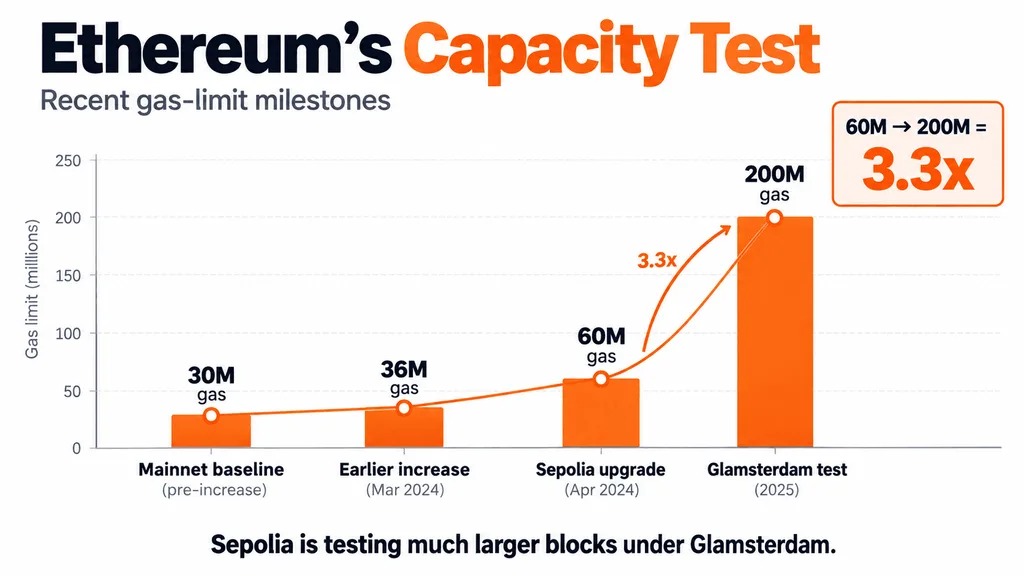
Ethereum is testing the Glamsterdam upgrade on the Sepolia test network, with a target block size of gas set at 200 million, which is more than three times the previous limit of around 60 million. Developers are using this opportunity to assess whether validators can safely handle larger blocks and to observe to what extent the capacity can be expanded without significantly increasing hardware or verification burdens.
Helpful
No.Help

Ethereum is testing one of the most significant attempts to increase its capacity. During the Glamsterdam upgrade, which is being progressed on the Sepolia test network, the target for the number of blocks has been set at a limit of 200 million gas.

This test more than tripled the previous upper limit of approximately 60 million gas for Sepolia. Developers use this to measure whether Ethereum validators can safely process significantly larger blocks.

This change does not mean that the Ethereum mainnet will immediately increase to 200 million gas. On the contrary, developers are using Sepolia to determine to what extent the capacity of Layer can be expanded further, while also avoiding placing an excessive burden on hardware or verification requirements.

Ethereum tests an over-three-fold increase in capacity

Gas represents the computational workload required to execute transactions and smart contracts on Ethereum.

A higher limit on blocks gas means that each block can accommodate more exchanges, stable coin transfers, and smart contract interactions before users start competing fiercely for available space.

Ethereum has previously been gradually increasing the upper limit of gas, but on Sepolia, it has been raised from 60 million to 200 million, representing a more radical test.

This experiment emerged as developers attempted to expand Ethereum itself while maintaining a broader Layer 2 scaling strategy for the network.
Glamsterdam Changing the Way Ethereum Processes Blocks

Glamsterdam introduced a number of architectural changes aimed at supporting higher throughput.

One of these is the block-level access list, which allows nodes to know in advance which accounts and storage locations will be used by a block before it is executed. This may make it easier to process independent transactions in parallel, rather than executing them all in sequence.

Another important feature is the separation of proposers from builders within the protocol, which is ePBS. This feature incorporates more aspects of the Ethereum block construction process directly into the protocol.

Previously, the tests of Nethermind included 2,302 performance tests, during which it processed 570.7 billion gas in just over three minutes. Developers used this to evaluate the design's performance under heavier loads.

These improvements are at the core of Ethereum's broader roadmap for scaling, especially as blockchain activities are growing in the fields of payments, DeFi, and tokenized assets.

Tip
$0
Like
0
Save
0
Views 30
CoinMeta reminds readers to view blockchain rationally, stay aware of risks, and beware of virtual token issuance and speculation. All content on this site represents market information or related viewpoints only and does not constitute any form of investment advice. If you find sensitive content, please click“Report”,and we will handle it promptly。
Submit
Comment 0
Hot
Latest
No comments yet. Be the first!
Related
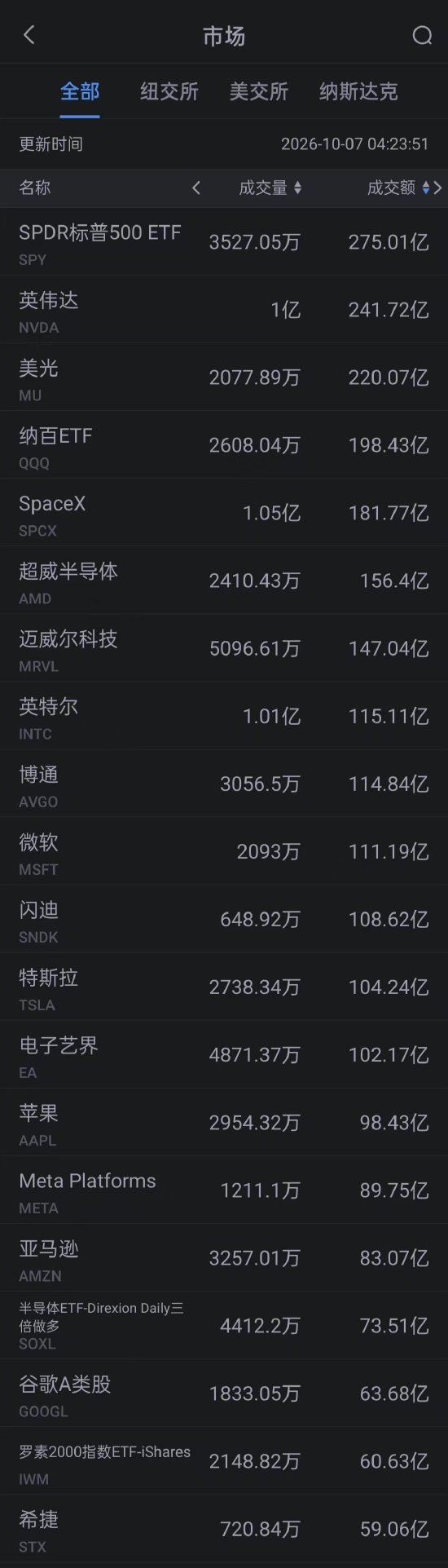
Top 20 US Stock Traders on October 7: Marvell Technologies Up More than 5% as It Releases Long-Term Revenue Outlook
Among the top 20 trading volumes in U.S. stocks on Thursday, technology stocks such as NVIDIA, AMD, Marvell Technologies, Broadcom, Microsoft, and Google all had related news. Marvell Technologies announced its long-term revenue guidance during Investor Day, expecting revenue to reach $20 billion for the fiscal year 2028, with a forecast range of $70 billion to $90 billion for the fiscal year 2031; Broadcom's related AI debt financing reached $60 billion; Google released a multimodal embedding model and responded to the domain name hijacking incident.
The Block
·2026-10-07 05:27:17
4
First Digital signs the final agreement and will go public on SPAC to build an intelligent economic infrastructure
First Digital and KOYN sign a final business merger agreement, aiming to become NASDAQ-listed companies through the SPAC transaction, and continue to advance the construction of the FDUSD stablecoin and Finance District ecosystem.
GlobeNewswire
·2026-10-07 05:27:09
3
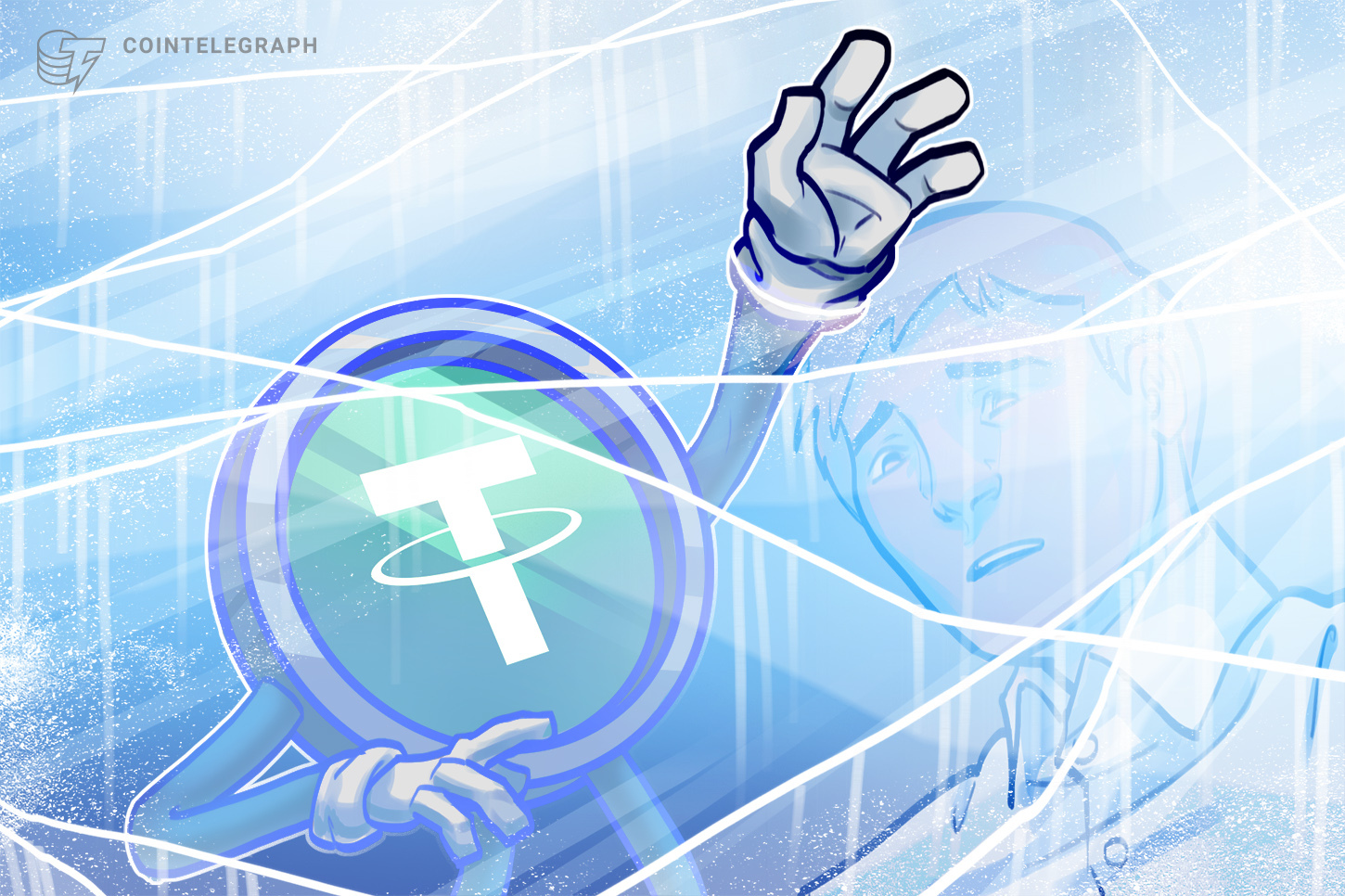
Conduit sues Tether, accusing it of unfreezing $2.76 million without cause USDT
Cross-border payment platform Conduit Technology accuses stablecoin issuer Tether of unfoundedly freezing $2.76 million from its wallet in September 2025. Conduit claims that these funds belong to the company itself, and Tether argues that there is no legal basis or right to withhold them, stating that this action has had a substantial impact on their business.
Cointelegraph
·2026-10-07 05:16:25
6
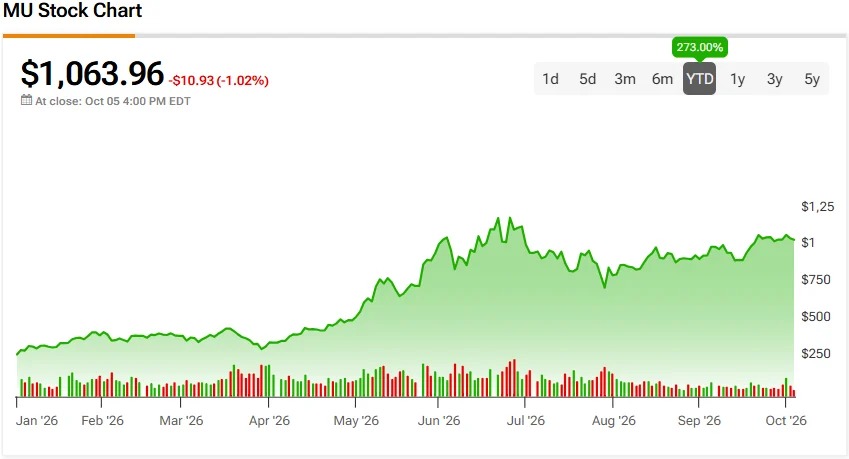
"Stop dreaming," investors say about Micron's stock
Micron Technology's latest quarterly performance was once again strong, but the stock price quickly lost its gains after the earnings report. An investor named Rational Techne remains bearish, believing that the market may have approached Micron's cyclical peak, and that increased supply of memory chips and competition in the coming years could suppress valuations.
Businessinsider
·2026-10-07 05:07:22
13
Spain shows property owners that contracts can be rewritten overnight
The Spanish government has passed an emergency decree to limit rent increases and strengthen the automatic renewal of leases, sparking controversy over the retroactive modification of private contracts. The article uses this as a comparison to Bitcoin, stating that its rules are fixed and cannot be arbitrarily changed by the government.
Bitcoin Magazine
·2026-10-07 04:48:08
17
View More