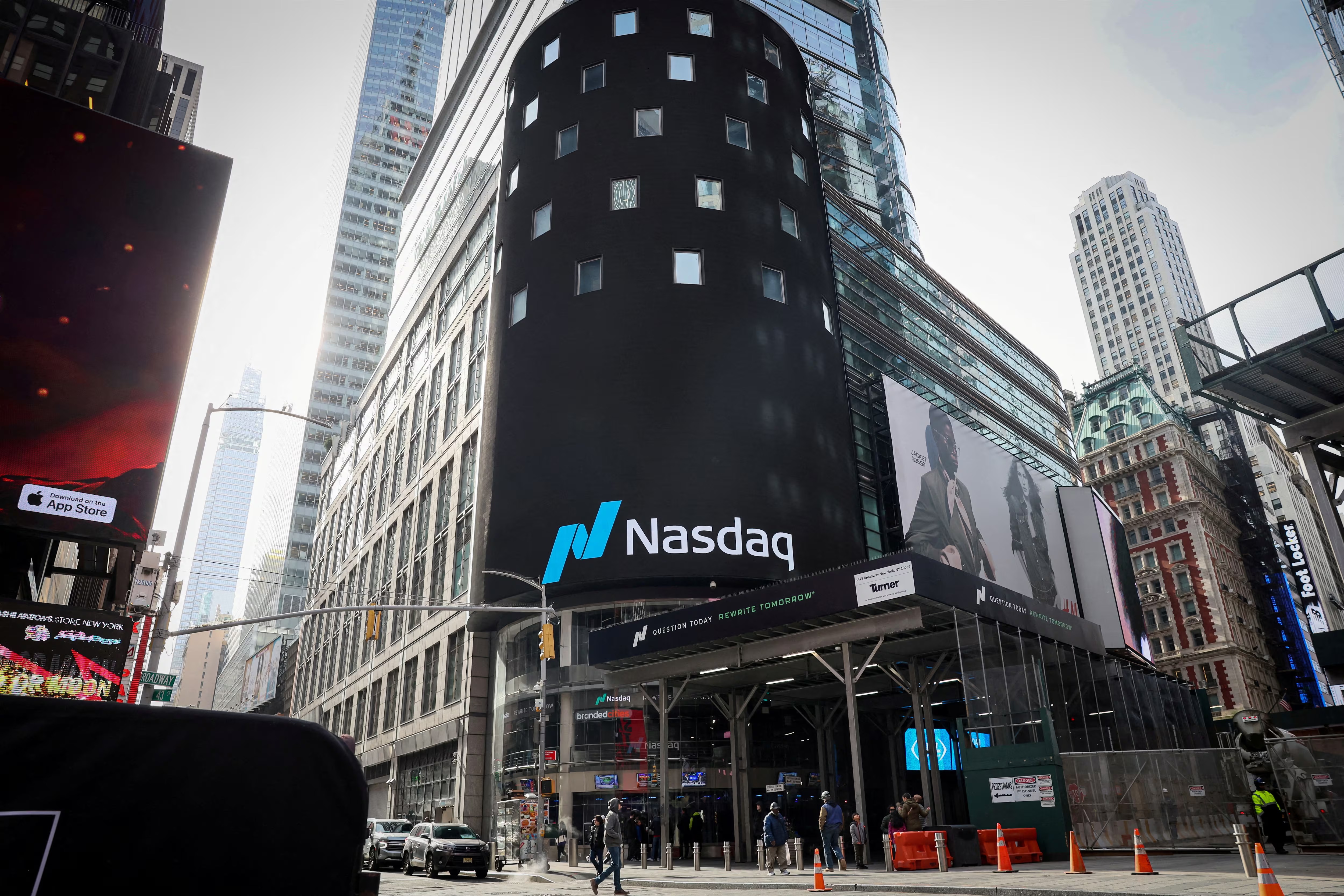
Starting from December 6th, four major exchanges including NASDAQ ( Nasdaq ) and the New York Stock Exchange ( Arca ) will officially introduce night trading sessions, marking a full transition to a 23-hour "round-the-clock trading" era on Wall Street.
This historic expansion is aimed at addressing the cross-border competition in the cryptocurrency and predictive markets characterized by "24/7 trading" and at accelerating the capture of incremental demand from overseas investors. Data from the U.S. Securities and Exchange Commission (SEC) shows that although night trading currently accounts for only about 1% of the total trading volume of U.S. stocks, its year-over-year growth rate has reached as high as 358%, indicating a strong momentum of growth.
Institutional funds on the sidelines: Liquidity and price spreads are key concerns
The extension of trading hours has sparked disagreements in the global market. Supporters hope to use this opportunity to break down time zone barriers, but institutional investors with substantial funds remain highly cautious about potential risks.
Crisil Coalition Greenwich Senior Analyst David Easthope stated that the core pain point for the institution lies in the "market quality" after extending trading hours, which refers to liquidity and bid-ask spreads, rather than simply operational or staffing scheduling issues. A survey conducted by this institution among buyer traders in the second half of last year (the second half of 2025) revealed that due to the scarcity of participants outside regular trading hours, forced entry into the market could result in a double blow of depleted liquidity and widened spreads, which may even affect the mental and physical health of traders. However, Easthope added that as regulators make substantial progress with reforms, buyers are now mentally prepared for the "inevitability" of this trend.
Themis Trading, the co-head of stock trading, and Joseph Saluzzi openly expressed their lack of interest in the new regulations. He pointed out that the total volume of pre-market and post-market trading on current exchanges only accounts for 10% of the total volume, and institutional funds would never rashly enter a market with low liquidity, wide price spreads, and high volatility.
Liquidnet, the head of market structure, and Connor believe that institutions are currently in a 'wait-and-see' mode. If the expansion in December can substantially improve the night-time price discovery mechanism and reduce transaction costs, institutional funds will eventually enter the market to capture the Alpha (excess returns) from the night session.
Overseas and retail investors dominate: a highly concentrated trading target
Overseas funds and retail investors have become the main participants in the current night trading session. SEC data shows that in the second quarter of this year, overseas investors contributed 37% of the total trading volume in the night session.
The imbalance in the structure of participants directly leads to a high concentration of trading targets. In August this year, just 15 stocks accounted for 50% of the trading volume during the night session, among which there were frequently "less than $1" low-priced stocks with registration locations in mainland China and Hong Kong, China. In contrast, during regular times with ample liquidity, 256 stocks would be required to achieve the same proportion of trading volume.
The CEO of Blue Ocean Technologies, an alternative trading system that currently provides night session matching services (ATS), stated that after the new regulations are implemented in December, existing active traders will be able to transition seamlessly. However, he also admitted that the continuous absence of buyer institutions and investment banks means that the market is still missing a crucial piece of the puzzle.
Liquidation of infrastructure in place: Only one hour of 'window period' per day allowed
Despite disagreements on the funding side, the underlying infrastructure on Wall Street is already ready for an "all-nighter."
The American Securities Depository and Clearing Corporation (DTCC) responsible for the clearing of U.S. stocks switched to a "24x5" mode in June of this year, with operating hours from 8 p.m. on Sunday evenings to 8 p.m. on Friday evenings, New York time. At the same time, the Securities Information Processor (SIPs) responsible for distributing quotes and trading data has also been approved to extend its operating hours.
According to the latest schedule, after the expansion in December, NASDAQ and the New York Stock Exchange will add a night session from 9 p.m. to 4 a.m. the following day, in addition to their existing regular trading hours (9:30-4:00 p.m. Eastern Time), pre-market hours (starting at 4:00 a.m.), and post-market hours (4:00-8:00 p.m.).
At that time, the U.S. stock market will only have a one-hour closing period from 8 p.m. to 9 p.m. throughout the day, which is reserved for system maintenance and transaction processing.