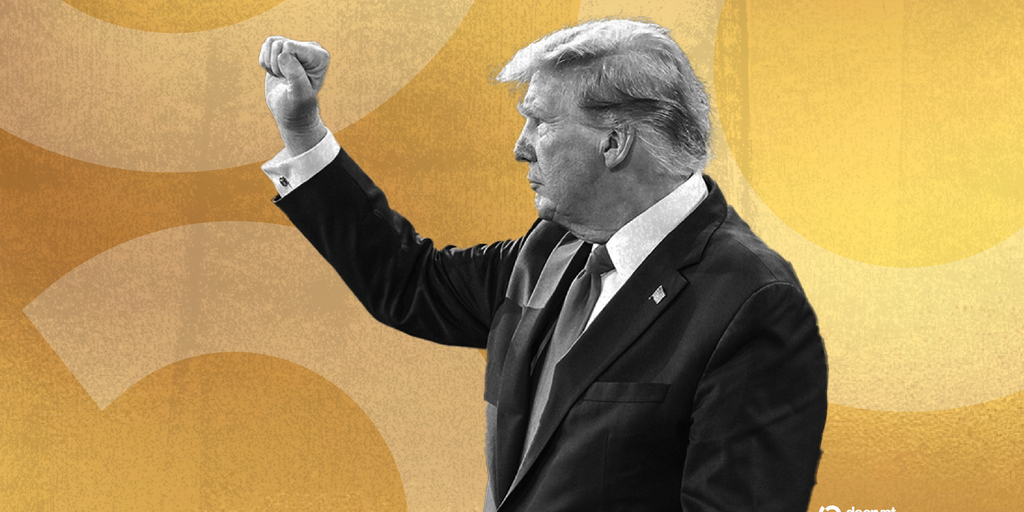


It is reported that U.S. President Donald Trump is expected to appoint Jay Clayton as the head of artificial intelligence at the White House. This appointment will place the direction of U.S. regulation of AI in the hands of a former Wall Street regulator, who is best known for his tough stance against the crypto industry. This anticipated appointment was reported by NBC News on October 2, 2026, several years after Clayton established a reputation in the digital assets field for using law enforcement instead of regulation.
Jay Clayton is expected to take on the role of head of AI.
According to a source familiar with the matter, quoted by NBC News, Trump hinted at this appointment in early October 2026. The announcement will follow a long meeting held on Tuesday at the White House with executives from several leading technology companies, which Clayton also attended.
When asked about this pending appointment, a White House official told NBC News: "Any personnel appointments will be announced directly by the President. Until then, any reports are merely unfounded speculation." Unlike earlier versions of the "AI Tsar" position, this time it seems to have nothing to do with the crypto industry at all, but rather focuses on the newly established AI task force by the government; according to CoinDesk, Trump has compared it to the Space Force he established during his first term in office.
Regulatory track record built on encrypted law enforcement
Clyton's intersection with emerging technologies did not begin with artificial intelligence. During Trump's tenure as Chairman of the U.S. Securities and Exchange Commission, he was involved in establishing the commission's enforcement-focused regulatory approach towards digital assets; according to CoinDesk, this approach later also influenced the operation of SEC under President Biden, which was led by Chairman Gary Gensler.
In 2017, Clayton established the SEC network department to oversee the rapidly growing crypto industry, with a focus on Initial Coin Offerings (ICOs) and related activities. By the time he left the organization in 2020, SEC had filed 57 law enforcement cases against digital asset companies, blockchain enterprises, and ICOs, on the grounds that these practices were suspected of "using digital asset securities to deceive investors" and violating federal registration rules.
Ripple Labs Case and XRP Securities Claims
The most notable case in this law enforcement record targets Ripple Labs. SEC accused the company of failing to register the sale of approximately $1.3 billion worth of XRP tokens as securities; this lawsuit was initiated shortly before Clayton resigned in 2020. The case continued for many years until Paul Atkins, the current chairman of SEC and another appointee of Trump, pushed for the abandonment of further prosecution of the case last year, according to CoinDesk.
Changes in the White House's Technology Leadership Structure
This anticipated appointment also indicates a divergence in Trump's initial arrangements for his technology policy team. According to NBC news reports, David Sax served as a special advisor responsible for both AI and cryptocurrency affairs within the government from January to March 2025, after which he was appointed co-chair of the President's Science and Technology Advisory Committee. Since then, cryptocurrency affairs at the White House have been solely handled by advisor Patrick Whitte, while it now seems that Clayton will take over the AI portion of the responsibilities.
During the same period, Trump's own attitude towards cryptocurrencies also underwent a significant change. CoinDesk noted that in 2021, during an interview, he publicly questioned Bitcoin, stating that it should be "very, very strictly regulated," but during his 2024 campaign, he completely reversed his stance and became an active supporter of the industry.
Clyton's views on AI and national security
In an interview with CNBC during the week of the White House Technology Summit, Clayton made a serious statement regarding artificial intelligence. He said, "Superintelligence is a national security issue." He used wording officially adopted by the government and added that this view "was not only recognized by industry leaders yesterday, but also by everyone in the room," according to reports from NBC News. He also stated that the government would adopt a "whole-of-government" approach to regulate this technology.
At the same time, Clayton opposes slowing down the development of AI. “I don’t think any American would consider that a good strategy,” he stated according to CoinDesk. Before returning to government this year and serving as Director of National Intelligence, as well as previously as the U.S. Attorney for the Southern District of New York, Clayton held a position on the board of Apollo Global Management, a private equity firm that has committed to investing billions of dollars in AI and digital infrastructure projects.
This article was generated with the assistance of artificial intelligence and has been reviewed by an editorial team.