

After Meta Platforms launched its personal AI assistant Muse, the technological pressure on traditional financial institutions rapidly intensified. Investors began to worry that, despite large banks' continuous emphasis on AI investment in recent years, their pace of advancement might not keep up with the new round of product evolution, and some of their businesses could face AI assistance diversion in the future.
Bank sector under pressure
These concerns are first reflected in bank stocks. Reports mention that investors have begun to re-evaluate banks' competitive positions in customer service, wealth management, and daily financial interactions. If the AI assistant can connect with users more directly and take on more decision-making and execution functions, banks' existing digital advantages may be weakened.
Broker stocks experienced even greater declines.
The more significant decline on that day was seen in the securities firm sector. There are concerns in the market that AI's assistant may become involved in stock trading in the future and encourage users to shift their funds to products with higher yields, thereby squeezing the business space of traditional securities firms and financial management platforms.
On September 22, the stock prices of Charles Schwab and LPL Financial both fell by more than 5%. This indicates that the market selling pressure is not limited to banks but has also spread to financial service companies targeting retail investors.
JPM is also affected
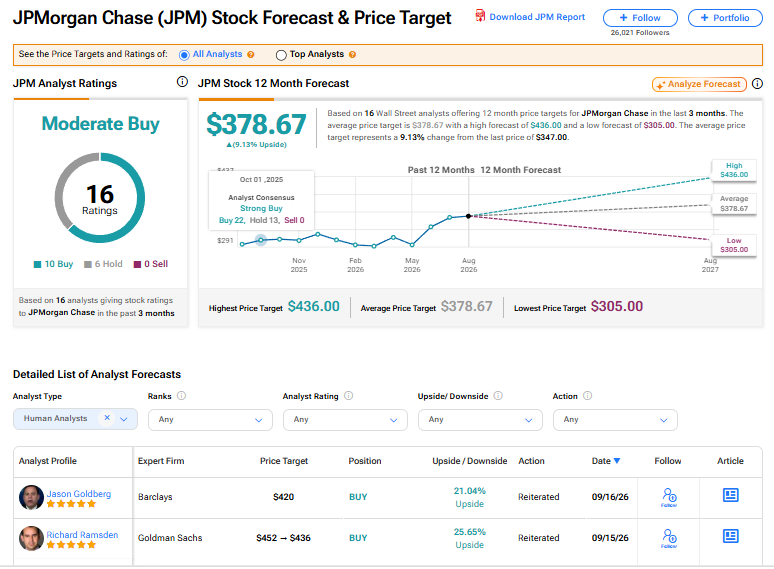
JPMorgan Chase has also been affected by this wave of sentiment. Although the bank's management has repeatedly emphasized the application of AI in internal operations and business processes, investors are currently more concerned with whether the existing deployment can cope with a more powerful, general-purpose AI assistant.
From the content of the reports, this round of decline reflects more of the market's concerns about the future competitive landscape, rather than any clear changes in the fundamentals of banks in the short term. The focus has shifted from "whether financial institutions use AI" to "whether they can maintain their advantage in the stage where they can directly reach users through AI".