




The latest Gallup poll shows that public sentiment towards the government in the United States continues to deteriorate. 89% of American adults believe that corruption is widespread within the U.S. government, a figure that is 10 percentage points higher than last year and represents a new high in similar surveys conducted by Gallup over the past 20 years.
This finding has attracted attention not only because of the high figures, but also because this judgment transcends party lines. The survey shows that 91% of Democrats, 90% of independent voters, and 83% of Republicans believe that corruption in government is widespread.
Partisan sentiment is also on the rise
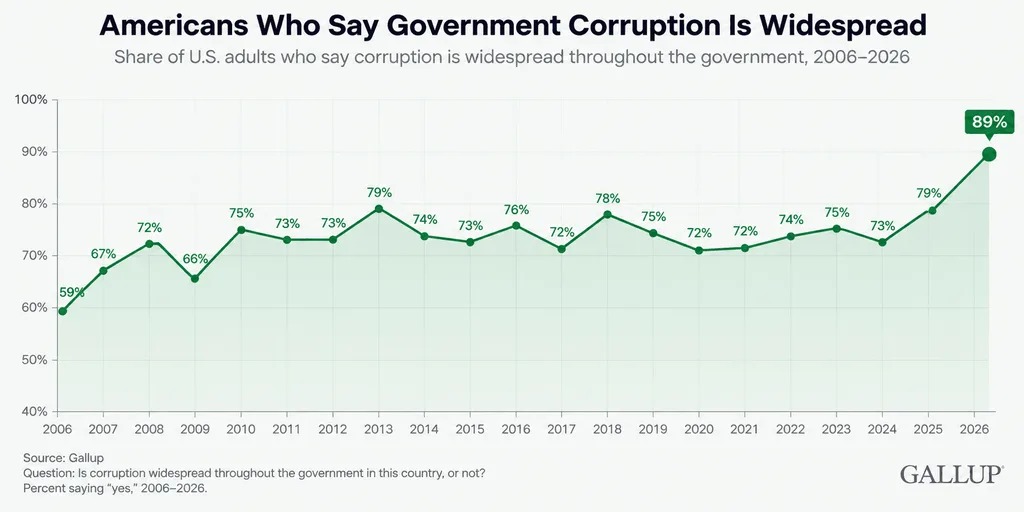
In terms of the degree of change, the attitude shift among Democratic voters is the most noticeable. In 2024, the last year of Biden's tenure, only 57% of Democrats believed that government corruption was widespread; this proportion rose to 76% in 2025, and further increased to 91% this year under Trump's administration.
In contrast, there has been less change in the views of Republican voters. Although the Republicans currently control the White House and Congress in the United States, about 80% of Republicans still believe that corruption is a widespread problem. This indicates that public perception can be influenced by changes in the ruling party, but the current level of dissatisfaction is now difficult to explain solely by partisan stance.
The United States is widening the gap with other countries.
Gallup also mentioned that recent data in the United States is gradually deviating from that of other developed economies. Since 2023, among the 132 countries and regions covered by its surveys, only 4 countries have nominal figures higher than the current 89% in the United States.
This comparison indicates that the American public's skepticism about government integrity is at a relatively high level among developed economies.
Corporate trust is still higher than that in the government.
The survey also shows that public opinion in the United States regarding corporate corruption is deteriorating, although to a lesser extent than regarding government corruption. 71% of respondents believe that corruption is widespread among American corporations. As a result, there is a 18-percentage-point gap between public perception of corruption in government and corporations, which is also the largest gap recorded by Gallup in the United States.
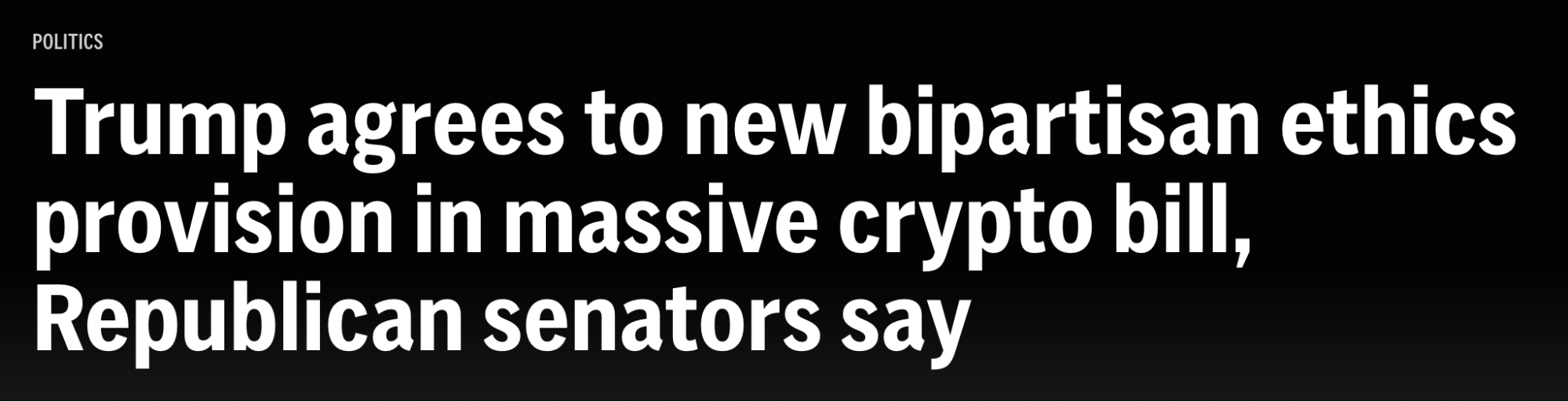
This survey reflects public perception, rather than a statistic of the actual number of corruption cases. However, at the political and economic levels, such perceptions can influence regulatory discussions, conflicts of interest reviews, and the social foundation for government oversight. The article also mentions that the U.S. Congress is currently discussing ethical rules related to financial conflicts of interest and digital assets.