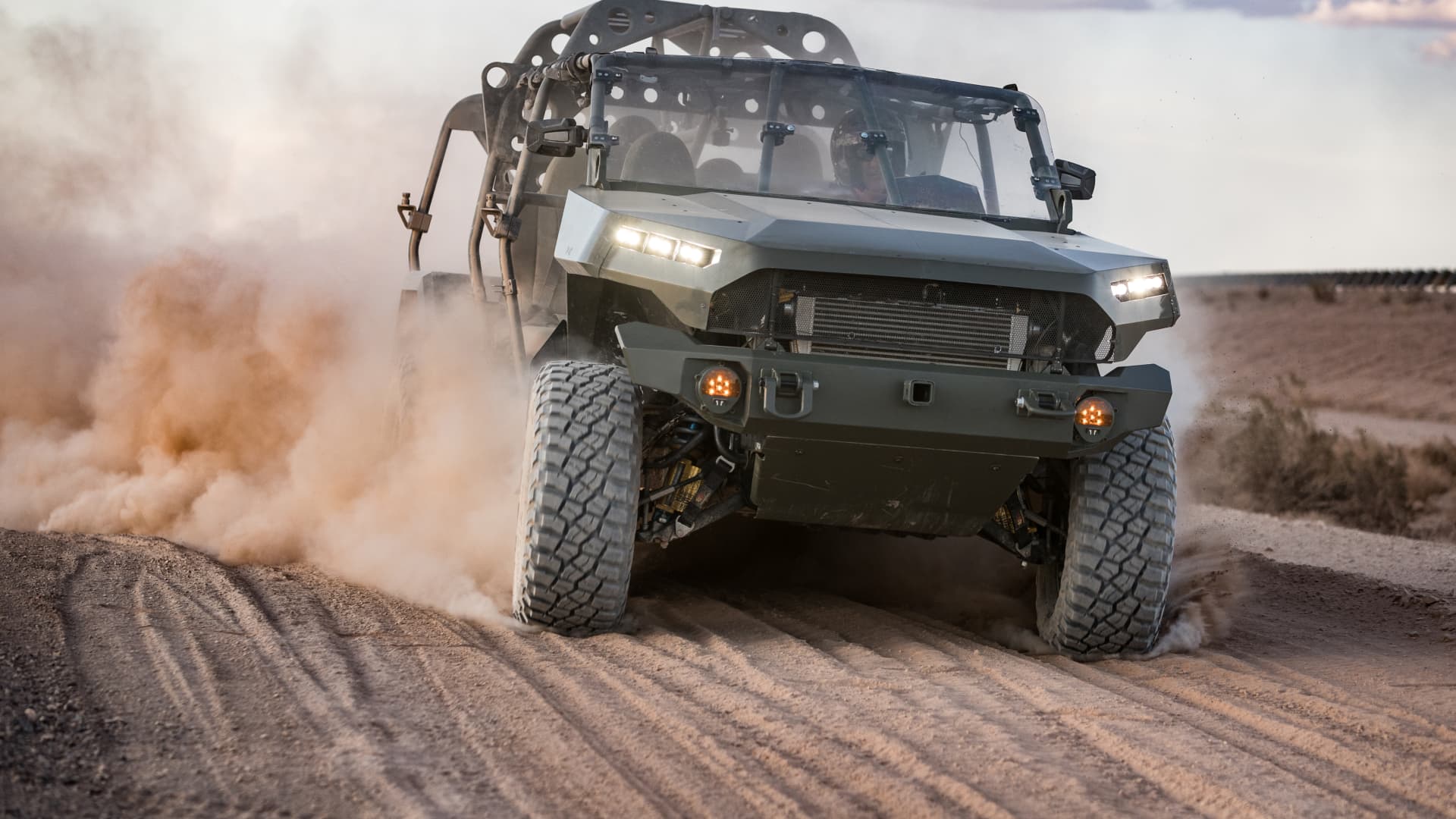


Against the backdrop of slowing new car sales in the United States and electric vehicle investments not yielding the expected returns, General Motors and Ford are shifting some of their production capacity and resources to the military and energy storage sectors. Although the revenue contribution from these two areas is still small for both companies at present, Wall Street generally regards them as new growth directions beyond their main automotive businesses.
Electric vehicle production capacity shifting towards energy storage
In the past few years, two companies have invested billions of dollars in expanding production for electric vehicles, including building battery factories and supporting production lines. However, as demand for electric vehicles did not meet early expectations, some of the production capacity originally dedicated to electric vehicles began to seek new uses, with energy storage becoming the most direct direction for this capacity.
Research institution Global Market Insights predicts that the global energy storage system market size will grow from $668.7 billion in 2024 to $5.12 trillion by 2034. The US market is also expected to expand significantly, driven by factors such as increasing electricity demand and the additional load generated by data centers.
General Motors has not yet sold its own large-scale energy storage systems on a large scale, but its defense industry business has provided related products. The joint battery factory between General Motors and LG Energy Solution is also supplying products for energy storage purposes. The company is also advancing the research and development of the next generation of sodium-ion batteries and is collaborating with Redwood Materials to repurpose large electric vehicle batteries for energy storage systems.
Ford, in December last year, stated that it planned to invest $2 billion to launch its energy business and transform the Kentucky battery factory, which it is building in collaboration with SK On, into a production base for energy storage equipment, with the goal of commencing production by the end of 2027. Ford also plans to set aside some space at its Marshall plant in Michigan to produce residential energy storage cells.
- Ford's Model e-business is expected to incur a loss of about $4 billion in 2026.
- The company aims to achieve break-even by 2029.
- Energy storage business is seen as a key turning point after 2027
Ford CEO Jim Farley stated in July of this year that after reaching a five-year framework agreement with EDF Power Solutions North America, the company's sales of 20 gigawatt-hours of energy storage capacity have entered "the third phase."
Military orders become a second line of income
Compared to Ford, General Motors entered the U.S. military industry market earlier. General Motors restarted its defense division in 2017 and has since been continuously involved in multiple U.S. military projects. The company recently won a contract for infantry squad vehicles for the U.S. Army, and General Motors stated that if funding from Congress is allocated, the contract value could exceed $1 billion.
This amount is still limited compared to General's quarterly revenue of $48 billion, but the company expects its defense business to continue to grow. General indicates that defense revenue is expected to approach $700 million in 2026, and it aims to achieve pre-tax earnings this year, while also accumulating more subsequent orders.
A relevant official from the U.S. Army stated to CNBC that automobile companies have advantages in large-scale manufacturing, supply chain organization, and production capacity, and these capabilities are being highly valued by the military. The report also mentioned that the Trump administration is encouraging more American companies to participate in military projects, and the importance of domestic manufacturing is also on the rise.
Ford accelerates its pursuit of General Motors
Ford has begun to advance its defense business more explicitly this year. In addition to participating in the prototype contract for heavy infantry squad vehicles in the United States, Ford also announced this week that it is collaborating with General Dynamics Land Systems and engineering firm Ricardo to bid for the UK Ministry of Defence's lightweight mobility platform project.
Farley Previously, Ford stated to investors that it aims to extend its manufacturing and delivery capabilities in the commercial vehicle market to government customers and is continuing to discuss more defense projects with the U.S. government. For Ford, this direction not only helps to explore new sources of revenue but also has the potential to improve the utilization rate of existing factories and supply chains.
Overall, it is difficult for the military industry and energy storage to change the revenue structure of these two automakers in the short term. However, as the electric vehicle business faces pressure and the growth of traditional automobiles slows down, these two new business lines are becoming important areas for General Motors and Ford to reallocate their capital and production capacity.