

Foreign media reports that several Bitcoin indicators frequently monitored by long-term investors are simultaneously pointing to a range more suitable for medium- to long-term observation and phased allocation. The article argues that the current signals resemble a temporary low point after market pressure has eased, rather than an immediate trend reversal.
Sharpe ratio falls to historic low
The article mentions that Bitcoin's Sharpe ratio is currently around -23. This indicator is typically used to measure the risk-reward ratio. Historically, when this indicator falls to -20 or lower, it often coincides with the end of a significant correction.
The article recalls similar readings for Bitcoin in 2015, 2018-2019, and 2022-2023. The market subsequently consolidated before gradually turning upwards. In other words, these signals are more likely to indicate a "bottoming out" phase and do not necessarily mean an immediate price rebound.
On-chain data supports long-term holding
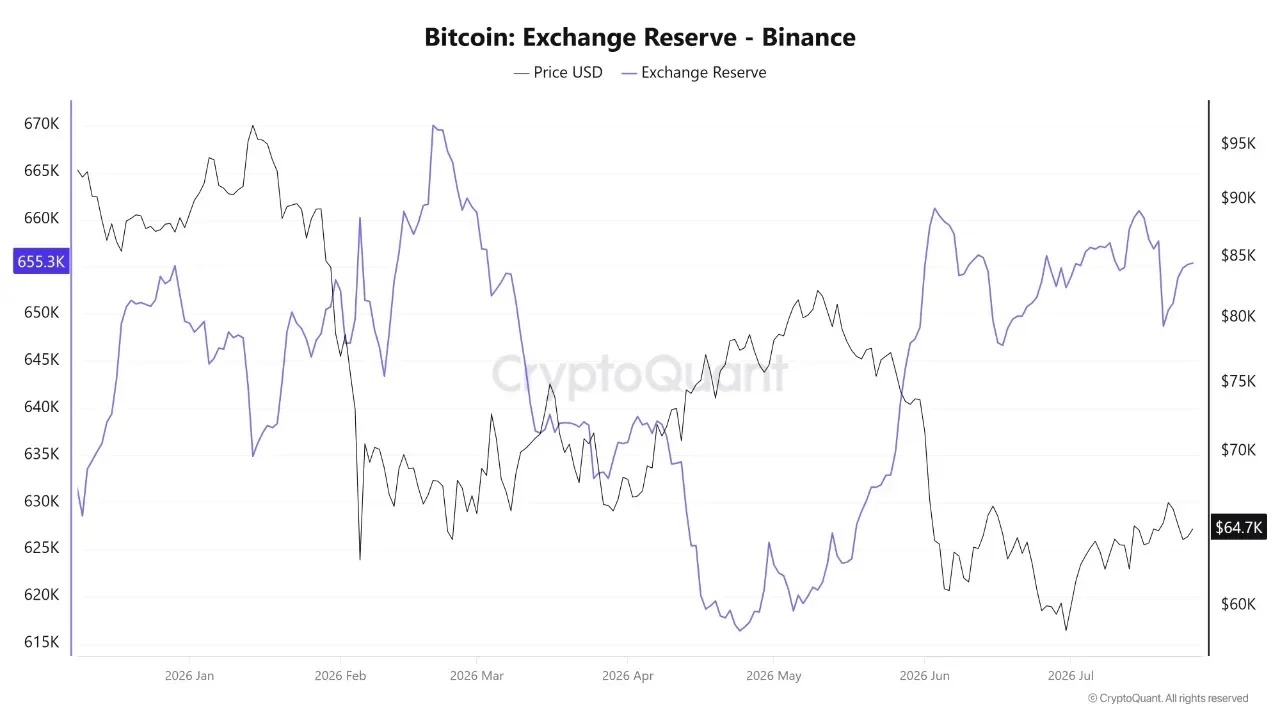
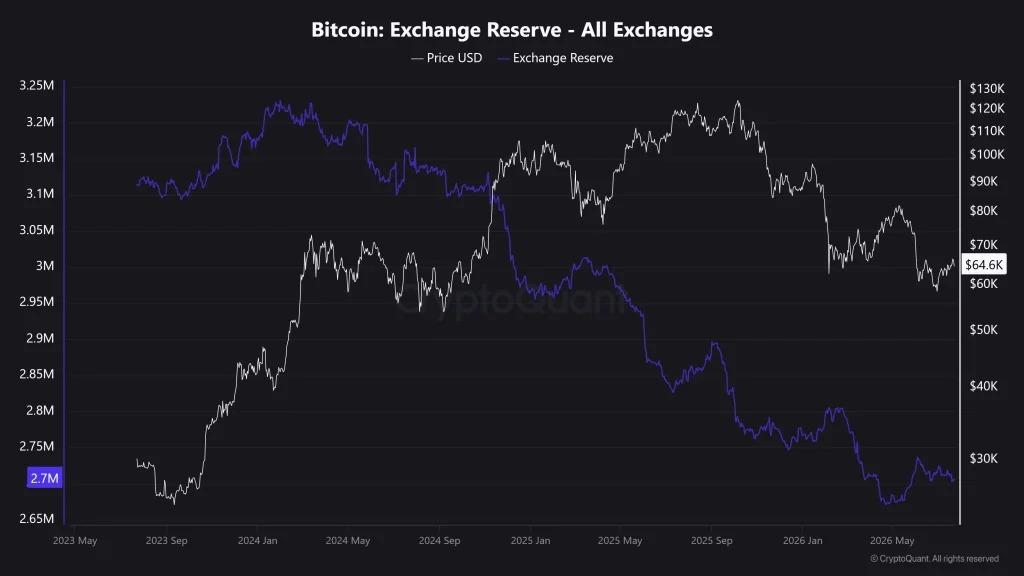
In addition to market indicators, on-chain data is also considered a supporting factor. The article states that the recent continuous decline in Bitcoin reserves on exchanges indicates that some funds are shifting assets towards long-term storage rather than leaving them on trading platforms to await sale.
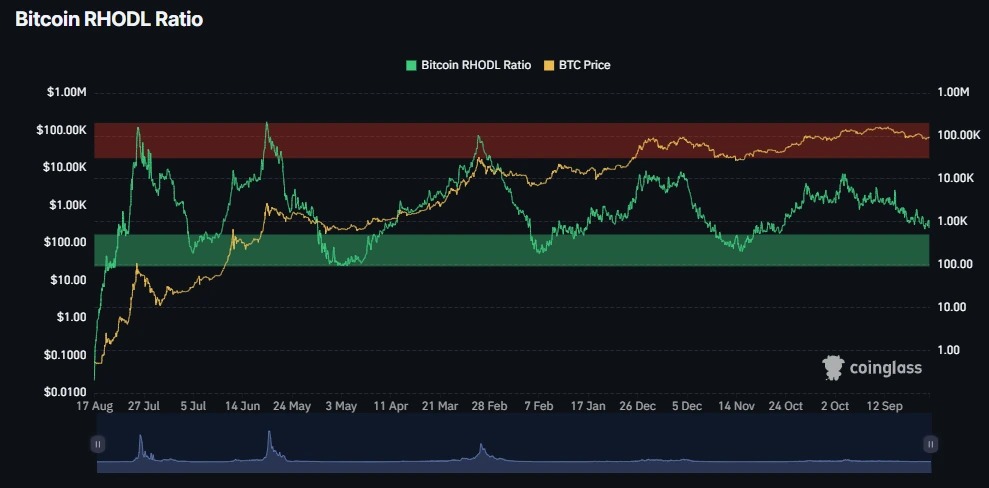
Another indicator mentioned is the RHODL ratio. The article argues that this indicator is entering the green zone, which typically means that shares are shifting from short-term holders to long-term holders. If this change continues, it suggests that short-term selling pressure in the market may be weakening.
- A decrease in exchange reserves typically corresponds to a slowdown in selling pressure.
- RHODL entering the green zone reflects a longer holding period.
- Extremely low Sharpe ratios often appear near the bottom of a cycle.
Short-term pressure remains due to macroeconomic factors.
As of press time, Bitcoin was trading at $64,710, down 1.47% on the day. The article attributes the short-term pressure to rising US Treasury yields and risk aversion stemming from the situation in the Middle East.
The article also mentions that if the US Clarity Act progresses before the August recess, it could provide some support to the market. However, if tensions between the US and Iran escalate, risk appetite may continue to be under pressure.
Overall, the core judgment of this commentary is that some medium- to long-term indicators for Bitcoin are approaching historically low levels, and on-chain data also supports this signal. However, historically, such phases often involve several months of consolidation before a clearer trend change emerges.