
















Foreign media, citing XWIN Japan and market analysts, reported that the cryptocurrency exchange industry is entering a new phase of consolidation. Stricter regulations, rising compliance costs, and intensified institutional competition are putting greater pressure on smaller platforms, with some funds and trading activity believed to continue flowing to leading exchanges like Binance.
The closures of BitMEX and BitMart have drawn attention.
The report noted that the closures of BitMEX and BitMart are seen as the latest signal of this round of industry contraction. Analysts believe that market resources are shifting from a fragmented state to a few global platforms, with trading depth, users, and funds more easily concentrating on leading exchanges.
XWIN Japan stated that smaller exchanges are currently facing stricter regulatory requirements, higher compliance costs, and competition from platforms targeting institutional clients. This makes it even more difficult for platforms with already limited liquidity to maintain growth.
Binance reserve data remains high
Data from on-chain data platform CryptoQuant also corroborates this trend. The data shows that Binance's Bitcoin reserves, after a decline in early 2026, have rebounded and are currently still at a relatively high level.
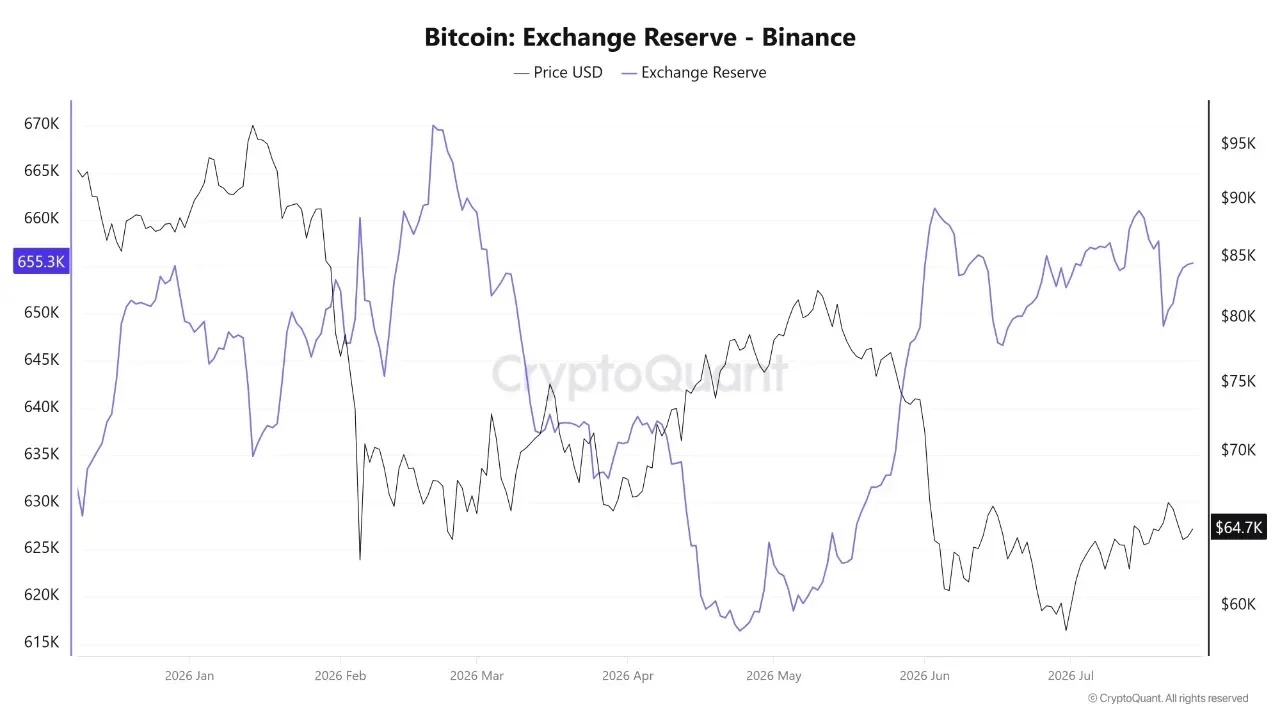
Analysts believe this could indicate that more funds and trading activity are concentrating on Binance. However, the report also emphasizes that the increase in exchange reserves should not be simply interpreted as increased selling pressure.
- ETF arbitrage may lead to asset reallocation.
- Derivatives trading will drive up demand for positions.
- Institutional custody and market making will also increase reserves.
Industry consolidation does not necessarily equate to a bearish outlook.
Analyst Miles Deutscher offered a similar assessment. He stated that dozens of crypto companies have closed or gone bankrupt in the past two months, a phenomenon not uncommon in the crypto market cycle.
He compared the current situation to 2022, when FTX, Celsius, Voyager, and Three Arrows Capital collapsed or went bankrupt, leading to a dramatic shakeout in the industry.
XWIN Japan and Deutscher jointly conclude that weaker platforms are being squeezed out of the market, while liquidity, users, and trust are further concentrating on stronger platforms. The report suggests this doesn't mean the market will immediately reverse, but increased industry concentration may lead to a more transparent and institutionalized exchange ecosystem.