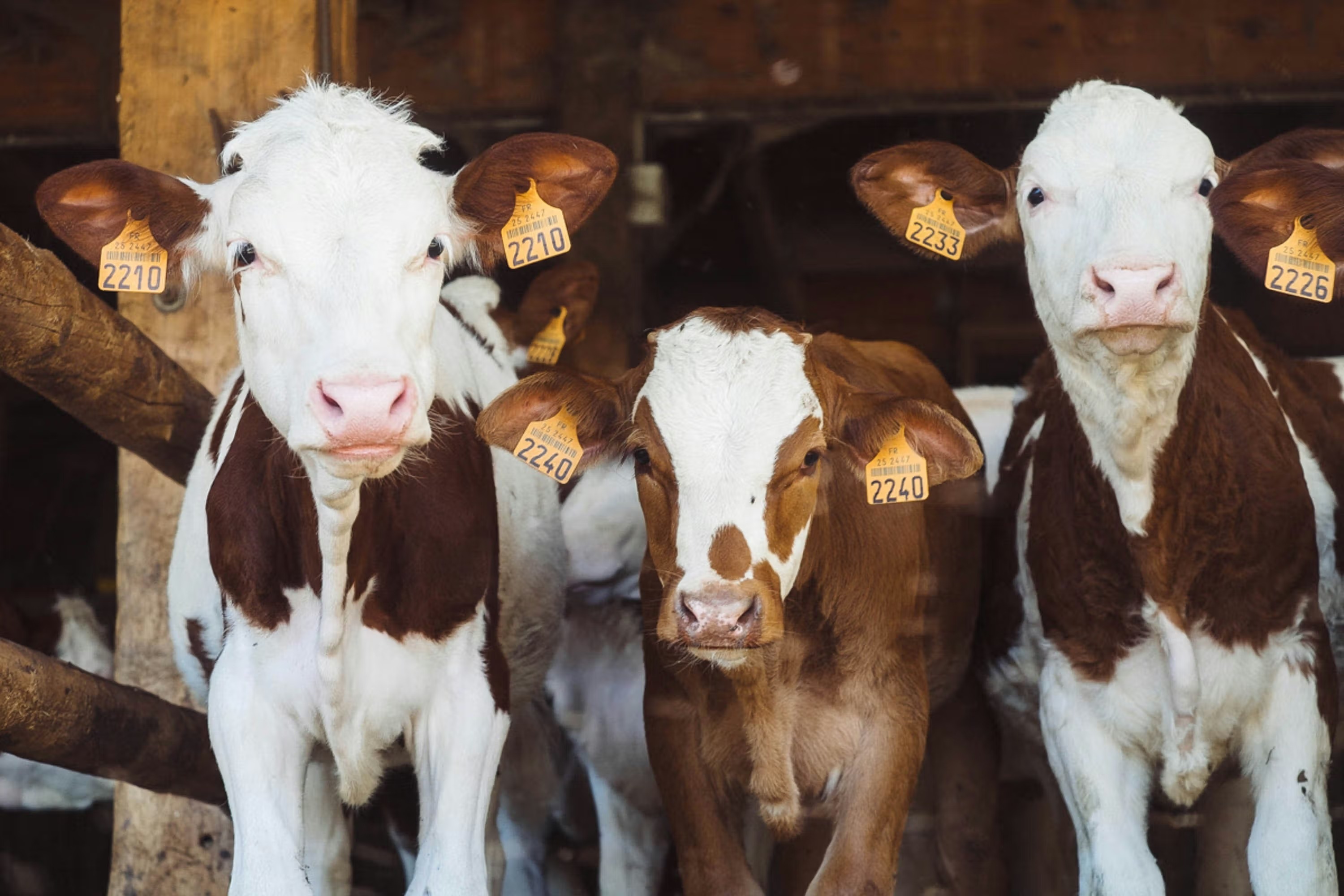
A new RWA (Rural Financial Credit Certificate) case has emerged in Brazil's agricultural finance market. A dairy farm in Paraná state used 10 dairy cows as collateral to complete a 100,000 reais rural financial credit certificate (CPR-F) financing. This is also the first time that the Brazilian Stock Exchange's B3 has officially accepted livestock tokenization collateral registration.
Ten dairy cows have completed mortgage registration.
This transaction took place at the Fazenda Engenho Velho farm in Imbitúa, Brazil. The 10 dairy cows used as collateral were valued at approximately 120,000 reais, and the loan was issued by BMP, a direct lending institution authorized by the Central Bank of Brazil. BMP subsequently sold the relevant receivables to the accounts receivable investment fund Target FIDC, which then completed the registration at B3.
Each cow generates an on-chain identity.
The key to this financing is that the collateral is no longer just on paper. Each cow wears a smart collar provided by the agricultural technology company Cowmed, which continuously collects data on its health, behavior, and location.
After being encrypted, this data generates a unique digital identity for each cow, which is directly linked to the loan contract. This eliminates the need for lenders to conduct on-site verification to confirm the status of the collateral.
The issue of bank discounts was used for testing.
In Brazilian agricultural credit, while livestock are often considered collateral, banks typically significantly undervalue them. The report mentions that a dairy cow with a book value of 20,000 reais might only be valued at 8,000 reais during loan approval.
The reason is that traditional financial institutions struggle to continuously track livestock conditions and promptly confirm the continued existence of collateral. Humberto Brenner, director of Target FIDC, stated that real-time monitoring significantly reduces these information gaps and makes financial institutions more willing to accept genuine asset collateral.
Agricultural credit tightening promotes pilot programs
Behind these attempts lies the increasing financing pressure on Brazil's agricultural sector. According to Serasa Experian data, the number of Brazilian agricultural companies filing for judicial reorganization reached 1,990 in 2025, a significant increase from 534 in 2023. High interest rates, falling agricultural product prices, and climate shocks are squeezing farmers' financing options.
Cowmed CEO Thiago Martins stated that this model transforms visible, verifiable physical assets into registrable digital assets, thereby providing farmers with new collateral channels and enabling them to secure loans at lower costs and higher amounts.
Currently, Cowmed monitors approximately 100,000 dairy cows in Brazil, the United States, Canada, Uruguay, Paraguay, and Bolivia, with a total estimated value of approximately 2 billion reais. The company anticipates that about 20% of these cows will be available for tokenized collateral within the next two years. Reports indicate that Target FIDC is evaluating four additional Brazilian farmer projects, with the aim of facilitating approximately 5 million reais in credit through this model by the end of 2026.