





Solana Foundation to Provide Security for DeFi Protocols After Drift Hack
永远满仓
04-08 02:11
Ai Focus
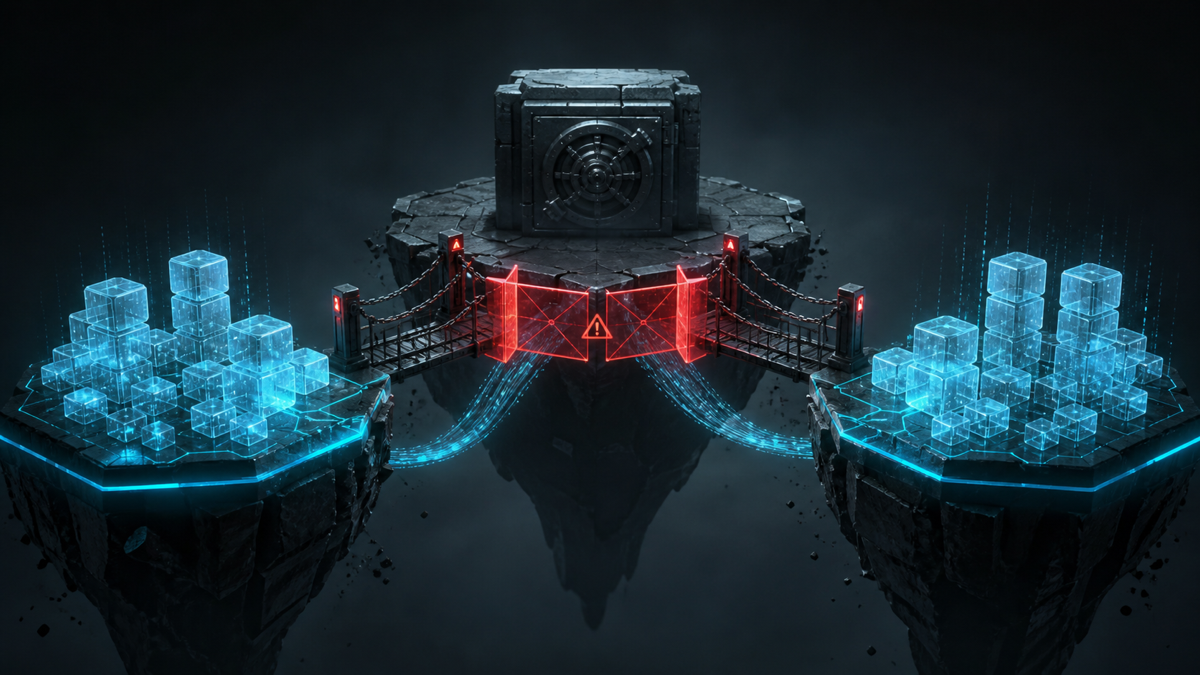
The Solana Foundation and Asymmetric Research have introduced STRIDE, a security program for DeFi protocols with over $10 million TVL, offering 24/7 threat monitoring and formal verification for those with over $100 million TVL. This initiative aims to enhance security as attackers target Solana's growing locked value.
Helpful
No.Help

Nearly a week after a prominent Solana-based decentralized exchange was hit with a $285 million hack that’s been linked to North Korean hackers, the Solana Foundation has revealed plans to help secure the network’s largest DeFi protocols.

The Solana Foundation and Asymmetric Research launched STRIDE, a tiered security program that provides 24/7 threat monitoring for DeFi protocols with over $10 million in total value locked (TVL). For protocols with over $100 million TVL, the Foundation will offer “formal verification”—described in a post as “a mathematical, proof-based method that guarantees smart contract correctness by exhaustively checking every possible state and execution path.”

STRIDE—or Solana Trust, Resilience and Infrastructure for DeFi Enterprises—evaluates protocols against security standards before providing ongoing protection services. The initiative marks a significant escalation in blockchain security infrastructure as attackers target Solana's growing billions in locked value with increasingly sophisticated methods.

The program launched alongside the Solana Incident Response Network (SIRN), a membership-based collective of security firms dedicated to rapid ecosystem defense. Founding participants include Asymmetric Research along with OtterSec, Neodyme, Squads, and ZeroShadow. The framework will evolve based on real-world assessment feedback, with version 0.1 currently live.

The timing underscores an urgent need—Drift Protocol suffered an exploit where attackers drained $285 million in under 12 minutes on April 1, demonstrating the speed and scale at which modern DeFi vulnerabilities can be exploited. Drift said on Sunday that it discovered that North Korean hackers had spent six months infiltrating its team and infrastructure before executing the attack.

Such incidents highlight why major blockchain networks are taking more direct responsibility for ecosystem-wide security rather than leaving individual protocols to defend themselves.

The tiered approach based on TVL thresholds reflects how layer-1 networks are institutionalizing security as decentralized finance matures. Rather than treating all protocols equally, STRIDE allocates resources proportionally to risk—acknowledging that protocols managing hundreds of millions of dollars' worth of assets require different protection than smaller experiments.

This shift recognizes that individual smart contract audits alone cannot match the innovation pace of adversaries targeting blockchain infrastructure. Rapidly advancing AI is also a key concern, as it can help attackers and developers alike find flaws.

An upcoming Anthropic AI model codenamed Claude Mythos is being viewed as a particular threat to cybersecurity—so much so that top cybersecurity stock prices fell late last month when first details of the model were leaked. On the other hand, a recently fixed Zcash software exploit was discovered with the help of AI tooling.

Tip
$0
Like
0
Save
1
Views 135
CoinMeta reminds readers to view blockchain rationally, stay aware of risks, and beware of virtual token issuance and speculation. All content on this site represents market information or related viewpoints only and does not constitute any form of investment advice. If you find sensitive content, please click“Report”,and we will handle it promptly。
Submit
Comment 0
Hot
Latest
No comments yet. Be the first!
Related
The Sandbox Suspends Cross-Chain Bridge Between Base and BNB Chain: Unsecured SAND Why Can't We Just Look at the Coin Minting Volume?
On August 22, The Sandbox stated that a vulnerability was discovered in its SAND cross-chain bridge on Base and BNB Smart Chain. Attackers were able to mint tokens without the corresponding Ethereum SAND locking support. The team subsequently suspended the related cross-chain functionality and claimed that the vulnerability had been contained. The core issue of this incident is not merely the simple "minting" of additional tokens, but rather the disruption of the most fundamental accounting relationships between cross-chain assets: the mapped tokens on the target chain should correspond one-to-one with the assets locked or destroyed on the source chain; once unsecured minting occurs, the market can no longer assume equivalence between SAND on different chains.
币界网
·2026-08-23 12:29:19
140
OpenAI Funds 14 Studies on the "Intelligent Era": Why Can't AI Policy Experiments Be Answered Only by Model Companies?
On August 17, OpenAI announced funding for 14 projects led by independent organizations, with themes focusing on economic opportunities and social resilience, continuing the discussions on "industrial policies in the intelligent era" initiated in April of this year. The selected projects cover areas such as labor force, education, local governance, social security, and technology diffusion. Compared to a single product launch, this arrangement is more worth observing from a methodological perspective: when AI affects not only software functionality but also employment structures, skill investments, and public institutions, it becomes difficult to determine who will bear the costs, how the benefits will be distributed, and which policies are effective in different regions, relying solely on internal research within model companies.
CoinMeta
·2026-08-23 12:28:00
28
web3: Trump disclosed over a thousand securities transactions in June
Trump's latest financial disclosure shows that he completed over 1,000 securities transactions in June, covering targets such as Berkshire, Visa, MasterCard, Meta, and Coinbase.
Fortune
·2026-08-23 06:22:39
57
OpenAI Calls on California to Strengthen AI Security Legislation
OpenAI calls on California to revise the AI security legislation, SB 53, requesting an expansion of the monitoring scope for cutting-edge models and enhanced network security protection.
TechCrunch
·2026-08-23 00:41:06
58
Maxio CEO claims that AI's money-burning behavior is not the biggest problem
According to Maxio CEO, after enterprises deploy AI proxies, the real more difficult issue to handle is employee unrest, rather than single instances of token overspending.
Fortune
·2026-08-22 20:19:04
63
View More