Key Points
- MELANIA has seen the largest decline among Trump-related cryptocurrencies
- WLFI faces renewed selling pressure amid concerns about liquidity
- Token supply expansion remains a significant long-term risk.
Cryptocurrencies related to U.S. President Donald Trump and his family have suffered significant losses since their listing, with some tokens losing nearly all of their initial value.
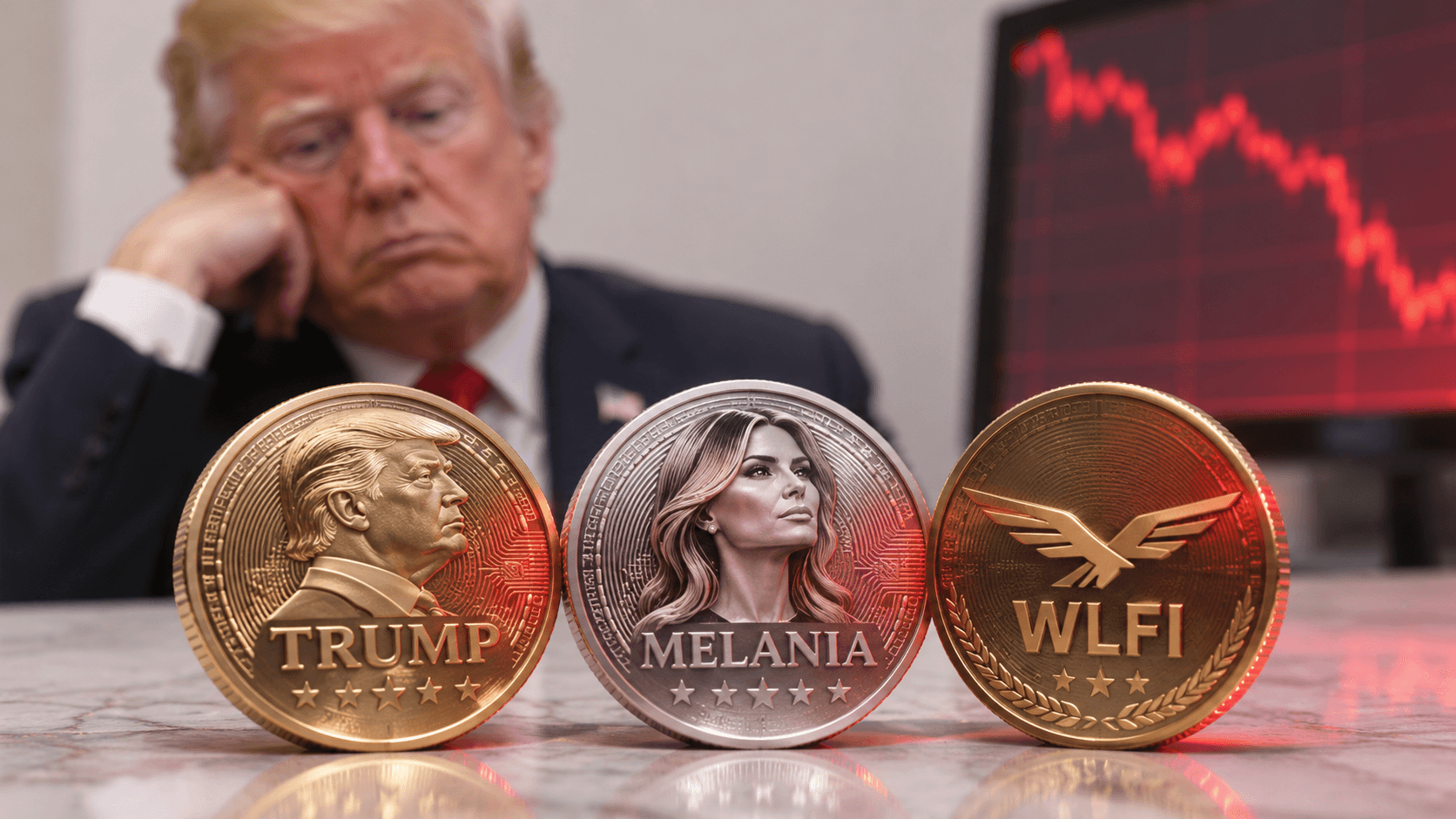
Market data circulating on November 28th showed that MELANIA fell by 99.4% compared to the issuance levels reported, followed by World Liberty Financial ( WLFI ) with a decline of 94%; Official Trump ( TRUMP ) fell by 88.2%.
As these data were released, controversy surrounding World Liberty Financial resurfaced. After the price of Tron (Tron) plummeted significantly, its founder, Justin Sun, called for it to be taken off the market.
The Trump family-related cryptocurrency tokens suffer a major setback
Official Trump and Melania Meme were launched in January 2025, shortly before President Donald Trump took office, and attracted a large amount of speculative demand at that time.
However, as investor interest wanes, it has become difficult for both of these cryptocurrencies to maintain their early momentum.
According to CoinCodex market data, TRUMP fell to a historic low of around $0.72 on November 29, representing a decrease of approximately 99% from its historical high of $76.98.
MELANIA has also seen a decline of over 99% from its peak valuation, while WLFI recently hit a new historical low of around $0.015.
The latest round of declines occurred after cryptocurrencies related to Trump faced significant political uncertainties, against the backdrop of the conclusion of the U.S. mid-term elections in November.
Although these three tokens adopt different economic models, their performance indicates that political visibility alone does not guarantee sustained market demand.
WLFI Plunge Sparks New Concerns
The challenges faced by World Liberty Financial are not merely the speculative dynamics typically associated with meme coins.
Unlike TRUMP and MELANIA, WLFI is a governance token within a decentralized finance ecosystem, which also includes the USD1 stablecoin.
According to the official documents of this project, holders of WLFI can participate in governance decisions related to the protocol.
However, the recent legal and political uncertainties surrounding WLFI have added another layer of risk for investors.
The latest round of sharp price drops for this token has exacerbated market concerns regarding liquidity, derivatives exposure, and investor confidence.
In addition, the governance structure of the project and the token allocation method mean that if more supply enters circulation in the future, it may affect its valuation.
It should be noted that the losses incurred by WLFI in the secondary market do not necessarily mean that early investors who purchased the tokens before the start of public trading also experienced the same level of returns.
Can Trump's crypto project be revived?
One of the biggest long-term challenges faced by TRUMP is the continuous expansion of its circulating supply.
According to the official website of the Trump meme coin, there were initially 200 million tokens available, with a total supply planned to increase to 1 billion within three years. Approximately 80% of the initial allocation was reserved for the creator and associated entities.
As more tokens enter the market, in order to maintain their prices, there needs to be sufficient market demand to absorb the continuously expanding supply.
At the same time, Trump's continuous public support for the adoption of cryptocurrencies has not been able to prevent tokens named after him from falling to record lows.
The broader challenges faced by politically driven meme coins also highlight the difficulty of maintaining investors' interest after the initial promotional activities have ended.
The article states that although an improvement in the cryptocurrency market environment may support a speculative rebound, a large amount of new demand is still needed to return to previous valuation levels.