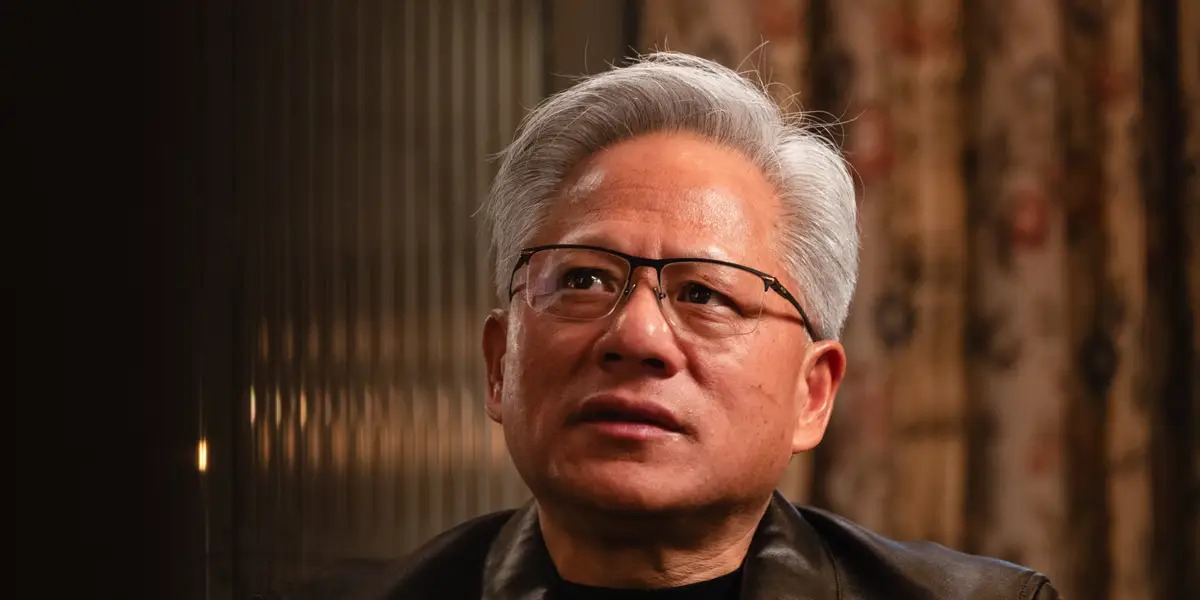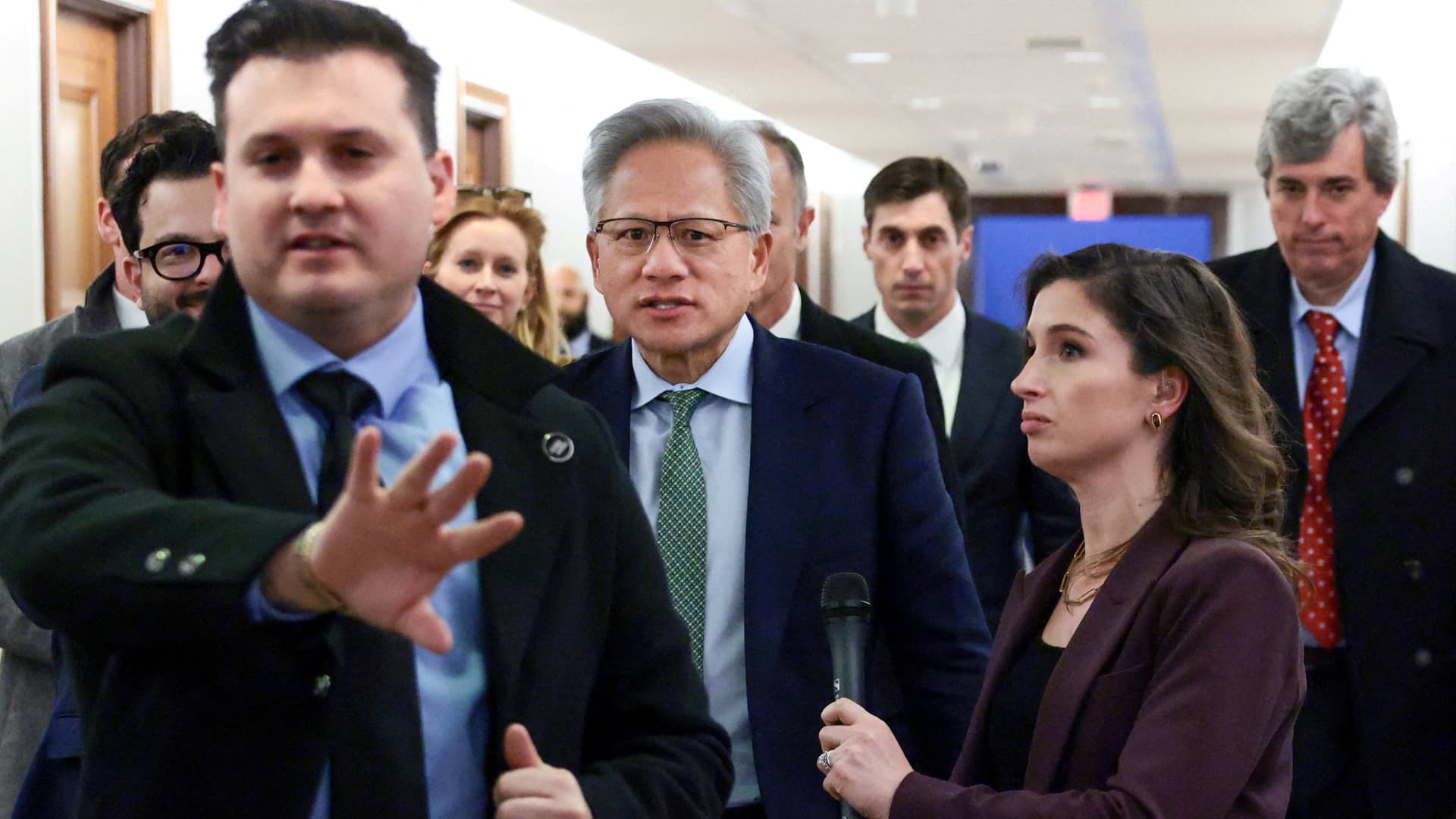


After U.S. President Donald Trump urged NVIDIA's board of directors to rehire Jensen Huang, Jensen Huang has returned to his position as NVIDIA's CEO. However, with the continuous increase in external criticism, investigations into the company, its senior management, and its board of directors are still ongoing.
"Obviously, they succumbed to external pressure," said Betsy Atkins ( Betsy Atkins ), who has long served as a director of a listed company and is also an author. She stated that when the board initially allowed Jensen Huang to resign, "the board failed." "It is the duty of the board to consider all stakeholders."
California Attorney General Rob Bonta ( Rob Bonta ) is investigating whether NVIDIA made misleading statements to investors. Bonta stated on Tuesday in the program Squawk on the Street on CNBC, "California has a comprehensive corporate securities law that prohibits companies from misleading investors and the public."
The directors are already defendants in a shareholder lawsuit, which accuses them of failing to provide effective oversight over NVIDIA. Another class-action securities lawsuit targets the company and its co-founder, Jensen Huang.
Today, the insurance arrangements of the board of directors have also become part of this story. A risk consultant with direct knowledge of NVIDIA's insurance arrangements stated that the company has established a D&O insurance coverage worth approximately $1 billion. This insurance term refers to a combination of policies provided by different companies to cover the liability insurance for directors and executives facing significant risks.
This consultant said that NVIDIA “really likes insurance”; “They buy insurance as if they don’t have a balance sheet at all.” An industry expert with 25 years of experience in finance and insurance stated that the $1 billion in insurance coverage means NVIDIA has essentially “bought up the market,” purchasing almost all the protection available. This expert requested anonymity due to concerns about existing or potential client relationships.
However, according to a source from CNBC, NVIDIA has allocated all of this protection to Side A. Side A provides protection for the risks that directors and executives face personally when the company is unable to compensate them. Side B and Side C require NVIDIA to assume more of its own risks and legal costs. Risk consultants say that NVIDIA believes it has a "war fund" to protect the company from the impact of class actions.
Board Protection
This decision has raised questions from the outside world: did the board of directors protect its own interests at the expense of the company's welfare? CNBC sought a comment from NVIDIA but received no response.
The CEO of an insurance company described a $1 billion policy as providing extensive coverage, but expressed surprise at the allocation of only Side A, stating that this would lead to an imbalance in protection, as it would only cover the directors.
However, a D&O insurance expert with extensive experience in the field of corporate insurance, who works for banks, pharmaceutical companies, and other businesses that frequently face litigation, stated that such a structure does not necessarily indicate governance failure. For companies with sufficient capital to internally absorb company risks, a Side A approach is quite common.
"For a company with abundant resources like NVIDIA, it may be financially reasonable to keep corporate-level risks on its own books," said this consultant. The D&O protection of Side A "is crucial for corporate governance."
"This is a capital allocation decision," the expert told me. The company believes that it is not worth paying for insurance to protect its balance sheet. In other words, Side B covers the legal defense and settlement costs for the company's directors and executives, while Side C provides protection when the company is a defendant, such as in securities claims cases. However, these protections are considered too expensive relative to the coverage they offer to the company.
Value Judgment
For shareholders, the question is whether it is reasonable for the board of directors to decide to assume this part of the risk, and whether the company will be able to bear the related costs if the scale of claims expands.
A shareholder derivative lawsuit filed on November 11 named Jensen Huang, directors, and other executives as defendants. The complaint alleges that they failed to supervise risks related to the relationship between Jensen Huang and Megaspeed executive Alice Huang, and made misleading statements. The complaint also claims that some defendants sold approximately $2 billion worth of NVIDIA shares while holding significant undisclosed information. These are still merely allegations and not conclusions.
Another class action lawsuit was filed on November 9th, naming NVIDIA and Jensen Huang as defendants. This lawsuit seeks compensation for investors who purchased NVIDIA stocks between October 9, 2025, and November 8, 2026, accusing the company and Jensen Huang of misleading investors. The distinction is important: the derivative lawsuit was filed on behalf of NVIDIA, while the class action lawsuit is aimed at seeking compensation for the investors.
Michelle Leonard, the chief economist at the Insurance Information Institute ( Michel L é onard ), stated: "Insurance is already starting to make a difference." She is referring to the standard insurance policy mechanism, not NVIDIA's specific insurance policies. "Once a lawsuit is filed, D&O will begin to pay for defense costs, long before anyone can prove anything."
Insurable Loss
Claims must still comply with the terms of the insurance policy, and defense costs will also reduce the remaining insured amount. The decline in NVIDIA's market value alone does not prove the existence of an insurable loss. The plaintiff needs to prove the damages that are legally compensable; insurance will only cover losses within the scope of the coverage.
The board of directors has taken some measures it claims are aimed at strengthening accountability. NVIDIA announced the initiation of an independent investigation on November 8th, and two days later, the independent directors hired external lawyers. Jensen Huang resigned from his positions as CEO and director on November 11th; the board appointed Chief Financial Officer Colette Kress ( Colette Kress ) as interim CEO. NVIDIA stated that there is no reason to believe that Jensen Huang's extramarital affairs have compromised national security or company secrets.
Atkins joined the board of directors of Wynn Resorts in 2018 after Steve Wynn ( Steve Wynn ), the founder of Wynn Resorts, resigned. She believes that accusations do not equate to conclusions, and that the board of directors should also weigh the value that the founder has brought to the company's innovation when assessing governance issues. Although Jensen Huang has resumed leadership, NVIDIA's investigation is still ongoing.
"If it weren't for them, would companies still be able to innovate at such high speeds? I don't think so," says Atkins. She is the author of the book "Don't Waste Board Seats: A Decision-Maker's Guide to Choosing Directors Who Can Create Value" ( Don 't Waste a Board Seat : A Decision - Maker 's Guide to Choosing Directors Who Create Value ).
NVIDIA's 2026 proxy documents also show that the company has signed compensation agreements with directors and executives, which are separate from insurance coverage. As long as permitted by law, these agreements will be borne by the company in terms of certain costs and liabilities.