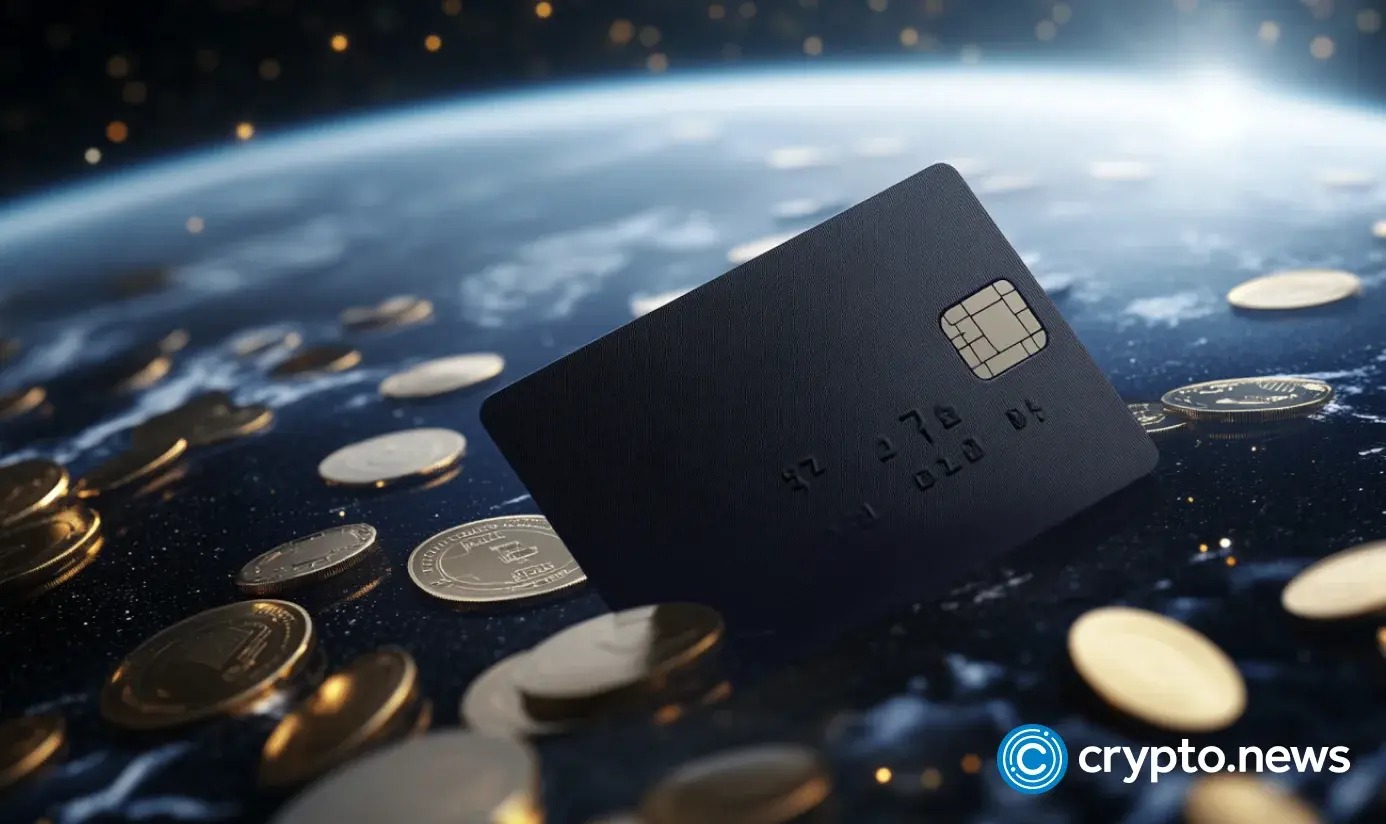
The weekly consumption amount of cryptocurrency cards has exceeded $300 million, representing a growth of nearly 200% compared to a year ago; at the same time, users spend between 65 and 75 cents for every $1 they recharge.
- In the 30-day sample, RedotPay alone accounted for over 46% of the total consumption.
- According to the data from DWF, most card items earn less than 1% of the consumption amount after cashback is given.
- In purchases other than in US dollars, a currency exchange fee of 0.5% to 2% may erode the rewards.
In a research report released on November 23, DWF Labs stated that customers are using new encrypted banks to hold their US dollar balances and earn profits while also conducting transactions. The company's analysis of PaymentScan data revealed that among the 20 largest projects it tracked, 5 projects accounted for a combined 86% of the total transaction volume within 30 days.
Encrypted card consumption is concentrated in five projects.
RedotPay topped the rankings over a 30-day period, followed by EtherFi, KAST, Wirex One, and Karta. The proportion of RedotPay exceeded the combined proportion of the latter four leading projects, which account for about 40% of the total sample consumption. The remaining 15 projects together account for approximately 14%.
The ranking for DWF uses data from projects that can be obtained through PaymentScan. The 30-day percentage is calculated using these projects as the denominator, as the consumption data for some other cards is not available. The weekly growth data is based on a different time frame, so it is not possible to determine whether the combined percentage of the top five projects has increased over the past year based on this data.
If measured by the proportion of the recharging amount spent by users, the situation for the issuers varies. A lifetime comparison of DWF shows that for RedotPay, the cost per dollar recharged is equivalent to 84 cents spent, for EtherFi it is 61 cents, and for KAST it is 43 cents. This means that, for every dollar of funds, there is a difference of 41 cents between RedotPay and KAST.
DWF pointed out that the 7% to 9% yield rates advertised by EtherFi and KAST for US dollar stablecoin deposits may be one of the reasons why users keep their funds in these applications. The consumption ratio measures the relationship between card purchases and top-ups. This difference may include funds that users have transferred elsewhere or used for other services, therefore it cannot prove how much money customers still hold in their accounts.
Cashback and currency fees determine how much capital users will retain.
When customers make purchases, a transaction fee is charged for these card services. These fees can also be applied separately when users exchange assets, top up their accounts, or withdraw funds. Rebates take a portion of this revenue, and they also serve as a way to attract customers. DWF has found that some of these services offer rewards of 2% to 3% on transactions, but some limit the amount of rewards that customers can receive.
If the card is settled in US dollars, but the merchant charges in another currency, there may be an additional cost for the same transaction. According to the limit specified by DWF, if both a 2% conversion fee and a 2% rebate reward apply to the same transaction amount, the conversion fee will offset the rebate. However, if the card is settled in the currency used by the consumer, this conversion cost can be eliminated.
Local payment networks solve a different type of problem by transferring funds into accounts that the recipients are already using. According to DWF, RedotPay supports payments in over 35 currencies through local partners.
As previously reported by crypto.news, the integration of the company with Circle in Brazil in June 2025 enabled customers to send cryptocurrencies to Brazilian bank accounts, with the recipients receiving reais. The entire transfer process did not require the recipients to set up an encrypted wallet.
New banks are adding lending and trading services in addition to card services.
Some providers are attempting to issue stablecoins in order to generate revenue from funds held within applications. DWF mentions that KAST has collaborated with M0, and that EtherFi has launched ether.fi USD and issued it through Ethena.
The report estimates that approximately $48 million in idle EtherFi deposits, with a yield of 4%, could generate about $2 million in income per year. This estimate assumes that both the balance and the yield remain unchanged throughout the year.
Ethena Pay provides another example of integrating earnings into payment applications. DWF indicates that deposits rely on Ethena's own earnings strategy, which in turn increases the demand for USDe. This arrangement links the income generated by these balances to the strategy that supports the product.
Lending provides customers with another way to utilize their existing assets. In August, EtherFi expanded its Cash product by integrating with the Aave market on Optimism, allowing customers to use their investment portfolios as collateral for loans and spend the proceeds from these loans via cards.
DWF indicates that the loan amount in the referenced Aave V4 instance has exceeded 47 million US dollars. Providers can use protocols such as Aave or Morpho to connect borrowers to on-chain liquidity.
Wallet providers are also experimenting with transaction fee models. In July 2025, Phantom launched a mobile perpetual contract through Hyperliquid, allowing users to access over 100 markets from the moment they log in.
Perpetual contracts allow traders to bet on price changes through contracts that have no expiration date. DWF indicates that since the launch of this feature, Phantom has earned over 20 million US dollars in builder fees. These fees come from transactions routed through its wallet interface.