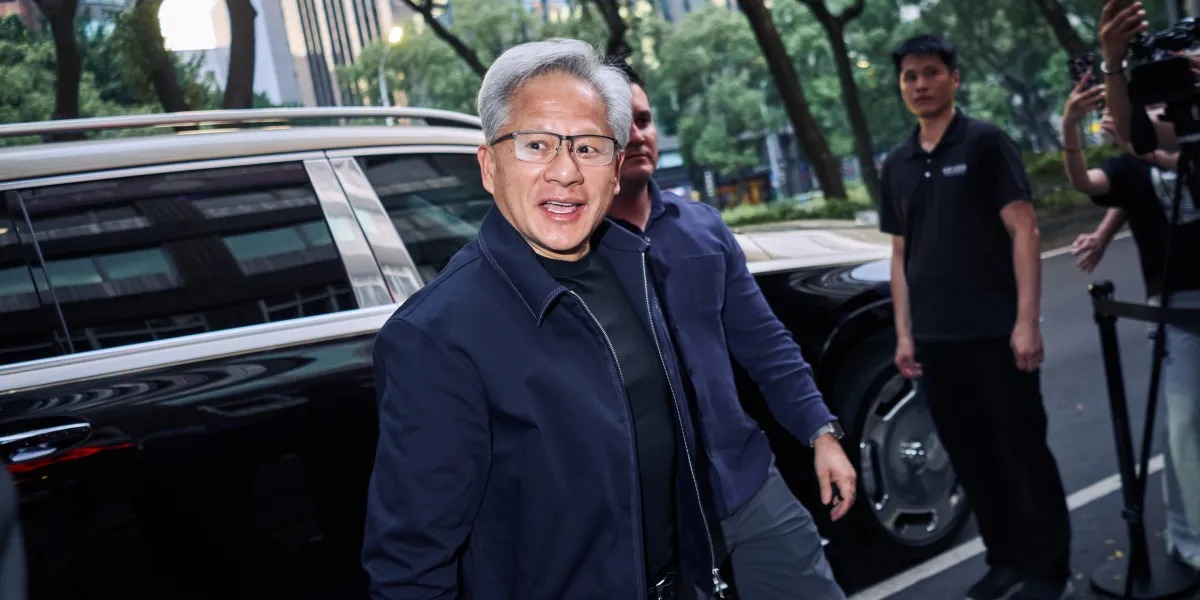


On Monday morning, after news broke that Jensen Huang had returned to his position at NVIDIA CEO, the stock price of this AI chip manufacturer soared by 29% in pre-market trading. Subsequently, NVIDIA recorded its best single-day performance in over 20 years, while the broader S&P 500 index and the Nasdaq index, which is dominated by tech stocks, rose by about 4.7% and 6.5% respectively.
This is in sharp contrast to last week. At that time, the market turned positive for two consecutive days and had entered a correction zone by the close on Friday.
At least for Monday, this news seems to have reignited the AI trade and helped to erase some of the losses in the stock market and for this tech giant over the past week or so.
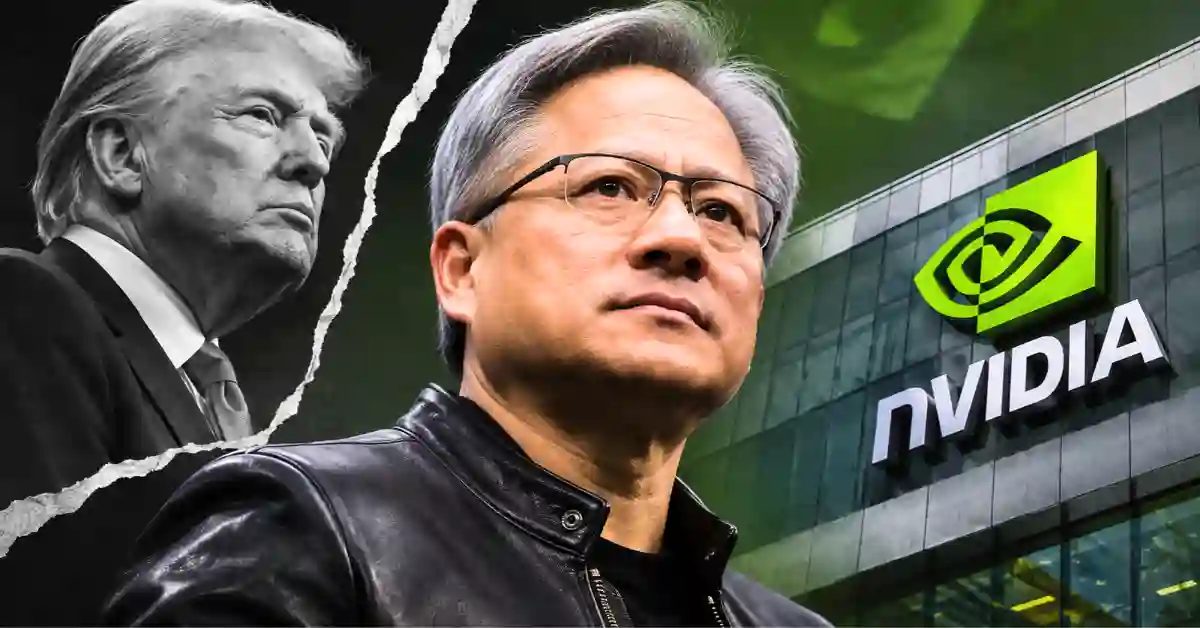
However, as investors cheered and U.S. President Donald Trump took credit for Jensen Huang's return, a larger question arose: what is the causal relationship behind these astonishing events? Does both the selling off and the rebound on Monday reflect Jensen Huang's key role in the global economy? Or is last week's decline stemming from broader, yet unresolved market instability, which just happened to provide supporters of Jensen Huang with a reason for his return?
NVIDIA's Board of Directors' sudden change in attitude — last week they insisted that this former CEO would not return to the company, yet on Monday they completely changed their tune — has only added to the doubts and mystery surrounding the situation. Why did the company change its mind so suddenly, and why now?
Equity Armor Investments Portfolio Manager Joe Tigai stated that it is not surprising that market selling pressure may have prompted the board of directors to make this decision.
"There is every reason to believe that, with shareholders involved, they might feel that we might need Jensen Huang back, because the market has now sent a very clear signal," he said. Tiegai mentioned that NVIDIA still delivered strong financial results last week without Jensen Huang in charge, and added that despite the company's performance exceeding expectations, the stock price has not improved.
"The fundamentals of this stock are excellent, but without Jensen Huang, the company would be fundamentally different. He is a visionary person," Tiegai told Fortune magazine. "He has a long-term perspective on the future direction of technology and has been leading NVIDIA down the right path for a long time. I believe both the stock market and shareholders hope that NVIDIA has him and that kind of vision." (The wealth management company Equity Armor Investments is an investor in NVIDIA.)
Governance experts have expressed similar views. Nick Reese, a professor at the Center for Global Affairs at the NYU Professional Studies School, told Fortune, "Allowing Jensen Huang to return to his NVIDIA CEO position is clearly aimed at rebuilding market confidence and preventing further losses after the market entered a correction zone at the close on Friday."
Nevertheless, the factors that have long been troubling investors have not disappeared, especially NVIDIA's role as a "central bank" providing financing to numerous startups and potentially obscuring the true state of demand. In fact, Jensen Huang's return may even make it more difficult to end this practice (in fact, during Jensen Huang's brief absence, NVIDIA's interim leadership expressed a willingness to re-evaluate some financing activities). Moreover, public opposition to data center construction is only set to intensify in the future, and this is one of the key issues that helped the Democrats achieve a major victory in recent U.S. mid-term elections – which will become a significant headwind to the prosperity of AI.
AI Growth Engine
For supporters of Jensen Huang, including a group of very prominent tech founders and billionaires, the recent sell-offs in the stock market have undoubtedly proven Jensen Huang's importance, and they also serve as a warning of greater economic risks.
Venture capital investor Chamath Palihapitiya posted on X on Monday, saying: "The intervention of the president and JD this weekend prevented a huge economic mistake from happening in the United States this week. They provided the conditions necessary for the board of directors to bring Jensen Huang back."
Trump, on the other hand, talked at length about his role in it. On Monday, he told CNBC that he communicated "directly and indirectly" with NVIDIA's board of directors and urged them to let Jensen Huang return. "It was I who convinced them," Trump said, "It was I who facilitated this deal."
Trump also said, "People ask, is having him a threat? No, losing him is the threat." He stated, "I am very, very happy that the company has the courage, and so does the board of directors, to do what is right. They have endured pressure for two weeks, and the company has also suffered significant losses."
However, Trump himself may also hold NVIDIA stocks. According to CNBC, investment accounts associated with the president have conducted 103 transactions since his return to the White House, with a total amount ranging from $27 million to $97.5 million. The White House stated that Trump does not control these transactions, which are carried out by external advisors.
Without Jensen Huang, Washington might also suffer losses: that is, the United States' position in the AI competition. Patrick Moorhead, founder of Moor Insights & Strategy and also involved with CEO, said, "I think even the harshest hawks on China would think, 'My god, if this has already weakened NVIDIA's market value, and American companies might reduce their investments in AI, could that threaten America's leading position in the AI field?'
After all, the United States may lose its advantages in several areas. In the days following Jensen Huang's resignation, NVIDIA's market value evaporated by about one trillion dollars, and the lengthy CEO selection process could make the company more hesitant when it comes to funding the construction of AI infrastructure. Chinese customers might also switch to domestic chips more quickly. At the same time, Washington will also lose an executive who has been lobbying for U.S. chip exports overseas for many years.
Finally, there are concerns on the economic front. Moorhead said that without Jensen Huang in charge, "it could lead us into a recession." Reuters cited data from Apollo Global on Monday, reporting that AI investment has become one of the main drivers of growth in the United States, contributing about 1.3 percentage points to the country's real GDP growth over the past three quarters. If NVIDIA's decline causes companies to shrink their investments, the economy will lose an important source of expansion.
So, what will happen next after Jensen Huang returns to his core position? Analysts say that the challenge lies in rebuilding market confidence in NVIDIA's board of directors. In a statement, the board stated that its actions were taken after receiving "advice" from "high-level U.S. government officials," and the investigation into whether Jensen Huang could become a target of foreign intelligence agencies has not yet concluded.
"I believe there is a serious deficiency in the corporate governance of NVIDIA's board of directors. This incident precisely proves that point," Rita Macino, a research analyst at Gabelli Funds, told Fortune. Gabelli Funds is also an investor in NVIDIA.
Stacy Ragan, a senior analyst at Bernstein Research, expressed a similar view. “While we are delighted that Jensen Huang has returned, the board’s repeated reactions are, frankly, reminiscent of a clown show… This also raises legitimate questions about their judgment and processes, making one wonder how they make other important decisions,” she wrote in a report sent to clients on Monday. Nevertheless, the firm still upgraded its rating on NVIDIA shares from in line with the market to outperforming the market.
Why is Jensen Huang from NVIDIA making a comeback? Wall Street experts point to market selling, government intervention, and concerns about recession.