Over the past few years, Jensen Huang has not only been the leader of NVIDIA but has also acted as a stabilizing force in the global AI supply chain. Whenever doubts about the AI bubble arise one after another, he is always able to calm the situation and add further confidence to the market.
Today, with the sudden departure of key figures, what may collapse first is not necessarily the technological narrative or the demand for computing power, but rather the underlying understanding that supported this massive investment boom: the days of mutual funding and mutual support between upstream and downstream parties have come to an end.
From TSMC's credit terms to Dell's request for a 45% price increase at the point of delivery, to NVIDIA withdrawing its funding support—without a core guarantor, no one is willing to take on the role of the "last one to pass the torch" in this situation. Overnight, the supply chain has rapidly shifted from "recklessly leveraging debt" back to a model that relies on "cash on delivery and in-stock products."
The contract becomes worthless, and they're willing to go to court just to raise prices by 45%
The British quantitative trading giant XTX Markets has taken server manufacturer Dell to court with a lawsuit.
Court documents revealed a deal that was seemingly a foregone conclusion: the parties had previously signed a fixed-price server procurement contract totaling $549 million. To prevent any changes midway, XTX paid an additional $5 million to “ensure price certainty.”
However, as the delivery date approached, Dell informed XTX that the prices of server components had risen sharply, and the company "could not absorb this cost on its own." XTX would have to pay an additional $62 million to $70 million at least in order to obtain this batch of machines.
XTX stated in the lawsuit that they were "shocked" by Dell's decision to override the agreed price. However, Dell's attitude was just as direct – according to court documents, a Dell executive told XTX at the time, "Other companies facing price increases also approached other suppliers, but in the end, they returned to Dell and accepted the price adjustment."
In the current AI computing hardware market, this scenario where sellers have a dominant position and even force price changes near delivery is not unique to Dell alone.
According to reports by several informed sources cited by the British "Financial Times," server suppliers such as Dell, HPE (Hewlett-Packard, which split off from HP), Lenovo, and Supermicro Computer (Supermicro), commonly request substantial price increases months after signing NVIDIA AI server purchase contracts with their customers, just as the equipment is about to be delivered. Some customers have experienced price hikes of up to 25%, 30%, or even 45%.
Upon closer inspection, the actual delivery price of the GPU servers has increased by at least 20% to 30%; whereas for the CPU nodes, which have a very high proportion of memory costs, the price has more than tripled.
"When you suddenly receive a notice of a price increase of 25%, 30%, or even 45%, it's a very unsettling feeling," said a person familiar with the supply chain. The quotes agreed upon months in advance are simply not reliable now, as the difference between them and the actual transaction price when the equipment is received is ridiculously large.
Another interviewee directly pointed out the current unwritten rule: “The current norm is that the contract price we sign is actually just a reference price ( indicative price ). By the time of delivery, the price may be arbitrarily increased.”
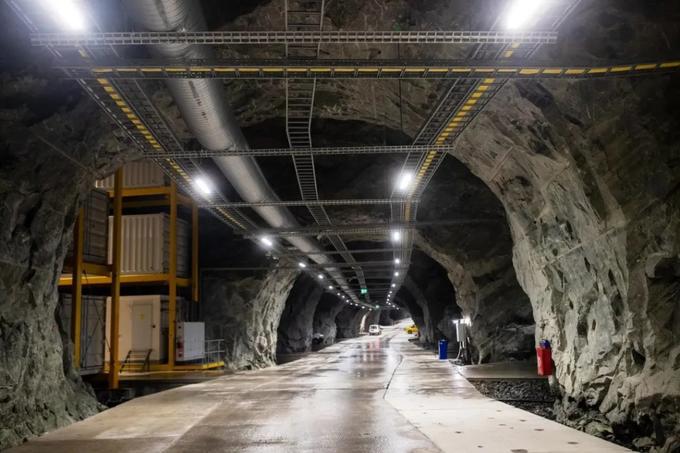
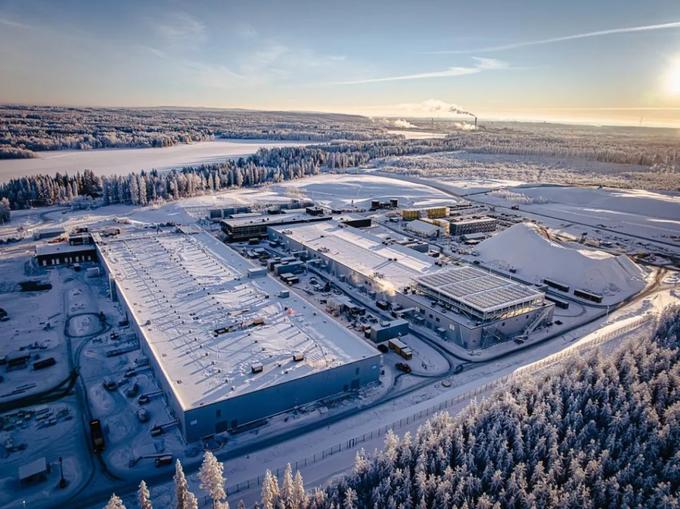
This round of price increases did not hit the small buyers who lack bargaining power. It is reported that among those affected are some of the world's leading financial and quantitative trading institutions – Jane Street, Optiver, and Hudson River Trading (abbreviated as HRT). Apart from the super-large cloud providers (Hyperscalers), these institutions, which directly monetize from the market through algorithms, are the largest purchasers of computing power hardware from AI. HRT even converted a large data center in an abandoned underground mine in Norway, while XTX Markets built its own data center in Finland.
Faced with suppliers' last-minute price increases, most trading institutions ultimately chose to swallow the extra costs. An informed source admitted, "We've never said no ( We ’ ve never said no ). After all, computing power is too important to us; we have no choice but to pay."
As for the direct reason why server manufacturers are willing to go to extreme measures, even litigating, in order to force price adjustments, a set of research data from JPMorgan Chase ( JPMorgan ) provides an answer: since the beginning of 2024, the cost of memory ( Memory ) has skyrocketed by more than 400%. Server manufacturing is already a business with low margins, and if manufacturers continue to fulfill their contracts at the original prices, it means they will suffer direct financial losses due to the out-of-control prices of upstream components.
Upstream synchronization tightens; TSMC starts to demand cash
Just before delivery, large downstream server manufacturers force the costs back on buyers, and almost at the same time, the wafer factories and chip giants at the very top of the industry chain are also tightening their budgets.
Just a week after Jensen Huang left NVIDIA, TSMC, which has long been a core manufacturing partner for NVIDIA, announced changes to its payment terms.
According to Taiwanese media reports, as the controversy over the "circular financing" in the AI industry continues to intensify, TSMC is taking comprehensive measures to strengthen customer credit management—re-evaluating credit limits based on companies' balance sheets, historical loss rates, market competitiveness, and business prospects. For chip orders that exceed these limits, additional cash payments are required; some customers even have to make advance payments in order to secure wafer production capacity.
For AI chip design companies and manufacturers of custom chips ( ASIC ), once this loophole is tightened, cash flow immediately becomes tight.
We know that the capital turnover cycle for chip manufacturing is already quite long: once the wafers are manufactured by TSMC, payment must be made immediately. However, after that, the chips undergo advanced packaging and testing before they can be delivered to end customers, and only then can payments be received. TSMC's restriction on credit limits means that the larger the order size, the more funds chip design companies have to advance on their own.
The pressure is already directly reflected on chip manufacturers.
In the third quarter, ASIC manufacturers such as MediaTek, Creative Electronics, and Worldcore Electronics actively launched fundraising efforts, supplementing their cash reserves by issuing convertible bonds, increasing capital, or obtaining bank loans. Among them, MediaTek completed the pricing of $3.9 billion in convertible bonds at the end of August, with NVIDIA subscribing to $3.5 billion of that amount alone.
Even a chip giant of the size of MediaTek had to rely on capital markets and funds from core partners to support itself in the face of the substantial down payment pressure for a AI order.
$500 billion in financing fell through? NVIDIA is even less willing to take the hit.
What is more noteworthy than TSMC's tighter payment terms is the change within NVIDIA itself, which is at the heart of the storm.
Over the past two years, NVIDIA has been deeply involved in the expansion of global AI infrastructure. It has not only acted as a supplier of graphics cards but has also taken direct actions to push the entire computing infrastructure to unprecedented heights by investing in AI startups, facilitating financing for data center projects, and even providing guarantees for the repurchase of computing power.
However, multiple authoritative sources indicate that this radical approach is starting to slow down – and this shift began even before Jensen Huang officially resigned.
According to The Wall Street Journal, on the eve of Jensen Huang's resignation, NVIDIA had already begun to tighten its financial support for the AI company, requiring some cloud service partners to receive advance payments from end customers in order to reduce the financing risks borne by NVIDIA itself.
Last week, The Wall Street Journal revealed an even more indicative detail: the $500 billion infrastructure financing plan previously spearheaded by NVIDIA in collaboration with top Wall Street asset management and investment banking firms such as Apollo, Blackstone (Blackstone), BlackRock (Bridgewater), Brookfield, Goldman Sachs (Goldman Sachs), and KKR had not actually seen any funds allocated as of the time of publication.
At the same time, the hidden risks that NVIDIA itself bears on its balance sheet have also begun to come to light.
Reuters analysis indicates that NVIDIA has previously committed to purchasing some of the computing power capacity that cloud service providers failed to sell under certain conditions, with a commitment amount of up to $36 billion. During the period of high demand for computing power, such "guaranteed repurchase" arrangements served as an excellent leverage tool, enabling emerging cloud service providers to obtain loans from banks and capital markets smoothly; however, once there are fluctuations in the demand for end-user computing power or if it falls short of expectations, these $36 billion will become an actual liability, directly weighing on NVIDIA's own balance sheet.
For NVIDIA's new management team, which has just taken over, how to carefully dismantle and manage the risks associated with such historical commitments is no longer just a theoretical exercise on paper; it has become a real-world problem that must be addressed immediately.
NVIDIA is shifting from its past approach of "wide-net expansion" to a more stringent selection process for partners: Companies that can demonstrate real customer needs at the end-user level, possess long-term orders, and have received customer prepayments will still have the opportunity to receive funding and production capacity support from NVIDIA; whereas those projects that rely heavily on external support, boast grand ambitions but lack a definite source of revenue, will face increasingly higher barriers ahead.
"Pass the Flower while Drumming" Stalls: No One Wants to Take on the Last Lap
From Dell's initial high asking prices to TSMC's demand for immediate payment and NVIDIA's withdrawal of financing, there is a pervasive sense of caution amidst the fear of a bursting bubble. It seems that with Steve Ballmer's resignation, the entire industry chain has begun to accelerate efforts to isolate its own bubble risks.
In the past two years, the infrastructure of computing power built by AI has been expanded at an extremely fast pace. This success is not only due to the iteration of chip computing power but also thanks to a mutual support system based on trust: NVIDIA invests money and provides credit guarantees; cloud service providers and startups borrow funds to purchase graphics cards; server manufacturers sign fixed-price contracts to secure their market share; and TSMC expands production capacity to meet the demand.
Everyone is betting on high growth, so they are willing to tolerate some volatility among themselves. But now, this unwritten understanding is starting to break down.
According to media statistics, as the trading craze around AI subsides, the market value of companies involved in data center construction has evaporated by $4.2 trillion. Coupled with ongoing doubts about circular financing and the changes in key expectations brought about by Jensen Huang's resignation, every rational player in the supply chain has begun to re-evaluate their strategies.
Jensen Huang's departure was not the starting point of these contradictions, but it accelerated the shift in the industry's psychological defenses. When the figure who once used his personal charisma and the company's financial strength to support the entire industry stepped back, everyone became immediately wary about "who would foot the bill."
It is foreseeable that computing power will remain in high demand in the short term. Big buyers like Jane Street and Optiver, who directly use computing power to “print money,” may curse, but in the end, they still have to pay.
But the market rules have changed: there is no longer a fixed price for buying servers, and one must pay in cash for TSMC chips on the spot. There's no doubt about what will happen in the future; buyers who have real money and can make their own profits can continue playing. However, those who rely entirely on financing, payment terms, and suppliers' advances to keep going may really not be able to sustain it.
Source: AI Frontline