


Disney reported revenue of $25.95 billion in the fourth quarter of fiscal year 2026, a year-on-year increase of 16%; adjusted earnings per share were $1.77, exceeding Wall Street's expectations.
Streaming media subscription revenue grew by 19% to $6.1 billion; benefiting from increased visitor traffic to theme parks, the experience-based business also saw gains.
Disney (DIS)'s stock price has once again drawn attention, following the company's release of quarterly financial results that exceeded expectations and an optimistic outlook for growth in fiscal year 2027, giving investors a reason to re-evaluate this stock. Revenue increased by 16% driven by streaming, theme parks, and sports businesses, and management has also signaled that future profits are expected to continue to grow. However, with anticipated increases in content spending and the stock price approaching key technical resistance levels, the market faces greater challenges.
Disney's revenue grows by 16%, and profits exceed Wall Street's expectations
The improvements are not only reflected in revenue. The operating profit of both the headquarters and branches increased by 43%, to approximately $5 billion; pre-tax profit grew by 71% to $3.5 billion. The performance indicates that Disney's various businesses are performing stronger, and the additional 53rd week in the fiscal year 2026 also contributed to the growth reported in the report. Therefore, investors will be watching to see if the company can continue this profit momentum in the next fiscal year.
Streaming media, parks, and sports businesses collectively enhance Disney's business structure.
Disney's streaming business delivered one of its strongest performances this quarter. Subscription revenue grew by 19% to $6.1 billion; streaming operating profit more than doubled from $402 million a year ago to $824 million.
Experiential businesses continue to make significant contributions to profits. The revenue of this department amounted to approximately $10.1 billion, with operating profits increasing by 20% to $2.25 billion. Global visitor attendance grew by 4%, indicating that demand for Disney parks remains strong.
The sports business also performed strongly. Revenue increased by 16% to $4.6 billion, and operating profit grew by 53% to $1.4 billion. This combination is very important to Disney's investment logic: the profitability of streaming services is improving, parks remain an important source of profit, and the sports business continues to support the company's overall entertainment strategy.
Disney's 2027 fiscal year guidance: $9 billion in share repurchases alongside higher content costs
Disney's outlook for the fiscal year 2027 has now become the core of the investment narrative for this stock. Management expects adjusted earnings per share to grow in double digits, with free cash flow of approximately $11 billion. The company also plans to repurchase about $9 billion in shares and increase the annual dividend by 33% to $2 per share.
However, this growth strategy also implies greater investment. Disney expects its cash content expenditure to increase by 9% in fiscal year 2027, to approximately $26 billion, reflecting the company's continued investment in entertainment programs and sports rights.
Management also expects that the operating profit of both headquarters and branches will increase by about 8%. Another change that investors need to assess is that Disney has decided not to disclose the operating profit of streaming services separately anymore. The company intends to place more emphasis on the broader entertainment business segment, but this approach will reduce the visibility of the streaming services' independent profitability to the outside world.
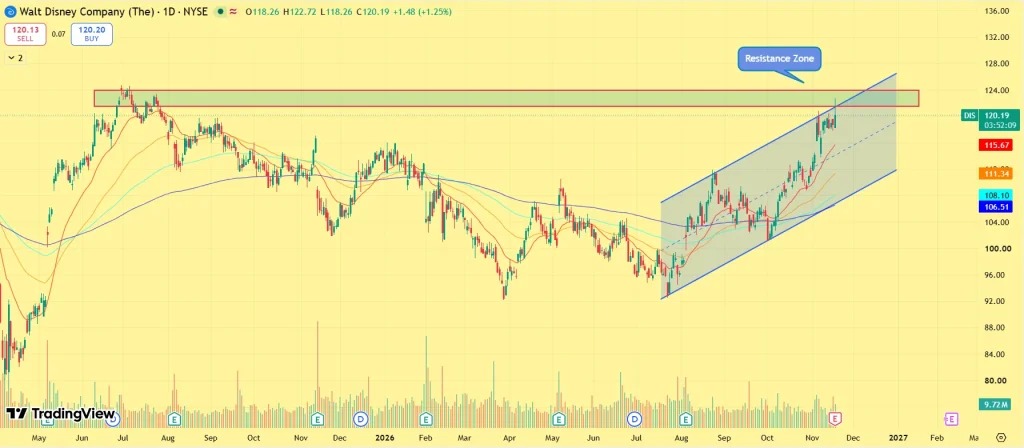
The key question is whether a higher level of investment in content can generate sufficient additional revenue and operating profits to justify such expenditures.
Disney Stock Analysis: $120 Resistance Level Becomes the Next Test
The current resistance level is in the range of $116 to $120. This area has previously attracted selling pressure, so it represents an important test for the current rebound. If the daily close firmly exceeds $122, it could strengthen the bullish trend and indicate that buyers are in control of the larger trend, potentially opening up space for further gains towards higher resistance levels.
However, if there are further obstacles, DIS may fall back to the lower edge of the upward channel. The current moving average provides support below the stock price, but to confirm a stronger breakout, the price still needs to remain above the resistance level.